
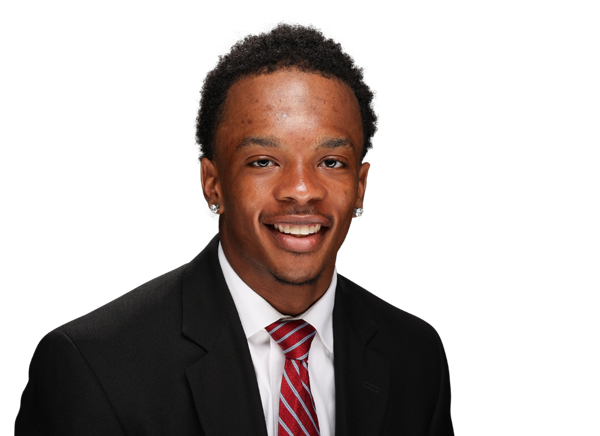
Aubrey Walker
 Alabama
Freshman
Alabama
Freshman
Bio
Recruiting
Scouting Report
Aubrey Walker is a 3-star Wide Receiver from Birmingham, AL (Moody) in the 2026 class. Ranked No. 1566 nationally. Composite rating: 0.8600. Committed to University of Alabama.
Physical Profile
Listed at 5-10, 170 lbs. Taller than 10% and heavier than 19% of 2026 Wide Receiver prospects in the SEC Scouts database (329 with a listed size).
Play Style
Walker is a speed-first slot and vertical threat. He wins by threatening the top of the defense and then using that cushion underneath, and once he catches the ball in space he is a long-speed finisher, as the 16.9-yard average shows. On a Moody team with several playmakers he was a complementary weapon who produced in fewer targets rather than a high-volume possession receiver. He also got occasional gadget touches (2 carries, 18 yards, 1 TD). His Antonio Brown comparison suggests he wants to play as a technician, but his current calling card is raw speed, not refined route-running.
Strengths
- Elite verified straight-line speed (4.3-4.39 40, laser-timed), which makes defenses respect him vertically and gives him immediate value as a kick-coverage gunner or returner
- Big-play production: 16.9 yards per catch on 29 receptions as a senior shows he turned limited volume into chunk plays, both on deep balls and after the catch
- Production on a winning team: he contributed to a 5A state championship and averaged better than a touchdown every five catches (7 total TDs) without being the focal point of the offense
- Run-after-catch ability: TDAlabama specifically noted his explosiveness after the catch, which fits quick-game and jet-motion concepts
Areas to Improve
- Frame and play strength: at about 170 lbs he has to get stronger to beat press coverage, hold up as a blocker, and handle contact over the middle against SEC nickel defenders
- Route craft and volume: 29 catches is a small senior-year sample, so his route tree, release package, and hands on contested or high-volume targets are largely unproven on film
- Competition jump: he went from 5A Alabama to the SEC with one known offer and no national camp or circuit résumé, so he needs time to learn the playbook and get used to the speed of practice
- Special-teams technique: his quickest path to the field is coverage and return units, so ball security as a returner and gunner fundamentals (beating double vises) are immediate priorities
College Projection
He is a developmental scholarship receiver. He joins a 2026 receiver class headlined by Cederian Morgan and MJ Mathis and, as he committed late, was reported as roughly the ninth scholarship receiver on the roster. His most realistic Year 1 role is special teams (kick/punt coverage, possibly a return audition) plus a redshirt within the four-game limit. Years 2-3 depend on how much strength he adds: if he gets to 180+ lbs and tightens his routes, he can earn a rotational slot or jet-motion role as a field-stretching specialist. Given Alabama's depth he is a strong transfer-portal candidate if he hasn't earned a role by Year 3, and at a Group of Five or lower Power Four program his speed would play right away.
Best Fit
Spread or RPO offenses that use the slot heavily with jet motion, bubbles, quick game, and vertical seam shots to get a fast receiver the ball in space and stretch the defense. Programs that value special teams and give young, fast players coverage reps are the best development path. At Alabama he fits the Lotzeir Brooks mold of a slot playmaker. Outside the SEC, a high-tempo Air Raid or spread team would let him produce sooner.
Current Team
University of Alabama