
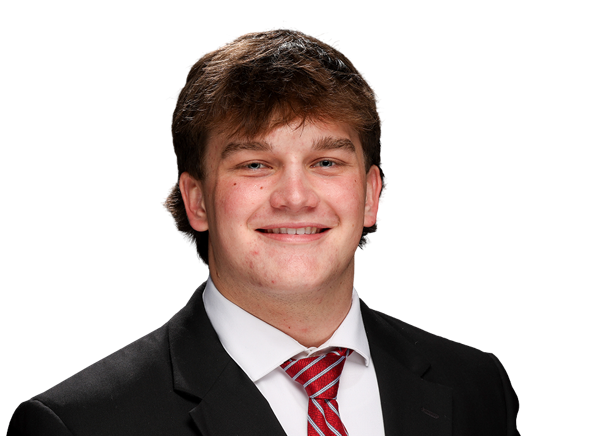
Jude Cascone
 Alabama
Freshman
Alabama
Freshman
Bio
Recruiting
Scouting Report
Jude Cascone is a 3-star Tight End from Marietta, GA (Walton) in the 2026 class. Ranked No. 1914 nationally. Composite rating: 0.8533. Committed to University of Alabama.
Physical Profile
Listed at 6-3, 224 lbs. Taller than 3% and heavier than 38% of 2026 Tight End prospects in the SEC Scouts database (116 with a listed size).
Play Style
On film and in his production, Cascone is a physical, assignment-sound football player rather than a matchup weapon. On offense he does his best work as a short-area and red-zone target, finding soft spots and finishing with his hands, and he moves in the run game as a wing or insert blocker. His snaps at linebacker show up in how he plays: he runs downhill, seeks contact and tackles well in space. Those traits usually make a player a core special-teamer early in his career.
Strengths
- Two-way toughness: he started at tight end and also played linebacker, posting 25 tackles and a sack in one season. That points to physicality, contact comfort and pursuit instincts that carry over directly to kick coverage.
- Efficient red-zone producer: 16 catches for 238 yards (14.9 yards per catch) and 4 touchdowns as a senior, plus 13-159-3 earlier in his career. About one in four of his catches went for a score, so he's a dependable target near the goal line in a high-level Georgia program.
- Versatility in alignment: the H-back profile lets him work from the wing, the backfield and the slot as a lead blocker, a chip-and-release outlet or a fullback-type piece in 12 and 21 personnel.
- Real recruiting interest: Georgia, Ohio State, Georgia Tech, Pitt and South Carolina all showed interest. Choosing an Alabama walk-on spot over scholarship-level options there shows confidence and makeup that staffs value in developmental players.
Areas to Improve
- Mass and play strength: he needs to add 15-20 pounds of good weight without losing movement so he can survive as a blocker at the point of attack against SEC edge defenders. Strength and conditioning will decide his ceiling.
- Receiving volume and route craft: 16 catches is a small senior sample. He needs to show he can separate against linebackers and safeties on option and seam routes, not just finish schemed red-zone looks.
- Specialization: at the college level he needs to settle on one primary identity (H-back/fullback versus move TE) and polish the technique for it, such as split-zone insert blocks, lead-block leverage and pass-pro chips.
College Projection
As an early-enrolled walk-on in a crowded Alabama tight end room, he will most likely redshirt in 2026 and contribute on the scout team. His fastest path to the field is special teams (kickoff, punt coverage and returns) in years two and three, then situational H-back or fullback snaps in short-yardage and goal-line packages. Earning a scholarship by year three or four is a realistic goal if he reaches about 240 pounds and becomes a reliable special-teams starter. Many Alabama walk-ons have taken exactly that route.
Best Fit
He fits best in a pro-style or heavy-personnel offense that uses a true H-back or fullback (12 and 21 personnel, split-zone, play-action off-set alignments) and values special-teams contributors. Alabama fits as long as the staff keeps a role for an H-back. A Group of Five or FCS program would have offered quicker playing time and a scholarship, but he chose the developmental route at a top program.
Current Team
University of Alabama