
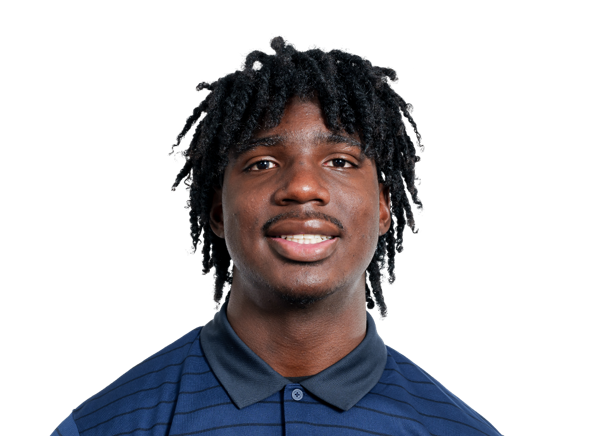
Jared Smith
 Auburn
Sophomore
Auburn
Sophomore
Bio
Recruiting
Scouting Report
Jared Smith is a 4-star Interior Offensive Line from Birmingham, AL (Stockbridge) in the 2026 class. Ranked No. 425 nationally. Composite rating: 0.8933. Uncommitted.
Physical Profile
Listed at 6-6, 260 lbs. Taller than 95% and heavier than 0% of 2026 Interior Offensive Line prospects in the SEC Scouts database (207 with a listed size).
Play Style
He is a downhill, power-first guard. His best film is in gap and duo runs, where he fits his hands inside, sinks his weight and drives defenders backward rather than steering them. He finishes blocks with a physical edge. In pass protection he uses a jump-set/short-set approach, relying on his length and first punch instead of long, patient kick-slides, and he recovers better going backward than you'd expect for a 330-lb player. When he's asked to redirect laterally in space or play with low pads for a whole series, his waist-bending shows and his efficiency drops.
Strengths
- Heavy, well-timed punch backed by 320+ lbs and a roughly 6-10 wingspan. He jolts defenders on contact and can win reps at the point of attack before hand fighting starts.
- Pass-set footwork is good for his size. He was 2025 Under Armour Next Atlanta OL MVP while at Woodland and showed he can slide and redirect against camp-level speed rushers.
- Proven against quality competition in Georgia's GHSA 4A and in camps. Recruiters valued him enough that Georgia, Georgia Tech and Auburn all pursued him, and ESPN ranks him the No. 19 interior lineman nationally.
- Pedigree and coaching fit. His uncle is Tyron Smith, and at Rutgers he develops under veteran NFL line coach Pat Flaherty, a detail-oriented technician whose strengths match Smith's needs.
Areas to Improve
- Pad level and bend: he bends at the waist instead of the knees, so defenders can get under his pads, and quick, low 3-techniques can beat him with a push-pull move. Hip and ankle mobility work is the top priority.
- Range in space: limited long speed makes long pulls, climbs to the second level and outside-zone reach blocks inconsistent. He needs to take more efficient angles to linebackers rather than rely on getting there fast.
- Consistency against games and stunts: like most young interior linemen, he needs more snaps to process twists and handoffs in pass protection at Big Ten speed.
- Three high schools in three years (Nevada, then two in Georgia) means less continuity in one scheme. His technical base is more raw than his ranking suggests.
College Projection
He's an enrolled Rutgers true freshman in 2026. No available source shows him taking meaningful snaps through the early part of the season, which fits a redshirt year. Expect 2026 to be spent in strength and conditioning and scout-team work, with limited appearances possible under the four-game redshirt rule. The realistic path is contending for the guard rotation in 2027 and becoming a multi-year starter from 2028 on. 247's own assessment called for 'a redshirt year or two'. His ceiling is an all-conference-caliber gap-scheme guard if the flexibility work takes.
NFL Outlook
Day 3 to late Day 2 potential if he develops. Pro-caliber guard size and length are hard to find, and the power in his punch translates to the NFL. His NFL grade will depend on fixing the waist-bending and showing enough lateral agility to handle interior pass rushers. If he becomes a 30+ start Big Ten guard with clean pass-protection tape, he fits the mold of a power-scheme guard drafted in rounds 4-6. For now he's a developmental prospect, not a projected draft pick.
Best Fit
A gap/power run scheme (counter, duo, power) that uses him as a drive-blocking guard with short pulls, plus a pass-protection plan built on short sets and help from the center. Rutgers is a good fit: a physical, run-first Big Ten identity, Pat Flaherty's technique-heavy coaching, and patience to redshirt and develop linemen. He would fit a wide-zone, stretch-heavy scheme much less well, because that asks for more lateral range than he has.
Player Comparison
Smith was a highly-rated 4-star prospect at 6'5" 335 lbs who excelled as an interior offensive lineman with exceptional size and athleticism for his frame. Like this prospect, he had strong recruiting metrics and the physical tools to dominate at multiple positions along the offensive line, eventually becoming a standout guard in both college and the NFL despite some injury concerns that may have limited his initial draft stock.
Season Stats - 2025
Defensive
General
Current Team
Auburn University