
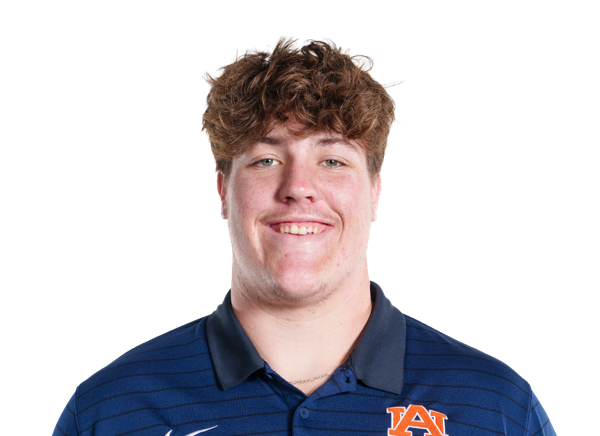
Mason Mathis
 Auburn
Freshman
Auburn
Freshman
Bio
Recruiting
Scouting Report
Mason Mathis is a 3-star Offensive Tackle from Pace, FL (Pace) in the 2026 class. Ranked No. 1523 nationally, No. 135 at OT, No. 200 in FL. Composite rating: 0.8611. Committed to Auburn University since December 4, 2025.
Physical Profile
Listed at 6-6, 320 lbs. Taller than 42% and heavier than 87% of 2026 Offensive Tackle prospects in the SEC Scouts database (182 with a listed size).
Play Style
His production profile says he is a physical, downhill run blocker who is most comfortable firing off the ball and moving defenders off the line in a ground-and-pound offense. The pancake total suggests a finishing mentality and a willingness to drive blocks to the end. No detailed public film breakdown was found, so specific technical tendencies (pad level, footwork, hand usage) cannot be confirmed from verified sources. What the evidence does support is a power-oriented right-side or strong-side blocker who is ahead in the run game and less tested in pass protection.
Strengths
- Run-game finisher: 68 pancake blocks as a senior is high production and points to a lineman who plays through the whistle and puts defenders on the ground instead of just walling them off
- Proven in a run-first system: Pace ran for 296.4 yards per game in his senior season, so most of his snaps were drive, down, and combination blocks, which carry over directly to a gap or duo run scheme
- College-ready mass: at about 320 pounds he will not need a weight-gain redshirt, so his first year can go toward technique and strength instead of bulking up
- Positional flexibility: his height and mass give him a floor at guard if pass protection on an island at tackle proves to be his limit, which raises his odds of becoming a contributor
Areas to Improve
- Pass-protection volume and technique: a high school offense averaging nearly 300 rushing yards a game produces few true dropback reps, so his kick-slide, set depth, and handling of speed-to-power and inside counters against SEC edge rushers are largely unproven
- Weight composition and change of direction: arriving at 320 means the strength staff will likely prioritize lower-body flexibility, bend, and recovery quickness, the traits that decide whether a big high school tackle can stay outside against college athletes
- Hand placement and leverage against better competition: Florida Panhandle competition is solid but not elite, so whether his pancake production holds up once defenders match his size and strength is the main projection question
College Projection
Expect a redshirt in 2026. He came in as the fourth of five 2026 OL signees, and Auburn's ESPN profile already lists him on the freshman roster. Years one and two should go to body composition, pass-set technique, and learning the system on the scout team. A realistic path is competing for backup snaps at tackle or guard by year three (2028), with a starting chance in years three to five depending on depth and how well he moves at his weight. If tackle footwork lags, a move inside to guard is the most likely way he gets on the field sooner.
Best Fit
He fits best in a gap or power run scheme (duo, power, counter, down-block heavy) that rewards a big, physical finisher, which matches what he did at Pace. A staff with a patient development approach and a strong strength program suits his redshirt-first timeline. Schematically, his floor is highest as a right tackle or guard in a run-leaning, balanced offense, rather than a left tackle in a spread offense that throws often and leaves him on an island against speed rushers.
Current Team
Auburn University