
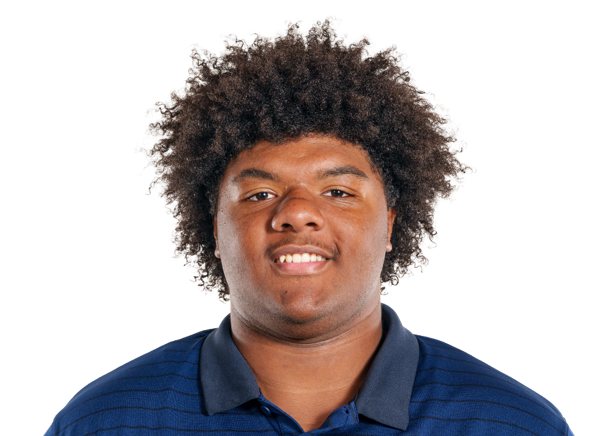
Mykall Lundy-Foster
 Auburn
Freshman
Auburn
Freshman
Bio
Recruiting
Scouting Report
Mykall Lundy-Foster is a 3-star Interior Offensive Line from Tallahassee, FL (Lawton Chiles) in the 2026 class. Ranked No. 921 nationally, No. 72 at IOL, No. 128 in FL. Composite rating: 0.8744. Committed to Auburn University since December 2, 2025.
Physical Profile
Listed at 6-4, 315 lbs. Taller than 36% and heavier than 74% of 2026 Interior Offensive Line prospects in the SEC Scouts database (207 with a listed size).
Play Style
He is a physical, downhill guard who looks for contact and tries to finish blocks. On film his best plays are drive blocks on base and duo runs, where he gets under the defender's pads and moves him off the ball, and pulls on counter and power. On pulls he gets depth quickly and can square up a linebacker or kick out an end. He plays like a thrower: violent hips and a heavy initial strike, at his best moving forward. In pass protection he relies on mass and power more than refined footwork, which works in high school but will need more technical polish in college.
Strengths
- Drive power in the run game: evaluators call him a road-grader who consistently wins one-on-ones at the high school level. His shot-put background shows explosive power that carries into his first strike.
- Pulling and moving: he shows quick feet and burst out of his stance on pulls, letting him get around the corner and hit linebackers in space. That fits gap and pin-pull concepts well.
- Experience and intangibles: a two-year starter at right guard and team captain. The coaching staff that recruited him to USF chose to bring him to Auburn, a strong signal about his work habits and coachability.
- Natural guard size: at roughly 315 lbs he can already absorb power rushers and hold the interior pocket against bull rushes better than most freshman linemen.
Areas to Improve
- Pass protection technique against quick interior rushers: high school opponents rarely tested his hand placement, his patience in his set, or how he passes off twists and stunts. Against SEC defensive tackles, his inside hand, his anchor timing, and his ability to recover once beaten all need work.
- Body composition and stamina: he needs to cut excess weight and build functional strength in an SEC strength program, keeping his pulling quickness while holding up for 70+ snaps. He also needs to play with consistent pad level, because shorter interior linemen lose leverage quickly when they stand up.
- Level of competition: Chiles is not a traditional Florida powerhouse, and with about ten offers mostly from Group of Five and FCS schools (USF, Boston College, Arkansas State, FIU, Alabama State), his dominance hasn't been tested against Power Four-level defensive linemen.
College Projection
He projects as a redshirt and developmental guard in 2026, with four games available to preserve his redshirt year. He has a familiar staff in Golesh's group, which helps his transition. A realistic timeline is to compete for second-team guard work in 2027 after a full year of strength and conditioning, with a possible starting window in 2028-29 if his pass protection matures. He is guard-only. Center is worth a look in spring practice because of his build and football intelligence, but tackle is not a realistic fit.
Best Fit
A gap and duo-heavy run offense that asks its guards to pull often and win with power, which matches the tempo/RPO system Golesh ran at USF and is bringing to Auburn. Auburn is close to ideal: the staff already knows exactly how to develop and use him. More broadly, he'd be most valuable in any scheme that values power at the point of attack over the lateral range needed for wide zone.
Current Team
Auburn University