
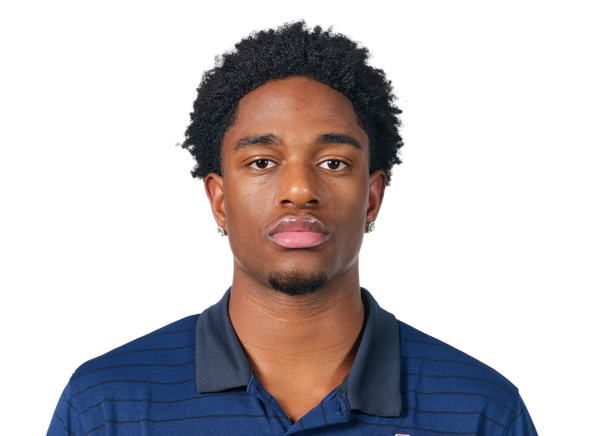
Brian Williams
 Auburn
Freshman
Auburn
Freshman
Bio
Recruiting
Scouting Report
Brian Williams is a 3-star Wide Receiver from Orlando, FL (The First Academy) in the 2026 class. Ranked No. 966 nationally, No. 104 at WR, No. 77 in FL. Composite rating: 0.8733. Committed to Auburn University since December 2, 2025.
Physical Profile
Listed at 6-4, 210 lbs. Taller than 91% and heavier than 95% of 2026 Wide Receiver prospects in the SEC Scouts database (329 with a listed size).
Play Style
Based on his production and frame, Williams projects as a vertical boundary target. He wins downfield and at the catch point, and his yards per catch reflect go routes, posts and back-shoulder throws more than yards gained after short catches. Recruiting coverage calls him a 'big body at wide receiver,' and his jumping background suggests he attacks the ball at its highest point. No detailed public film breakdown was available, so his route detail, release package and after-catch ability can't be graded with confidence from open sources.
Strengths
- Catch radius and contested-catch potential: a 6-4 frame plus jumping ability makes him a natural target on 50/50 balls, back-shoulder throws and red-zone fades, where a defender's position matters less than his reach.
- Big-play production: he averaged 16.3 yards per catch as a senior (34-555-7 in 10 games) and 15.6 as a junior (23-359-5), so he was used vertically and finished plays rather than living on short throws.
- Scoring efficiency: he had 12 touchdowns on 57 career catches tracked over his last two seasons, about one every 4.75 receptions, which shows he can finish in scoring range.
- Respected by elite programs: offers from Alabama, Georgia, Michigan, Notre Dame, Penn State and Florida, plus official visits to PSU, UF, Alabama and Kentucky, show that staffs who see film up close valued him more than his three-star ranking suggests.
- Competed at a high level: as a junior at Lake Mary he played for a 12-3 team that reached the Florida 7A state final, the state's largest classification.
Areas to Improve
- Volume and consistency: he never topped 34 catches in a season, and he missed several junior-year games with an injury. He still needs to show he can handle a full-time target share and stay durable at the college level.
- Separation as a route runner: tall receivers who depend on catch radius often round off breaks and struggle to get off press coverage. He needs better footwork at the line, hand fighting and sinking his hips on comebacks and digs to win against SEC corners who are also long.
- Play strength: even at the listed 210, he needs to add mass and functional strength to get through physical coverage, finish through contact and block on the perimeter, which is part of the job for a boundary receiver in a spread offense.
College Projection
He enrolled for 2026, wears #15, and starts as a developmental boundary receiver in Golesh's tempo spread. A realistic path is limited snaps in 2026, possibly redshirting under the four-game rule, with red-zone and special-teams work while he adds strength. He could compete for a real rotation role at X by 2027, with a starting window in 2028 if his route craft improves. His ceiling is a dependable vertical and red-zone starter. His floor is a situational big-bodied rotation receiver.
Best Fit
A vertical spread offense that isolates its boundary receiver one-on-one and throws back-shoulder and fade balls, such as Golesh's up-tempo system at Auburn. That scheme uses his catch radius right away while giving him time to develop the route detail needed to beat press coverage.
Transfer Portal History
Current Team
Auburn University