
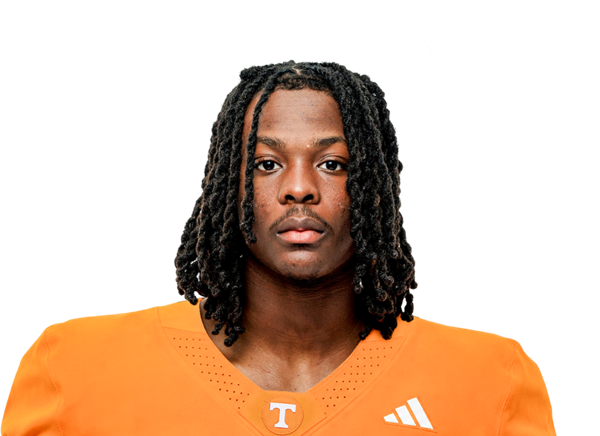
Jamyan Theodore
 Tennessee
Freshman
Tennessee
Freshman
Bio
Recruiting
Scouting Report
Jamyan Theodore is a 3-star Cornerback from Cleveland, OH (Baylor School) in the 2026 class. Ranked No. 507 nationally, No. 33 at CB, No. 9 in TN. Composite rating: 0.8889. Committed to University of Tennessee since June 30, 2025.
Physical Profile
Listed at 6-0, 173 lbs. Taller than 33% and heavier than 34% of 2026 Cornerback prospects in the SEC Scouts database (204 with a listed size).
Play Style
Theodore is a ball-hunting corner who plays with his eyes on the quarterback. He is most comfortable in off coverage and in Cover 3 or quarters, where he can read the quarterback's drop, jump the throw, and attack the ball at its highest point with a receiver's hands. Coaches and analysts describe him as physical for his weight. He plays aggressively at the catch point and tries to strip the ball after receptions, which produced 3 forced fumbles as a senior. His big games came in rivalry and playoff matchups (McCallie, the BlueCross Bowl), which speaks to his competitiveness. His head coach singled out his character and his insistence on playing corner as reasons he developed into an elite player at the position.
Strengths
- Elite ball production: 11 interceptions across his sophomore and junior seasons. As a junior he had 5 INTs, two return touchdowns, and double-digit pass breakups, including 3 INTs (one returned 32 yards for a TD) against rival McCallie and another in the BlueCross Bowl state final.
- Reads and breaks on the ball from off coverage: 247Sports calls him 'hyper-aware' and highlights how he drives on throws from off alignments. That fits the zone and pattern-match coverages common in the SEC.
- Receiver-level hands and instincts: as a senior he caught 48 passes for 1,017 yards and 13 TDs. That experience on offense helps him track the ball in the air and finish interceptions instead of just breaking up passes.
- Physical, active defender: as a senior he had 29 tackles, 8 passes defended, 2 INTs, and 3 forced fumbles. He goes after the ball after the catch, not only at the catch point.
- Track speed and improving burst give him a better chance of carrying vertical routes against SEC receivers than a typical corner ranked in the 500s nationally.
Areas to Improve
- Play strength and weight: he needs to grow from 171 toward 185-190 pounds to hold up in press coverage, get off blocks against perimeter screens, and tackle SEC running backs in space.
- Press-man technique: most of his film shows him reading the quarterback from off coverage. He needs to develop patient feet, a reliable jam, and the ability to stay in phase when matched up man-to-man at the line.
- Consistent tackling: his senior total of 29 tackles is modest, and he needs to show he can reliably bring down ball carriers in run support and on screens before he can be trusted on the boundary side.
- Full-time focus on defense: playing both ways as a senior split his practice time, so his technique at corner is behind that of single-position players in his class.
College Projection
He is a true freshman on Tennessee's 2026 roster in a crowded cornerback room. That room includes transfers Kayin Lee (Auburn), Jadais Richard (Miami), Isaiah Hardge (Colorado), and Tevis Metcalf (Michigan), several returning sophomores, and fellow freshmen Zay Anderson and Javonte Smith. 2026 most likely means special teams (his return experience helps) and a redshirt under the four-game rule. He realistically competes for the two-deep in 2027 once he reaches about 185 pounds. His ball skills give him a ceiling as a multi-year starting field corner by 2028. If he struggles in press man, his football IQ and tackling growth could support a move to nickel or safety.
Best Fit
His best fit is a program that plays mostly zone or pattern-match coverage (Cover 3, quarters) and asks its corners to read the quarterback and break on the ball rather than play press man on every snap. Tennessee's scheme under Tim Banks fits that well, and staying in-state with a redshirt year to build strength suits his timeline. He would be a weaker fit in a press-man scheme that needs immediate physical maturity from its boundary corners.
Current Team
University of Tennessee