
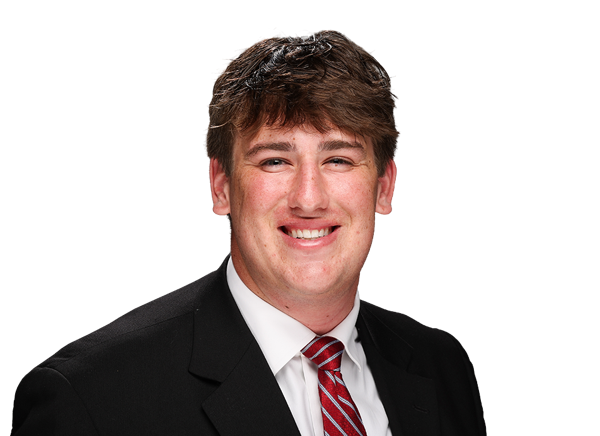
Bear Fretwell
 Alabama
Freshman
Alabama
Freshman
Bio
Recruiting
Scouting Report
Bear Fretwell is a 3-star Offensive Tackle from Brooklet, GA (Southeast Bulloch) in the 2026 class. Ranked No. 804 nationally, No. 38 at OT, No. 53 in GA. Composite rating: 0.8778. Committed to University of Alabama since July 24, 2025.
Physical Profile
Listed at 6-7, 305 lbs. Taller than 75% and heavier than 71% of 2026 Offensive Tackle prospects in the SEC Scouts database (182 with a listed size).
Play Style
A downhill, physical left tackle who plays like a road-grader. On film he explodes out of his stance, gets his hands and body into the defender and drives him off the ball, finishing blocks rather than just making contact. He wins mainly through size, length and effort rather than technique. In pass protection he relies on his reach to ride rushers wide, but his footwork and hand use aren't refined yet. Alabama has tried him at both tackle and center on its depth chart, which suggests the staff sees him as a flexible lineman rather than locking him in at one position.
Strengths
- Elite length: a 6-7 frame with plenty of room to grow, already at 305 pounds on Alabama's roster without losing his natural build
- Aggressive run-game temperament: film from left tackle shows him firing off the ball, getting his pads moving forward and driving defenders off the line instead of just occupying them
- Moves well for his size: his coach calls him extremely athletic, and a reported 4.77 forty (unverified) suggests he can get to the second level and pull
- Rapid development curve: he went from no 11-man experience to a two-year varsity starter on SEB's record-setting 2025 team that reached the state quarterfinals, and earned an Alabama offer from camp work, which suggests he will keep getting better with coaching
- Graded well by coaches in person: Kapilovic offered off a live camp workout, and Brent Key, a former offensive line coach, recruited him hard, so line specialists rated him higher than the recruiting services did
Areas to Improve
- Footwork and pass sets: his kick-slide, depth and set angles are raw. He relies on length and effort against speed rushers, and that won't work against SEC edge rushers without refinement
- Hand placement and timing: he needs to land his punch inside more consistently and keep his hands there. Strong defensive linemen will win his chest if his hands go wide
- ACL recovery: he must regain full knee stability, bend and the explosion in his first step before any competitive work. 2026 is a rehab year
- Leverage and pad level: like most 6-7 high school tackles, he tends to play tall. He needs to sink his hips and win with leverage, especially if Alabama tries him inside
- Limited football experience: with only about four years of 11-man ball, he has a lot to learn about blitz pickups, reading defensive fronts and calling out stunts
College Projection
Expect a redshirt-style development path. He joined Alabama in summer 2026 instead of enrolling early because of the January ACL tear, and is expected to spend the 2026 season rehabbing. Realistically he would compete for backup work in 2027, push for a rotation spot in 2028, and could start as a third- or fourth-year player if he gets his weight to 315-320 and improves his technique. He projects best at right tackle, with guard as his fallback if his footwork in space limits him.
Best Fit
A power or gap-heavy run scheme with a patient, development-focused line coach, which is what Alabama offers under Kapilovic. He benefits from a deep offensive line room where he isn't needed early and can rebuild his knee, add weight and improve his technique over two or three years. A downhill run offense that uses his physicality first, combined with careful pass-protection coaching, gives him the best chance to become a multi-year starter.
Current Team
University of Alabama