
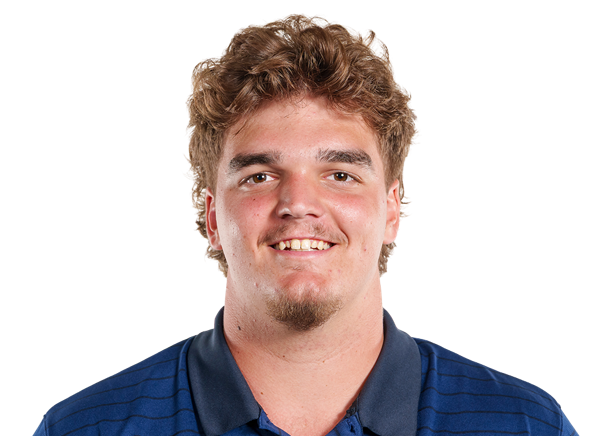
Bear McWhorter
 Auburn
Freshman
Auburn
Freshman
Bio
Recruiting
Scouting Report
Bear McWhorter is a 3-star Interior Offensive Line from Kingston, GA (Cass) in the 2026 class. Ranked No. 701 nationally, No. 77 at IOL, No. 97 in GA. Composite rating: 0.8821. Committed to Auburn University since December 14, 2025.
Physical Profile
Listed at 6-4, 315 lbs. Taller than 36% and heavier than 74% of 2026 Interior Offensive Line prospects in the SEC Scouts database (207 with a listed size).
Play Style
McWhorter plays like a classic SEC guard. He fires out low, gets his hands on the defender first, and works to move a defensive tackle off the ball rather than just screening him. He is at his best in a downhill run game on inside zone, duo, and gap or pull concepts, where his first step and lower-body power stand out. As a pass blocker he is more of an anchor-and-absorb player than a mirror athlete. He holds up well against power rushes, but his footwork against speed and games inside is still developing. The physical, finishing style that ESPN valued is what separates him from the generic three-star tape the other services rated.
Strengths
- Explosive first step: evaluators specifically noted his burst out of his stance, which lets him strike and win leverage on down blocks and double teams before a defensive tackle can settle in
- Physical, finishing demeanor that fits a run-first interior role, with power at the point of attack shown on a Cass team that went 9-3 in 2025, the program's most wins since 2015
- Proven against top competition: Under Armour All-America Game, MaxPreps All-American, FBU/Adidas All-American, and Touchdown Club of Atlanta first-team all-state in 2025
- Mature, college-ready size (6-4/315) for a true freshman, with a strong recruiting pedigree that included offers from Alabama, Georgia, Florida, Florida State, Clemson and South Carolina
Areas to Improve
- Pass protection against SEC interior quickness: he needs to keep his hands inside, stay square instead of lunging, and redirect against twists and stunts, which high school competition seldom tests
- Body composition and functional strength: his weight rose quickly from about 290 to 315, so he needs to convert it into play strength in the weight room and keep his feet and conditioning through four quarters
- Positional limits: he is likely a guard only, with center as a possible cross-training option, so his early value depends on winning one specific spot rather than giving tackle depth
College Projection
He is a true freshman this fall under head coach Alex Golesh and offensive line coach Tyler Hudanick, in their first recruiting class. He was one of five offensive linemen in a 19-man class. Expect a redshirt year in 2026 focused on strength, technique, and learning the scheme, with snaps limited to the four games the redshirt rule allows. His realistic window to compete for a starting guard job is 2027-28 as a redshirt freshman or sophomore. If his ESPN ranking proves closer to the truth than his three-star ratings, he could become a multi-year starter at guard. If not, his floor is a dependable rotational interior lineman who can also back up at center.
NFL Outlook
ESPN rated him a four-star, but 247Sports and Rivals had him as a three-star and his composite (0.8821) is in three-star range, so a projection is speculative right now. If he grows into a multi-year SEC starter at guard, his explosiveness and power profile would give him a path to Day 3 draft consideration. That depends on him developing pass-protection skill against SEC interior rushers.
Best Fit
A gap- or duo-heavy offense that puts the guards on double teams and asks them to pull, and that values physicality over pure athleticism in space. Auburn's offensive line under Hudanick, in an SEC run game, fits him well. He would be a weaker fit in a wide-zone system that needs guards to reach-block and run laterally on every snap.
Current Team
Auburn University