
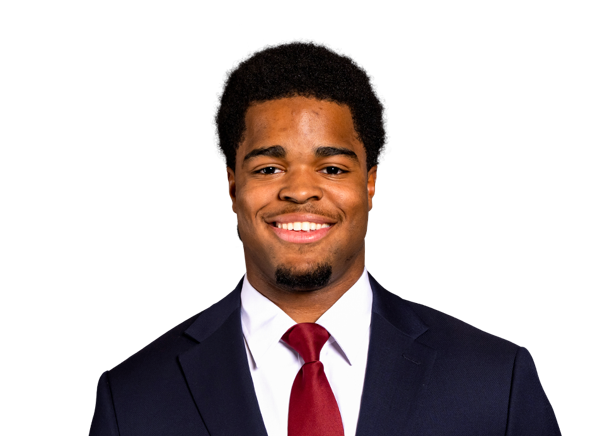
Matthew Nelson
 Oklahoma
Freshman
Oklahoma
Freshman
Bio
Recruiting
Scouting Report
Matthew Nelson is a 4-star Edge Rusher from Bryant, AR (Bryant) in the 2026 class. Ranked No. 458 nationally, No. 39 at EDGE, No. 3 in AR. Composite rating: 0.8922. Committed to University of Oklahoma since June 7, 2025.
Physical Profile
Listed at 6-5, 247 lbs. Taller than 79% and heavier than 80% of 2026 Edge Rusher prospects in the SEC Scouts database (169 with a listed size).
Play Style
A speed-and-length edge who beats offensive tackles around the outside and chases plays from the back side. His production (22 tackles for loss against 7.5 sacks) shows he is as disruptive against the run as he is rushing the passer: he gets into the backfield quickly and has the range to finish plays away from his side. The hurdler profile fits a rusher who can dip his shoulder and bend around the corner. The wrestling background shows up in how he uses his hands to separate from blockers rather than just running around them. He is more of a threat on the edge who wins with first-step speed than a player who takes on and sheds blocks at the point of attack.
Strengths
- Productive at the highest level of Arkansas football: 51 tackles, 22 tackles for loss, 7.5 sacks, 21 QB pressures and a forced fumble as a junior (2024) for Bryant's 7A state title team.
- Verified explosiveness and flexibility: a state championship in the 110m hurdles gives objective evidence of the hip mobility and stride control that film-only edge evaluations often have to guess at.
- Wrestling background: grappling experience usually shows up as an understanding of leverage, hand placement and escaping blocks, which helps him counter bigger tackles while he adds weight.
- Length and frame: at 6-5 with a long build he can win the reach battle against tackles and play the edge on the run, and 247Sports specifically noted that his frame and athleticism give him strong pass-rush potential.
- Strong reviews from other programs: late offers from Alabama (September 2025) and Arkansas (November 2025, after he had already committed) show SEC staffs rated him above his 3-star ranking.
Areas to Improve
- Play strength and anchor: he played high school ball at 215-225 and needs to hold the point of attack against 310-pound SEC tackles and down blocks from tight ends before he can be trusted on early downs; the move to 247 is a good start.
- Pass-rush plan and technique: 247Sports called him one of Oklahoma's more raw prospects. At the Power Four level he needs a planned counter off his speed rush (an inside spin, cross-chop or long-arm) instead of relying on length and speed.
- Playing low at his height: tall, high-cut edges tend to stand up at the snap, which gives blockers his chest. Keeping his pad level down on run downs will decide whether he becomes an every-down player.
College Projection
He projects as a redshirt-track developmental defensive end for Oklahoma under DE coach Miguel Chavis. The 2026 season is about the strength program, learning the playbook (he has credited veterans Taylor Wein and Jake Kreul with helping him) and possibly special teams snaps within the four-game redshirt limit. If he can play at 255-265 while keeping his burst, he should be a third-down pass-rush specialist by 2027 and compete for a starting job in 2028-29. Best case, he develops into a starter in the SEC edge rotation as a redshirt sophomore.
NFL Outlook
The stored 4-star rating would ordinarily call for an NFL projection. His measurables fit the NFL edge mold: 6-5, a long frame, verified hurdler speed and flexibility, and room to reach 260-plus. That gives him a legitimate path to Day 3 draft consideration if he adds weight without losing burst and develops a real pass-rush toolkit. He is not a projected early-round player today; his draft value depends on the next two to three years of physical development.
Best Fit
A multiple or 4-3 front with a pass-rush-first 'Cheetah' or wide-9 end role, like Brent Venables' Oklahoma scheme, which uses long, athletic edges in space. The fit works best with a patient, redshirt-friendly program that has a strong strength staff and a DL coach known for teaching hand technique, since his tools are ahead of his technique today.
Player Comparison
Similar recruiting profile as an underrated prospect who committed early to Oklahoma despite limited national exposure, then developed into a star. Both players share the physical frame of tall, lean athletes who rely more on football IQ and fundamentals than pure athleticism, with the Sooners coaching staff clearly identifying special traits that weren't immediately obvious to national recruiting services.
Current Team
University of Oklahoma