
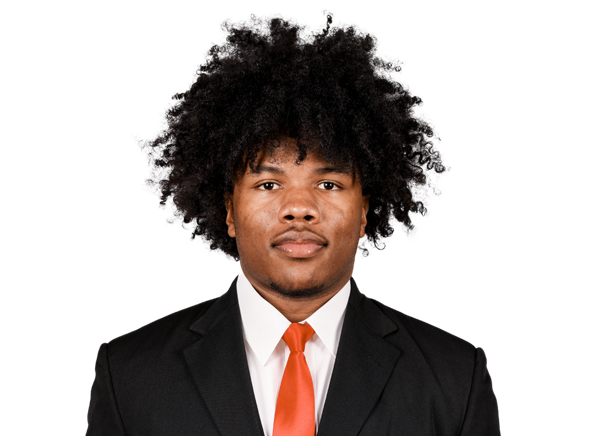
Elijah Littlejohn
 Georgia
Freshman
Georgia
Freshman
Bio
Recruiting
Scouting Report
Elijah Littlejohn is a 4-star Linebacker from Charlotte, NC (West Charlotte) in the 2026 class. Ranked No. 379 nationally, No. 30 at LB, No. 17 in NC. Composite rating: 0.8978. Committed to University of Georgia since November 22, 2025.
Physical Profile
Listed at 6-2, 225 lbs. Taller than 44% and heavier than 82% of 2026 Linebacker prospects in the SEC Scouts database (207 with a listed size).
Play Style
In high school he played mostly on the edge. ESPN listed him as an outside linebacker, and some sites carried him as a defensive lineman. He wins with a fast get-off and a bent, attacking rush, and he plays with an obvious urge to get into the backfield. He is at his best going forward, whether shooting a gap, working a stunt or chasing from the backside. He is less proven moving laterally or backward. At Georgia he wears No. 35 and is being trained as an inside linebacker, where his downhill reactions become quick run fits and blitzes from depth.
Strengths
- Productive in the backfield: as a junior at West Mecklenburg he had 84 tackles, 26 TFL, 14 sacks and 24 QB hurries in only seven games. As a senior at West Charlotte he had 55 tackles, 23 TFL, 9 sacks and a forced fumble. Few players in the class have more plays behind the line over that stretch.
- Fast first step and an aggressive, downhill play style. 247's evaluation points to his burst off the snap and his willingness to attack blockers instead of waiting for them. For an off-ball linebacker, that becomes fast gap fits and quick run-through blitzes.
- Chases hard from the backside and finishes plays. On film he runs down plays going away from him, which is the effort Georgia's inside linebackers need.
- Useful as a pass rusher from the second level. His edge background gives Glenn Schumann a linebacker who can walk up to the line, mug the A-gap and rush for real on third down. Most traditional inside linebackers can't do that.
Areas to Improve
- Reading plays from off the ball. He spent most of high school rushing from the edge, so reading the guard and the backfield flow, handling play-action and fitting correctly on gap-scheme runs are all new. Expect some false steps and overruns in his first year.
- Pass coverage. There is almost no film of him in zone drops, matching running backs or tight ends, or carrying the seam. Georgia's 'Money' inside-linebacker spot asks for more coverage than any other position he has played, and this is the biggest gap in his game.
- Technique against blockers. 247 notes he needs to refine both his pass-rush plan and his run-stopping technique. Inside, he has to take on and get off guards with his hands and good leverage, not just beat them with quickness.
College Projection
He was a December signee and early enrollee, so he went through Georgia's 2026 spring practice. Early depth charts list him as the third or fourth option at inside linebacker, behind players such as Raylen Wilson, Chris Cole and Zayden Walker (Terrell Foster also appears on one chart). He made 3 tackles, including 1 TFL, in the 2026 opener against Tennessee State. The realistic 2026 role is special teams plus snaps in lopsided games, possibly with some third-down rush work. If the move to inside linebacker takes, he could earn regular rotation snaps as a redshirt freshman or sophomore in 2027 and compete to start in 2028. If the coverage part doesn't develop, he is a natural fit for a hybrid or SAM-style role where he rushes the passer and plays over the tight end.
NFL Outlook
He has a realistic Day 3 draft outlook, with an upside of Day 2 if he becomes a full-time starter at Georgia. The NFL values off-ball linebackers who can also rush the passer, and Georgia's inside linebackers have a strong draft track record. His stock depends almost entirely on whether he can cover as an off-ball linebacker. If he can't, he projects as a special-teams and rotational rush linebacker at the next level.
Best Fit
An attacking multiple 3-4 or 4-2-5 defense that uses a pressure package and lets its inside linebackers blitz, mug the A-gaps and play some snaps on the edge. Georgia under Schumann is close to ideal. Programs that ask their inside linebackers to drop into deep zone coverage on nearly every snap would hide his best trait.
Current Team
University of Georgia