
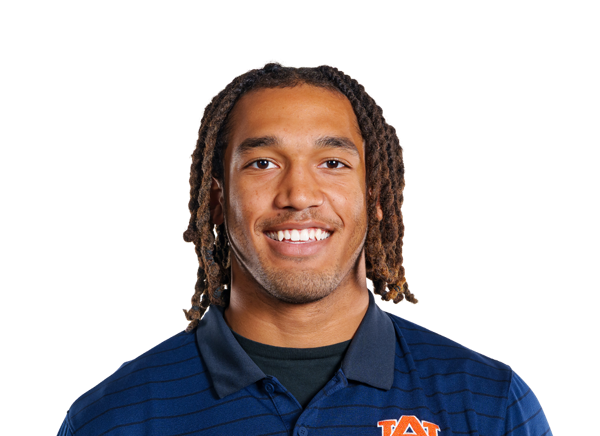
Adam Balogoun-Ali
 Auburn
Freshman
Auburn
Freshman
Bio
Recruiting
Scouting Report
Adam Balogoun-Ali is a 4-star Linebacker from Palm Beach, FL (Cardinal Newman) in the 2026 class. Ranked No. 359 nationally, No. 61 at LB, No. 89 in FL. Composite rating: 0.8999. Committed to Auburn University since July 7, 2025.
Physical Profile
Listed at 6-2, 230 lbs. Taller than 44% and heavier than 94% of 2026 Linebacker prospects in the SEC Scouts database (207 with a listed size).
Play Style
Based on his production and frame, he is a sideline-to-sideline run-and-hit linebacker. He finishes plays in pursuit and piles up tackles, but he is not a thumper who stacks and sheds in a phone booth. His two sacks at Benjamin suggest he can be used as a blitzer or from an edge alignment, which matches Auburn recruiting him as an outside linebacker. His best current fit is out in space: overhang, nickel-backer or weakside roles where he can use his range and avoid heavy blockers. No public film breakdown or camp report was available to confirm specific tendencies such as trigger speed, pursuit angles or drop depth. Film review should target those areas to confirm this projection.
Strengths
- Tackle volume and reliability: 94 tackles as a senior at Cardinal Newman and 56 tackles with 2 sacks the year before at The Benjamin School. That is steady production in two different programs against South Florida competition.
- Big-game production and leadership: he was the recognized leader of the Newman defense that held Chaminade-Madonna, a four-time defending state champion, to 14 points in a 17-14 upset. He was also a two-time Sun-Sentinel first-team selection.
- Movement skills from multiple sports: his basketball and track experience suggests the footwork, balance and closing speed that suit a pursuit linebacker who can also carry backs and tight ends in coverage.
- Scheme versatility: DJ Durkin recruited him as an outside linebacker, and his frame projects to SAM, overhang or nickel-backer roles. That gives a defensive staff several ways to use him while he adds weight.
Areas to Improve
- Play strength and mass: he needs to get to about 225+ pounds so he can take on and shed blocks from SEC offensive linemen at the point of attack instead of relying on avoiding them.
- Block recognition and fitting runs inside: undersized high school linebackers often win by running around blocks. At Auburn he will have to learn to hold his gap, keep his outside arm free and play downhill through contact in the box.
- Coverage refinement at the college level: his athletic profile fits coverage, but he has to learn pattern-match drops, zone spacing and route recognition against SEC tight ends and backs to justify the matchup value his frame suggests.
- Adjusting to a new staff: he was recruited by Hugh Freeze and DJ Durkin, and the 2026 roster lists Alex Golesh as head coach. He will have to earn his role in a new defensive system and terminology.
College Projection
He is a 2026 freshman linebacker on Auburn's roster; his depth-chart position and stats could not be verified. The realistic path is special teams first, since his range fits kickoff and punt coverage, along with a developmental year in the strength program to reach about 225 pounds. With normal development he projects as a rotational outside or weakside linebacker by his second or third year, and a starting role is plausible in years 3-4 if the weight gain holds his speed. A coaching staff with a lighter, speed-based linebacker model could speed that timeline up.
NFL Outlook
It is too early for a real draft grade. The most likely path to the NFL runs through the modern hybrid linebacker/safety role: a 6-2 athlete who plays in the 225-230 range with verified speed would fit the league's demand for coverage linebackers and special-teams contributors. His ranking band (247 Composite high-0.89s; national rank somewhere between #298 and #359 depending on the snapshot) is typical of Day 3 or priority free-agent hopefuls, not early-round projections. Moving up that board would take multiple years of SEC starting production and strong testing.
Best Fit
He fits best in a speed-based, multiple-front defense that uses a hybrid SAM, overhang or star linebacker and values coverage range over pure size. A program with a patient strength-and-conditioning plan and deep special-teams units would let him contribute early while he physically matures. Auburn fits on both counts, so his biggest variable is how the new staff defines its outside linebacker role.
Current Team
Auburn University