
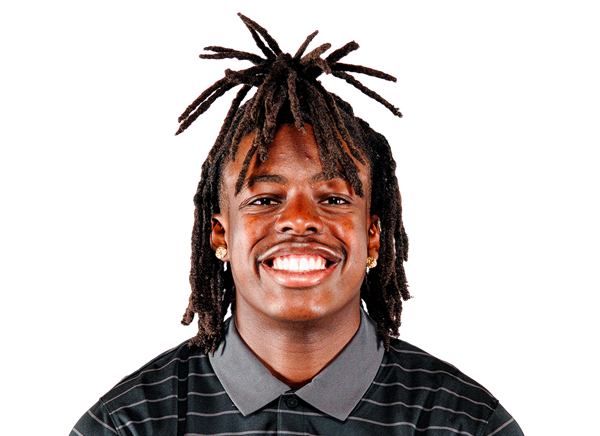
Jaxson Gates
 Missouri
Freshman
Missouri
Freshman
Bio
Recruiting
Scouting Report
Jaxson Gates is a 4-star Cornerback from Fontana, CA (Damien) in the 2026 class. Ranked No. 299 nationally, No. 48 at CB, No. 39 in CA. Composite rating: 0.9068. Committed to University of Missouri since October 30, 2025.
Physical Profile
Listed at 6-0, 185 lbs. Taller than 33% and heavier than 80% of 2026 Cornerback prospects in the SEC Scouts database (204 with a listed size).
Play Style
Gates is a boundary corner who relies on speed. He is most comfortable in press-bail or off-man, where he can mirror, stay in phase on vertical routes and use his recovery speed if he is beaten early. His film is consistent more than explosive: he wins with positioning and footwork and rarely gives up big plays, but he is not yet a heavy ball-hawk. He is a willing tackler but not a physical enforcer. Because his track background is more polished than his football background, his biggest gains should come from hip fluidity at the top of routes, reading receivers' route breakdowns, and timing his hands at the catch point.
Strengths
- Verified elite long speed: a 10.39–10.44 100m and a 22.79 200m, so he can carry vertical routes, recover from a false step and close on the ball. Few corners in the #150–#300 range can match it.
- Length for the outside: at 6-0 to 6-1 with long arms, he can play press-man boundary corner and contest back-shoulder and fade throws. That is why schools like Utah, Michigan State, BYU and Mississippi State pursued him.
- Reliable footwork and coverage fundamentals: evaluators describe his high school tape as steady and technically sound rather than built on splash plays. He finished with 61 tackles, 7 pass breakups and 1 interception over his junior and senior seasons.
- Coachable and already contributing: he appeared in Missouri's 2026 season opener against Arkansas-Pine Bluff (one assisted tackle) and added about 15 lb between spring and fall.
Areas to Improve
- Play strength and mass: at 169–185 lb he can be moved off his spot by bigger SEC receivers in press and at the catch point, and he gives up size to blockers on perimeter runs. A full strength-program cycle is needed before he can handle every-down boundary work.
- Ball production: 1 interception and 7 pass breakups over two seasons is modest for a prospect with his speed. He needs to turn from coverage position into playing the ball and finishing takeaways.
- Tackling and run-fit consistency: his tackle totals (30 as a junior, 31 in nine games as a senior) show he is willing, but his light frame makes open-field tackles and working through stalk blocks a clear development area.
College Projection
He is a true freshman in 2026 on a Missouri team that lost three starting corners to the NFL and restocked through the transfer portal. Expect special-teams and rotational snaps in year one; he has already played in the opener. Freshman-season availability could let him preserve a redshirt through the four-game rule. His realistic path is to compete for a starting outside-corner job in 2027–28 once he is around 190 lb. Missouri cornerbacks coach Al Pogue's development-first approach, which Gates cited when he flipped, fits that timeline.
NFL Outlook
Players with his traits get drafted: a 6-foot-plus corner with a 10.4-second 100m has an NFL-caliber speed and length profile. His draft stock depends almost entirely on adding weight and on ball skills. If he reaches about 190 lb, keeps his speed and produces pass breakups and interceptions as a two-year starter, he projects as a Day 3 pick with Day 2 upside for a press-man team. If he stays light or his ball production stays thin, he is more likely a priority free agent or developmental special-teams corner. He would be eligible for the 2029 draft.
Best Fit
An aggressive press-man or Cover 1/Cover 3 scheme with a patient, development-focused position coach and a strong strength program. That describes Missouri's setup under Pogue. The best early use of his speed is as a boundary corner who can carry vertical routes, not as a nickel who has to take on blocks in the box.
Current Team
University of Missouri