
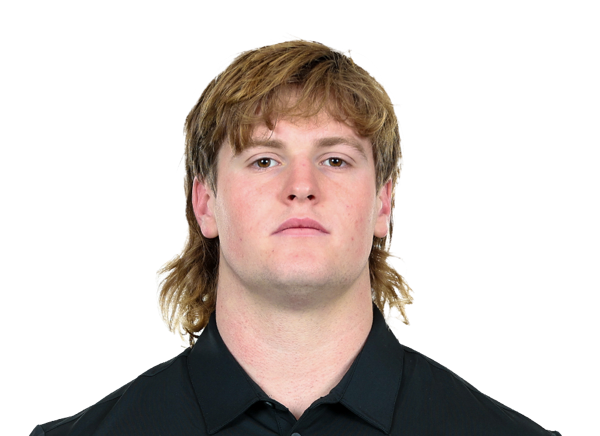
Zaden Krempin
 Texas A&M
Freshman
Texas A&M
Freshman
Bio
Recruiting
Scouting Report
Zaden Krempin is a 4-star Interior Offensive Line from Prosper, TX (Prosper) in the 2026 class. Ranked No. 438 nationally, No. 59 at IOL, No. 104 in TX. Composite rating: 0.8933. Committed to Texas A&M University since June 24, 2025.
Physical Profile
Listed at 6-4, 298 lbs. Taller than 36% and heavier than 52% of 2026 Interior Offensive Line prospects in the SEC Scouts database (207 with a listed size).
Play Style
The reported results describe a technician first. His value has come from pass-set consistency, not highlight pancakes. Giving up two sacks in 37 starts on the blind side points to a patient set, sound depth on his kick-slide, and reliable recovery when beaten early. In the run game he should suit zone and combination blocks well, where his movement lets him reach, climb to linebackers and stay square. He is less proven as a people-mover in gap schemes until he adds and uses more mass. He was not available to break down on film for this report. These tendencies are inferred from his production, honors and the tackle-to-guard projection that recruiting services agree on.
Strengths
- Proven pass protection: allowed 2.0 sacks in 37 consecutive starts at left tackle and gave up zero sacks as a junior, the season he was named District 6-6A Offensive Line MVP and all-state.
- Durability and experience: a three-year starter on a Prosper program that went 43-9 over that stretch and reached the playoffs every year, including area championships in 2023 and 2025. He enters college with more snaps than most interior linemen in his class.
- Tackle-level movement in an interior body: kick-slide footwork and the ability to mirror edge rushers usually carry over well at guard, where the space he has to cover is shorter.
- Positional flexibility: can play guard and slide out to tackle in an emergency, which gives an SEC staff valuable depth on the two-deep.
Areas to Improve
- Play strength and anchor: he played around 270 for much of his high school career, so he needs to add and hold good weight (low 300s) to handle bull rushes from SEC nose tackles and 3-techniques, who do not give him the extra space he had at tackle.
- Adjusting to interior leverage and hand timing: guard play demands a quicker punch, low pad level in a phone booth, and constant awareness of stunts and twists. Moving from tackle to guard is common, but it takes practice reps before it becomes second nature.
- Run-game finishing and displacement: most of what has been reported about him is about pass protection. To win a starting job he must show he can move defenders off the ball in gap and duo run schemes.
College Projection
He planned to enroll early at Texas A&M in January 2026. That gives him a spring of strength-and-conditioning and position-specific work, which is useful for a tackle moving to guard. A realistic path is developmental depth and possible redshirt use in 2026, a push for the two-deep at guard in 2027, and a multi-year starter window in 2027-29 if his play strength develops as expected. His tackle background makes him the kind of reserve who can back up both guard and tackle.
NFL Outlook
He profiles as a Day 3 NFL interior prospect if he becomes a multi-year SEC starter. His pass-protection foundation and positional versatility are traits the NFL values in guards and backup swing linemen. Moving into the Day 2 range would require clear gains in functional strength, anchor and run-game displacement at college level. His current 6-4 frame and a composite ranking outside the national top 250 put him in the high-floor, moderate-ceiling group rather than an early-round projection at this stage.
Best Fit
An SEC or Power Four program running a zone-heavy or balanced pro-style offense, with a strong strength staff and patience to develop a lineman into a third-year starter. Texas A&M fits that description. He is best used at guard in a scheme that values movement, pass-set discipline and versatility over pure mass, with the option to kick out to tackle when injuries hit.
Current Team
Texas A&M University