
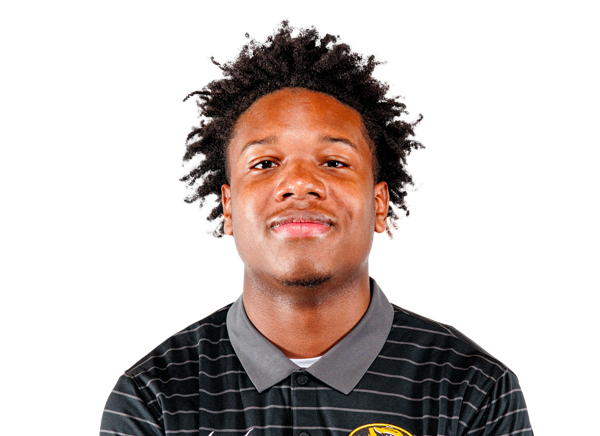
JJ Bush
 Missouri
Freshman
Missouri
Freshman
Bio
Recruiting
Scouting Report
JJ Bush is a 4-star Linebacker from Mobile, AL (Theodore) in the 2026 class. Ranked No. 379 nationally, No. 28 at LB, No. 14 in AL. Composite rating: 0.8978. Committed to University of Missouri since October 2, 2025.
Physical Profile
Listed at 6-1, 222 lbs. Taller than 21% and heavier than 80% of 2026 Linebacker prospects in the SEC Scouts database (207 with a listed size).
Play Style
Bush is a downhill, attacking linebacker who plays with urgency and wants to be in the backfield. His 22 TFL and 6 sacks as a junior reflect a player who reads quickly and fills gaps aggressively rather than a patient scraper. He flows well sideline to sideline, and his RB and basketball background shows in how he changes direction and closes on ball carriers in space. Theodore used him as a blitzer, and he times pressures well. Aggressive, high-motor linebackers like this can overrun plays and bite on misdirection, so eye discipline and leverage against counter and play-action are the main teaching points. The overall profile is a modern space linebacker: a sideline-to-sideline tackler and pressure player rather than a thumping box MIKE.
Strengths
- Backfield production: his junior season (2024) had 69 tackles, 22 tackles for loss, 6 sacks and 1 INT. A 22-TFL season shows elite trigger and a knack for shooting gaps, not just cleaning up tackles downfield
- Pass-rush versatility: six sacks as an off-ball linebacker suggest he can be used as a blitzer on a green-dog or pressure package in obvious passing situations, which adds value on third down
- Multi-sport athleticism: All-Region basketball production and track experience point to lateral quickness, footwork and body control that should help him in man coverage on RBs and TEs and in open-field tackling
- Ball skills and offensive background: his RB experience (344 yards, 6 TDs) and a junior-year INT show natural hands and comfort handling the ball in space, which helps him in zone drops and turning turnovers into points
- Big-game pedigree: he was selected for the Navy All-American Bowl, a sign that national evaluators rated him among the top linebackers in the class
Areas to Improve
- Taking on blocks: at 6-1/222 he needs to improve his hand use and leverage when stacking and shedding climbing guards and fullbacks. Right now he wins by avoiding blocks more than by beating them, and SEC run games will test that
- Coverage discipline: his film value is built on attacking downhill, so zone depth, pattern-matching and eye discipline against play-action will need significant coaching before he is trusted on early downs
- Mass and play strength: adding 5-10 more pounds without losing burst is necessary to hold up on inside run fits over a full SEC season
- Availability and accountability: the indefinite suspension after his May 2026 arrest is the biggest short-term obstacle. On-field development depends on him being reinstated and earning back trust from the staff
College Projection
His status must come first: Missouri suspended him indefinitely after his May 4, 2026 arrest. The charges were a Class D felony (aggravated fleeing) and a misdemeanor for careless driving, at roughly 80+ mph in a 40 zone. Boone County dropped the charges on May 6, 2026, but the prosecutor said they would likely be refiled. He is on the 2026 roster, but no public reinstatement was found, and he was not on the Week 1 depth chart, which listed Woodyard and Rodriguez as starters with Beasley, Huff and McClellan behind them. He has no recorded 2026 stats. The realistic 2026 path is a redshirt year, using up to four games if he is reinstated, while he adds mass and learns the defense. If he is back in good standing, his traits make him a special-teams contributor and rotational WLB/SAM in 2027, with a starting window in 2027-28 if his strength and coverage discipline develop. The ceiling is an all-SEC-caliber pressure linebacker, but that depends entirely on availability.
NFL Outlook
The NFL increasingly values linebackers who can run, cover and rush, and Bush's athleticism, blitz production and multi-sport background fit that direction. His NFL case depends on three things: reaching a durable 230-235 pounds, showing he can cover reliably on third down, and producing at the SEC level. If all three happen, he could be a Day 3 prospect as a WLB/SAM who helps on special teams and in pressure packages, and he could climb higher with breakout production. He is currently a long-range projection, and the off-field matter will draw scrutiny from NFL teams until it is fully resolved.
Best Fit
His best fit is a 4-2-5 or multiple-front defense that uses its linebackers as space players and pressure pieces rather than two-down run stuffers. Examples are a WILL who can scrape freely behind a big defensive line, or a SAM/overhang role that combines edge pressure with flat and curl coverage. Missouri's multiple scheme, with an emphasis on linebackers who can play in space, and Derek Nicholson's position coaching (Nicholson recruited him) fit his skill set well. The key is a strength-and-conditioning plan that adds mass without losing his burst, plus a clear accountability structure to get him back on the field.
Player Comparison
Similar physical frame at 6'3" 205 lbs with elite athletic versatility that allowed projection at multiple positions early in recruitment. Both prospects from talent-rich Alabama with exceptional composite ratings and positional flexibility that suggests rare athleticism - Waddle was initially recruited as a multi-position athlete before settling at wide receiver, mirroring this prospect's unknown position designation but elite ranking profile.
Current Team
University of Missouri