
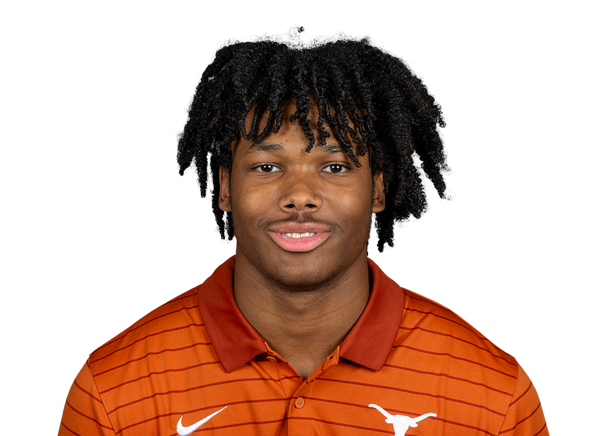
Toray Davis
 Texas
Freshman
Texas
Freshman
Bio
Recruiting
Scouting Report
Toray Davis is a 4-star Athlete from Thornton, CO (Fairview) in the 2026 class. Ranked No. 399 nationally, No. 13 at ATH, No. 1 in CO. Composite rating: 0.8969. Committed to University of Texas since December 1, 2025.
Physical Profile
Listed at 6-1, 197 lbs. Taller than 52% and heavier than 71% of 2026 Athlete prospects in the SEC Scouts database (150 with a listed size).
Play Style
Davis plays mostly as a middle-of-the-field safety who reads the quarterback and the route distribution and drives on throws. His habits as a receiver show up in how he tracks and attacks the ball at its highest point. Against the run he takes efficient angles and finishes in space, not just as the last line of defense, and he has a physical side that is uncommon for his build. He also has experience returning kicks, which gives him an early path onto special teams.
Strengths
- Range in pass defense: his highlights show him playing deep safety, reading passing concepts and covering a lot of ground from the middle of the field. 247Sports describes him as having 'a ton of range in pass defense with good ball skills.'
- Ball skills from his time as a receiver: he lined up at wide receiver and wingback for Fairview and was noted for natural hands and ability after the catch. That shows up on defense as a player who finds the football and turns pass breakups into interception chances.
- Open-field tackling and angles: Greg Biggins called him an 'excellent open-field' player. Other evaluators credit him with 'sharp, efficient angles to the football' and say he arrives in run support 'with violent intentions', which is uncommon for a lean, coverage-first safety.
- Processing and versatility: in spring 2026 at Texas he rotated at both safety spots while the room was banged up. Veteran DB Jelani McDonald publicly credited him with stepping up.
Areas to Improve
- Play strength and mass: at about 198 pounds he needs to get to 205-210 to take on pulling guards and big tight ends when he fills the alley at the SEC level, and to hold up physically over 12-plus games.
- Refining his defensive craft: he split time between receiver, wingback and returner in high school and was recruited as an 'ATH'. His eye discipline, pattern-matching technique and communication at the back end will develop further now that he plays defense only.
- Level of competition: Colorado 5A is a big step below Texas and SEC skill talent. His spring reps are encouraging, but he hasn't yet shown he can handle SEC speed on the tape that matters.
College Projection
Davis enrolled early at Texas and, as noted above, was already rotating at both safety spots during spring 2026 while the room dealt with injuries. The realistic role for his first season is special-teams coverage and return units plus rotational safety snaps, with a redshirt still possible. With another year of strength work, he projects as a competitor for a starting job in 2027 or 2028. His ability to play either safety spot gives Texas flexibility in a two-high structure. No verified 2026 regular-season playing data was found for this report.
NFL Outlook
He has a developmental Day 2-3 profile if things go well. NFL teams value a 6-1-plus safety with range, ball skills and willingness as a tackler, and Davis has said his goal is the NFL. Whether he gets there depends on adding mass without losing speed and turning his spring flashes into production against SEC competition. At this stage he is a college-development projection, not a draftable prospect yet.
Best Fit
Davis fits best in a two-high, split-safety scheme with a lot of disguise, like the Texas system under Steve Sarkisian and DBs coach Duane Akina, where range and processing on the back end are prioritized. He is most valuable as a free safety or as a safety who rotates between the deep half and the box. He should be in a program with a strong strength-and-conditioning track record that can add weight to his frame while he contributes on special teams early.
Player Comparison
Mathieu entered LSU at 5'9" 175 lbs with elite rankings despite questions about his exact position fit, eventually becoming a versatile defensive back who could play safety, nickel corner, and even linebacker packages. Like this prospect, Mathieu's high rating was based on pure football instincts and athleticism rather than prototypical size for any one position, making him a chess piece that elite programs coveted for his ability to impact multiple areas of the field.
Current Team
University of Texas