
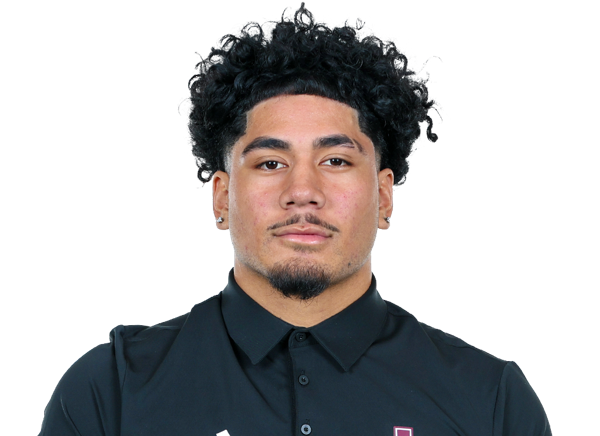
Samu Moala
 Texas A&M
Freshman
Texas A&M
Freshman
Bio
Recruiting
Scouting Report
Samu Moala is a 4-star Edge Rusher from Carson, CA (Leuzinger) in the 2026 class. Ranked No. 419 nationally, No. 88 at EDGE, No. 65 in CA. Composite rating: 0.8954. Committed to Texas A&M University since October 27, 2024.
Physical Profile
Listed at 6-4, 255 lbs. Taller than 54% and heavier than 91% of 2026 Edge Rusher prospects in the SEC Scouts database (169 with a listed size).
Play Style
He plays downhill and fast. As a high school inside linebacker he reads the play quickly, runs through gaps and finishes with bad intentions. He's at his best as a blitzer and on stunts, where his burst through the gap shows up. His effort on backside pursuit shows up all over his tape. He sometimes lined up on offense too, which says something about his ball skills and movement. Right now he wins with speed, angles and effort more than a refined rush plan. That profile tends to translate well to a stand-up edge or rush-end role once the technique catches up.
Strengths
- Productive in the backfield from off the ball: 193 tackles, 32.5 TFL, 18.5 sacks and 27 QB pressures over 40 games. A lot of that came from an inside linebacker spot, so his rush numbers should go up once he's attacking from the edge every snap.
- Finds the ball and finishes: evaluators point to his instincts and his knack for reaching the ball carrier with violent contact. That points to a high floor as a run defender and a special-teams player early on.
- Versatile, athletic frame: he played both ways, took Polynesian Bowl reps against elite competition, and carried 255 into college. A&M can use him standing up, with his hand down, or as a spy or drop player.
- Motor and competitiveness: Biggins singled out his motor and projected him as a Power 4 starter. It shows up in how often he's still chasing plays from the backside.
Areas to Improve
- Rush technique from a three- or two-point stance on the edge: because he played linebacker, his get-off, hand usage (chop, long-arm, cross-chop) and ability to bend the corner at the top of the rush are still raw. Most of his high school pressure came from blitzes and working through gaps, not beating a tackle one-on-one.
- Anchor and strength at the point of attack: he has to keep adding weight and play strength so college tackles and pulling guards can't wash him down on the edge. Year one in the weight room is a must.
- Plan and counters: he needs a primary rush move, a counter and a speed-to-power conversion. Right now he wins on effort and athleticism.
College Projection
Because he enrolled early and went through spring ball, he's ahead of most of his class. In 2026, expect special-teams snaps and rotational pass-rush work on obvious passing downs, with a redshirt possible under the four-game rule. His realistic path to regular rotation work is 2027, and to starting at defensive end or a hybrid rush position in 2028, depending on how well his rush plan comes along and whether he settles at 260-265 while keeping his burst.
NFL Outlook
He's a Day 2 or Day 3 NFL prospect if he develops. Long 6-4 edge players with linebacker instincts and real production get looked at as 3-4 outside linebackers or SAM/rush hybrids. To reach the top-100 range he'll need consistent SEC sack production, above-average testing (10-yard split and 3-cone) and proof he can set the edge against the run at 255-265. His versatility gives him a special-teams floor that helps a late-round case.
Best Fit
A multiple front that uses a stand-up rush end or Jack role and lets him attack upfield, drop into space sometimes, and use his linebacker instincts on stunts and games. That describes how Texas A&M is using its edge players now. A strong strength-and-conditioning program with a patient developmental timeline is what gets the most out of him.
Current Team
Texas A&M University