
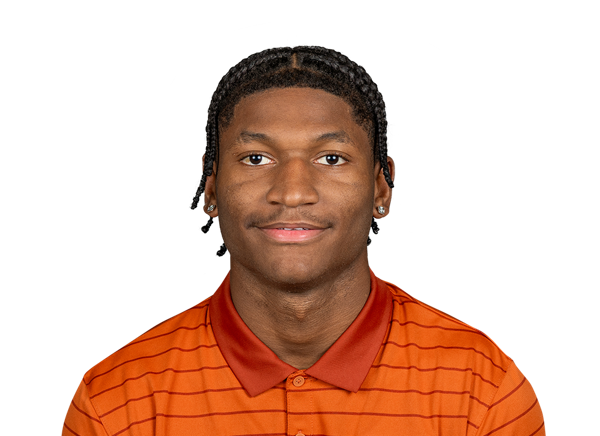
Chris Stewart
 Texas
Freshman
Texas
Freshman
Bio
Recruiting
Scouting Report
Chris Stewart is a 4-star Wide Receiver from Missouri City, TX (Shadow Creek) in the 2026 class. Ranked No. 345 nationally, No. 78 at WR, No. 88 in TX. Composite rating: 0.9015. Committed to University of Texas since June 24, 2024.
Physical Profile
Listed at 6-0, 184 lbs. Taller than 26% and heavier than 55% of 2026 Wide Receiver prospects in the SEC Scouts database (329 with a listed size).
Play Style
Stewart plays as a field-stretching speed receiver who wins with pure acceleration rather than size or physicality. At Shadow Creek he was used as a vertical threat and a runs-after-catch weapon: his 15-19 yards per catch reflects defenses giving him cushion and still losing on the deep ball. He also added occasional jet and gadget runs (3 carries for 57 yards and a TD as a junior). His return work shows he tracks the ball and hits a seam at full speed. On film he is most dangerous when he gets a free release, so motion, stacks and bunch alignments that keep him off the line suit his current skill set best.
Strengths
- Vertical speed: sub-10.7 100m that shows up on the field. He averaged 18.7 yards per catch as a sophomore (35-654) and 15.4 on 60 catches as a junior, big-play production that held up with a larger target share.
- Red-zone and scoring efficiency: 26 receiving touchdowns on 95 catches across his sophomore and junior seasons (roughly one TD every 3.7 receptions) against Houston-area 6A competition.
- Yards after the catch in space: evaluators note his acceleration and ability to outrun defenders in the open field, which makes him a natural fit for screens, jet motion and crossers.
- Return value: 3 kickoff returns for 112 yards and a 61-yard punt return in a shortened senior season give him a special-teams path to early playing time before he wins a receiver role.
Areas to Improve
- Play strength and release against press: at 175 pounds, SEC corners will try to jam him at the line. He needs to add mass and develop hand-fighting and stem work so his speed isn't cancelled out at the snap.
- Route tree and nuance: his production is built on vertical routes and plays in space. Sharper breaks on intermediate routes (digs, comebacks, option routes) will decide whether he is a situational deep threat or a full-time receiver.
- Durability and rust: the injury limited him to 5 senior games (18-291-1), so he lost a full year of development and live reps. Getting fully healthy and regaining his top speed is the first priority.
- Contested catches and blocking: his lean frame limits 50/50 wins and perimeter run blocking, both of which Sarkisian demands from his receivers.
College Projection
Expect a development year in 2026. He is coming back from an injury and entering a crowded, heavily recruited Texas receiver room, so a redshirt that uses the four-game limit on special teams and a few speed packages is the most likely path. By 2027 he projects as a rotational deep threat (the Z or slot role Sarkisian uses to stretch the field), with a realistic ceiling as a starter in 2028 if he adds 10-15 pounds and expands his route tree. Returns are his fastest route to the field.
NFL Outlook
As a 4-star with verified track speed, Stewart has the raw trait NFL teams draft for, but his current 6-0/175 build and limited route diversity make him a developmental Day 3 type rather than a projected high pick. His draft ceiling depends on three things: adding strength without losing speed, proving he can beat press coverage, and producing as a multi-year starter. If he tests at the Combine the way his 100m time suggests (a 4.3-range 40) and adds return value, he could fit as a speed slot/Z receiver and returner.
Best Fit
A spread or pro-spread offense with heavy pre-snap motion and a willingness to take vertical shots. Texas under Sarkisian is close to ideal: stacks, motion and play-action shots create the free releases his game needs, and a patient receiver room lets him build strength before he has to start. He would struggle more in a system that asks outside receivers to win one-on-one against press every snap or to block heavily in a gap-scheme run game.
Current Team
University of Texas