
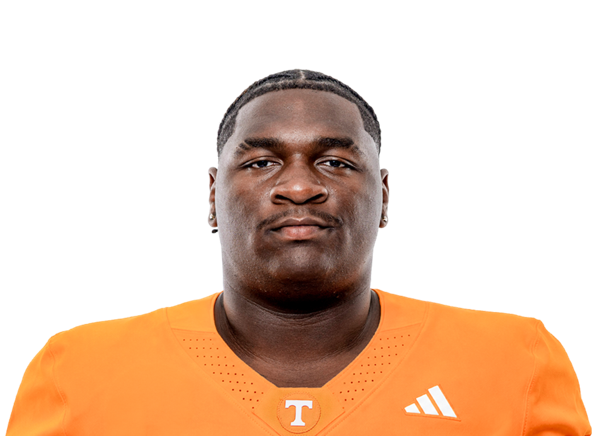
Dereon Albert
 Tennessee
Freshman
Tennessee
Freshman
Bio
Recruiting
Scouting Report
Dereon Albert is a 4-star Defensive Line from Jackson, MS (Jackson Academy) in the 2026 class. Ranked No. 396 nationally, No. 60 at DL, No. 24 in MS. Composite rating: 0.8971. Committed to University of Tennessee since June 30, 2025.
Physical Profile
Listed at 6-1, 309 lbs. Taller than 6% and heavier than 85% of 2026 Defensive Line prospects in the SEC Scouts database (227 with a listed size).
Play Style
He plays like a disruptive 3-technique or shaded nose tackle who attacks upfield. He stays low, fires off the ball and aims for the blocker's edge instead of reading the play first. He uses a quick hand swipe or a strong push to cross the blocker's face. When he gets stopped, he keeps his feet moving and chases, which explains his high tackle totals. He is at his best when he can shoot gaps, run twists and make plays in the backfield. He struggles more when asked to hold two gaps, absorb a combination block and stay put. His strong small-school production (Jackson Academy plays in the MAIS) should be weighed against the lower level of competition, which is partly why his Composite trails his camp reputation.
Strengths
- Quick first step into gaps: he plays as a one-gap penetrator, reacts fast to the snap and stays low. That produced 17 tackles for loss and 7 sacks in 2024, strong numbers for a 305-pound interior player.
- Active, violent hands and a strong upper body. Combined with his 34.5-inch arms, he can strike first, knock blockers' hands away and get off blocks instead of staying engaged. He dominated the one-on-one reps at an Under Armour camp near New Orleans.
- Proven, steady production: four years as a varsity starter, more than 300 career tackles, and 81 tackles in 2024. For an interior lineman, that shows unusual effort and range for his size.
- Can win several ways as a pass rusher. His film shows quickness, athleticism and power, and he fits stunts and twists well because he can loop inside or outside without losing balance.
Areas to Improve
- Conditioning and stamina. Ivins notes his range in pursuit drops as drives go on. Handling SEC snap counts at 300-plus pounds will require a real change in his body composition in Tennessee's strength program.
- Holding his ground against double teams. As a penetrator he is less proven at taking on combination blocks, and his short height makes it harder to anchor against 6-5 guards and centers. He also needs to control his aggressiveness, because it draws offside and hands-to-the-face penalties.
College Projection
He projects as a rotational interior lineman under Tennessee defensive line coach Rodney Garner. He fits best as a 3-technique or a moving nose tackle in pass-rush packages and on stunt-heavy downs. A realistic path is to redshirt or play a few series in Year 1 while his conditioning improves, earn a 15-25-snap rotational role in Year 2, and compete for a starting job in Years 3-4 if he can anchor against double teams. Ivins' comparison, a pocket pusher who can give valuable snaps to a College Football Playoff contender, is a fair middle-case outcome.
NFL Outlook
Day 3 upside with a lot of uncertainty. NFL teams usually want interior linemen closer to 6-3 and 6-4, but his 34.5-inch arms offset much of the height concern, and teams value interior pass rushers who get penetration. If he improves his conditioning and becomes a 30-35-snap-per-game player with 5-plus sacks in a season at Tennessee, he could be a late-round pick or priority free agent as a pass-rushing 3-technique. If he stays a pure one-gap player who cannot handle double teams, his path to the draft will be harder.
Best Fit
An attacking one-gap front, either a 4-3 under or a multiple front, that frequently moves its interior linemen and runs twists. Tennessee's aggressive front under Garner fits him well. He would be less effective in a two-gap 3-4 that asks its nose tackle to absorb double teams.
Current Team
University of Tennessee