
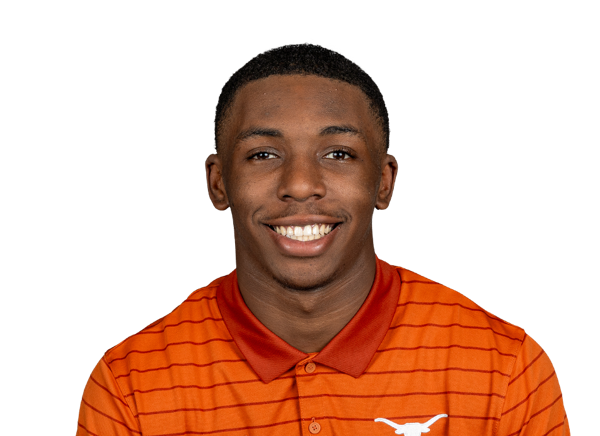
Hayward Howard Jr.
 Texas
Freshman
Texas
Freshman
Bio
Recruiting
Scouting Report
Hayward Howard Jr. is a 4-star Cornerback from New Orleans, LA (Edna Karr) in the 2026 class. Ranked No. 333 nationally, No. 57 at CB, No. 13 in LA. Composite rating: 0.9029. Committed to University of Texas since May 8, 2025.
Physical Profile
Listed at 6-2, 182 lbs. Taller than 78% and heavier than 77% of 2026 Cornerback prospects in the SEC Scouts database (204 with a listed size).
Play Style
He is a boundary corner who uses length to take away the sideline and wants to squeeze routes toward his help. In press he gets hands on receivers early and rides them into the boundary. In off coverage he reads the quarterback and uses his reach to close throwing windows instead of relying on pure recovery speed. He is at his best against vertical and fade concepts, where his height and catch-point timing matter most, and he shows a willingness to compete for the ball rather than just break up the play. His tackling and run support are functional but held back by his current weight.
Strengths
- Length at the line of scrimmage: his 6-2 frame and long arms let him jam and reroute outside receivers in press and disrupt release timing, which fits a boundary cornerback.
- Coverage versatility: evaluators credit him with being comfortable in zone (reading the quarterback from off or Cover 3/Cover 4 alignments) as well as in press-man, so he isn't locked into one call.
- Ball skills and catch-point play: 247Sports' commitment analysis highlights his 'playmaking ability,' and his reach lets him play through the receiver's hands on fades and back-shoulder throws.
- Tested against top competition: he started for an undefeated state-champion Karr program in Louisiana's deepest classification, which regularly faces future FBS receivers, so his production came against a high level of play.
Areas to Improve
- Add functional strength and mass: at about 175-184 lb he can be pushed off his spot by bigger receivers and struggles to shed blocks on perimeter runs and screens. He needs a full strength cycle before he can handle a heavy snap load.
- Hip fluidity and transitions as a tall corner: long corners typically lose ground on sharp breaking routes (slants, comebacks, digs) against quicker slot and 'Z' receivers. Keeping his pad level down and his feet efficient out of the pedal will decide whether he stays at outside corner or eventually moves to safety.
- Press patience and hand timing: length can become a crutch. He has to avoid lunging on the jam or grabbing downfield, because college officiating will flag the contact that high school officials let go.
College Projection
He enrolled at Texas in January 2026 and wears No. 21. The post-spring depth chart projected him as a backup boundary corner (CB3) behind Kade Phillips and Kobe Black, and I could not confirm any 2026 game snaps as of late September. The realistic path is special teams and spot defensive snaps in 2026, which could lead to a redshirt under the four-game rule. He would compete for a rotational outside corner role in 2027 and could start by 2028 once he has added about 10-15 lb. If his change-of-direction speed doesn't hold up against SEC receivers, his length, range and zone instincts make a move to safety a credible backup plan.
NFL Outlook
He is a Day 3 NFL Draft candidate with a Day 2 ceiling. NFL teams consistently value 6-2 corners with long arms, and if he reaches about 190-195 lb and shows he can run and turn with SEC receivers, his tools fit press-heavy schemes that ask outside corners to play the boundary with the play in front of them. What decides his draft stock will be his timed speed and his ability to change direction. If either measures below average, his more likely NFL projection is as a special-teams-first depth corner or a hybrid safety.
Best Fit
He fits best in a press-heavy defense with Cover 3/Cover 4 rules that keeps him on the boundary side of the field. There his length can reroute outside receivers and he can lean on sideline leverage and safety help, rather than being asked to mirror quick slot receivers in open space. Texas's defense, which already stocks long outside corners, is a sound schematic fit.
Current Team
University of Texas