
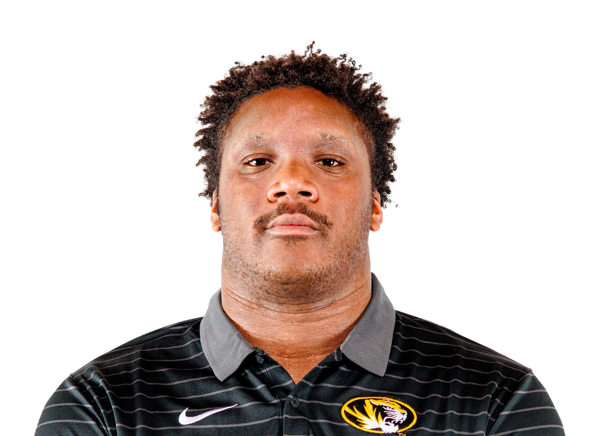
Tajh Overton
 Missouri
Freshman
Missouri
Freshman
Bio
Recruiting
Scouting Report
Tajh Overton is a 4-star Defensive Line from Owasso, OK (Owasso) in the 2026 class. Ranked No. 312 nationally, No. 62 at DL, No. 9 in OK. Composite rating: 0.9051. Committed to University of Missouri since October 16, 2025.
Physical Profile
Listed at 6-3, 284 lbs. Taller than 37% and heavier than 59% of 2026 Defensive Line prospects in the SEC Scouts database (227 with a listed size).
Play Style
Overton plays like an attacking one-gap penetrator. He fires off the ball low, gets into gaps before guards can set, and makes plays behind the line instead of absorbing blocks. His high tackle totals come from effort and range as much as penetration: he keeps working when his first move fails, redirects laterally and pursues to the sideline. He is most effective aligned in a shade or 3-technique where he can win with quickness. He is less of a two-gap, block-eating nose who relies on mass.
Strengths
- First-step quickness and penetration: 25 tackles for loss as a sophomore and 11 more as a senior (10 in the school's official count) show a player who lives in the backfield rather than just occupying blocks
- Lateral recovery and pursuit. When he is stopped at the line of scrimmage, he can redirect and run down ball-carriers in space, which shows up in unusually high tackle totals for an interior lineman (64 as a sophomore, 54-60 as a senior)
- Proven against top Oklahoma competition: an anchor on Owasso defenses that reached the 6A-I state title game in 2023 and 2025. Evaluators ranked him the top prospect in the state (247Sports at commitment; Griffin Media) and ESPN's No. 25 defensive lineman nationally
- Natural leverage. His height lets him win the pad-level battle against taller interior linemen and makes him hard to move off his spot in the run game
Areas to Improve
- Sack production (5 in each of his sophomore and senior seasons) trails his tackle-for-loss numbers. He wins with initial quickness but needs a developed secondary rush move, such as a club-swim or push-pull, to finish against SEC guards who stop his first step
- Anchor against double teams. At 275-284 lbs with average length he can get washed out by combination blocks, so strength development and consistent hand placement are the priorities before he can handle an every-down 1-technique job
College Projection
He is a true freshman in 2026. Missouri's roster lists no college statistics for him as of this report. Preseason analysis (SI/All Mizzou) projected him as a depth or rotational defensive tackle and gave him one of the best chances among Missouri's incoming freshmen to earn early snaps. The realistic path is situational rotation in 2026, a push for a starting interior job by 2027 once he reaches about 290-295 lbs, and a multi-year starter window after that. The risk case is limited early playing time behind veterans, which in the portal era can lead to a transfer.
NFL Outlook
Overton has Day 3 draft potential, with a mid-round ceiling if he develops. NFL teams value undersized, quick 3-technique tackles who can collapse the pocket, but his height and length will be discounted unless his college pass-rush production (pressures and sacks, not just run-game tackles for loss) clearly improves. Two or more years as a disruptive SEC starter at about 295 lbs would make him a legitimate draft prospect.
Best Fit
An attacking even-front, one-gap scheme that aligns him as a 3-technique or shade and asks him to penetrate rather than hold two gaps. Missouri's four-man front fits that profile. Programs that play a two-gap 3-4 nose, or need their interior linemen to absorb double teams, would waste his quickness and expose his lack of length.
Current Team
University of Missouri