
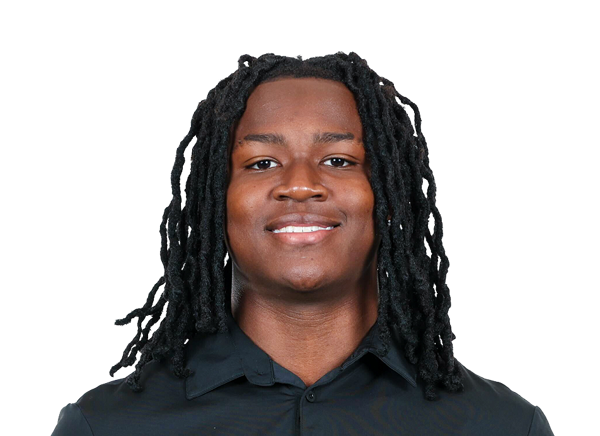
Chance Collins
 Texas A&M
Freshman
Texas A&M
Freshman
Bio
Recruiting
Scouting Report
Chance Collins is a 4-star Safety from Mansfield, TX (Mansfield Timberview) in the 2026 class. Ranked No. 246 nationally, No. 16 at S, No. 30 in TX. Composite rating: 0.9151. Committed to Texas A&M University since June 10, 2025.
Physical Profile
Listed at 6-1, 201 lbs. Taller than 54% and heavier than 93% of 2026 Safety prospects in the SEC Scouts database (200 with a listed size).
Play Style
Rangy, forward-leaning, ball-hawking safety who plays with offensive instincts. On film he is at his best reading the quarterback from depth and driving on throws, and he tracks the ball like the receiver he also was. Brooks noted he is comfortable coming forward, not just a center fielder, which is why A&M has tried him at nickel. He is more of a take-the-ball-away playmaker than a thumper today.
Strengths
- Ball skills and range over the top: 6 INT and 8 PBU as a junior show he finds the football and finishes. 247's Gabe Brooks singled out his work over the top.
- Sprinter speed in a 6-1 frame (10.76 / 21.16), so he can close from single-high depth, carry vertical routes from the slot, and make up for a false step.
- Receiver-quality hands and ball tracking from playing both ways: 23 catches for 423 yards and 5 TD as a senior (18.4 yards per catch). That shows up as high-pointing and adjusting to the ball on defense.
- Versatility across three phases. Brooks called him a 'flexible chess piece,' and he projects to deep safety, nickel and special-teams coverage units.
Areas to Improve
- Physicality near the line of scrimmage. His senior defensive production (42 tackles, 3 PBU, 1 FR) was modest, and he needs to show he can take on blocks from slot tight ends and pulling guards, then tackle through contact in run support as a nickel.
- Consistency and technique in man coverage from the slot. Much of his route recognition was built splitting time with offense, so footwork in press and trail technique against quick SEC slot receivers are the main development focus.
- Adding functional mass (target about 205+) while keeping the speed, so he can hold up over a full SEC season as a box-capable safety.
College Projection
He is already on the field in College Station as a January 2026 early enrollee. August 2026 camp reports had him 3rd or 4th in the nickel rotation behind Jordan Shaw and Bravion Rogers, and he was listed as a backup safety behind Dalton Brooks, Marcus Ratcliffe and Tawfiq Byard. Teammate Rueben Owens reportedly told Mike Elko that Collins is 'the truth.' Expect 2026 to be mostly special teams plus sub-package snaps, with a redshirt still possible under the four-game rule. His realistic path is a rotational nickel/safety role in 2027 and a starting job by 2028 once he adds mass and cleans up his man technique.
NFL Outlook
A Day 3 to mid-round prospect if he develops as projected. NFL teams value 6-1 defensive backs with sub-10.8 100m speed and interception production because they can play both safety and big nickel. Turning that into a real draft grade depends on showing he can tackle and cover in man at SEC level over two or more seasons as a starter. The ceiling is a starting-caliber hybrid safety. The floor is a special-teams core player with range.
Best Fit
A multiple, quarters- or split-safety defense that uses a big nickel or 'star' position and asks its safeties to rotate late. That describes Mike Elko's scheme at A&M, which rewards range, disguise and ball skills over pure box physicality. It is an excellent fit.
Player Comparison
Similar 6'0" 180-190 lb frame with exceptional football IQ and versatility that doesn't always translate to recruiting hype. Like Collins, Edelman was a 'coach's player' who maximized his skills through intelligence and adaptability, ultimately overperforming his recruiting profile through pure understanding of the game and ability to contribute in multiple roles.
Current Team
Texas A&M University