
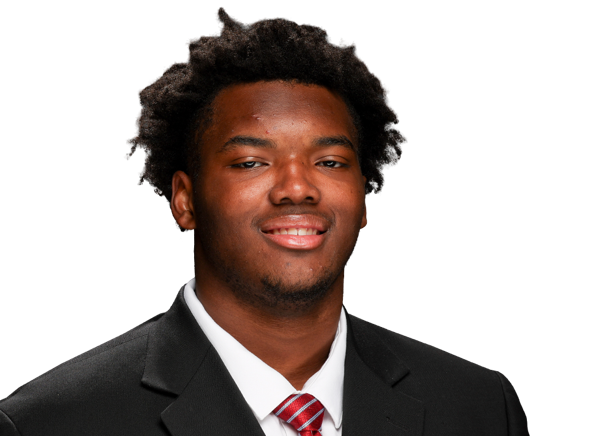

#73

Chris Booker

OL Alabama Alabama Freshman

Bio

Height 6'4"
Weight 285 lbs
Hometown Atlanta, GA
High School Hapeville Charter
Rating ⭐⭐⭐⭐

Recruiting

⭐⭐⭐⭐ Class of 2026
#221 National
#5 IOL
#14 State
0.9197 Rating

Scouting Report

A
92 / 100 Ceiling 92 • Floor 84
year 1 contributor NFL Rd 5

Chris Booker is a 6-foot-4, 285-pound interior offensive line prospect from Atlanta's Hapeville Charter who committed to Alabama on Feb. 20, 2025 — the Tide's first offensive lineman and second overall pledge in the 2026 class — and shut his recruitment down that June after an official visit. He played left tackle and defensive line in high school, and every major service graded him a four-star with a composite in the .9197 range, projecting him inside to guard at the next level. The evaluation is a bet on movement skill and positional versatility over present-day power: he is one of the more agile linemen in the class, but arrives with a frame that still needs 20-plus pounds of functional mass.

Physical Profile

At 6-4, 285 he is built like a college guard who hasn't finished the build yet — good natural width and a frame that has already absorbed weight from his two-way high school days without losing movement. The height is a fit for the interior rather than tackle: at 6-4 he lacks the length most SEC programs want on the edge, which is precisely why 247Sports lists him as an IOL despite his playing left tackle for Hapeville Charter. His athletic profile is the separator — nimble feet, real range in space, and the change of direction to pull and climb, traits that show up on tape more consistently than raw anchor strength. The DL background explains the hand quickness and the mean streak; it also explains why his pass-set footwork is less refined than a career offensive lineman's. Weight is the gating measurable: 285 pounds is playable at high school tackle but light for SEC interior line, where he'll be asked to absorb 320-pound nose tackles on down blocks and short-yardage.

Play Style

A move-and-finish blocker rather than a maul-and-displace one. On film his best reps are pulls and second-level climbs, where his feet and body control let him get square and stick on a linebacker in space — he is genuinely comfortable blocking on the move, which is rare at 285 pounds in a high school interior lineman. He's aggressive and finishes, carrying a defensive lineman's edge into the offensive side. The recurring inconsistency is pad level: he wins with athleticism and effort at the high school level and doesn't always need to bend, so he gets upright at the point of attack and lets defenders into his frame. In pass protection he mirrors well laterally and recovers with quickness rather than resetting with technique — effective now, but a habit that gets punished by SEC interior rushers with a two-way go.

Strengths

  • Elite movement skill for the position — he is among the more agile offensive linemen in the 2026 class, with the foot quickness to pull, reach-block, and climb to the second level, then actually adjust and fit on a moving linebacker rather than whiffing in space.
  • Four-position flexibility. 247Sports' evaluation credits him with legitimate four-position flexibility and significant long-term upside; he has real reps at left tackle and on the defensive line, so he understands leverage from both sides of the ball and can be cross-trained at guard and center without starting from zero.
  • Play temperament and finish. Evaluators consistently note a mean streak — he plays through the whistle and looks to finish, which is the trait that lets a lighter lineman survive early in a power conference while the weight room catches up.
  • Recruiting validation across services. Alabama offered on Feb. 2, 2025 — one day after his Junior Day visit — and he still held offers from Georgia, Florida, Kentucky, Mississippi State and Ole Miss (Lane Kiffin extended one and got him to Oxford for an official visit in June 2025) months after he was already committed. Programs kept recruiting a locked-in commit, which is the market's honest grade on him.

Areas to Improve

  • Pad level in the run game. This is the single most cited flaw on his tape — he plays too tall too often, especially on down blocks and at the point of attack. At 6-4 he has the natural leverage advantage to fix it, but a high-hat lineman against SEC 3-techniques gets displaced regardless of how well he moves.
  • Functional playing weight and anchor. He needs to add roughly 20-25 pounds of good mass to hold up as an interior starter; power-rushing 3-techniques and bull-rushing nose tackles will test an anchor that hasn't been stressed by high school competition.
  • Pass-set technique and hand placement. The DL background and left tackle reps mean his pass protection is currently athlete-driven rather than technique-driven — hand timing, punch placement, and set depth inside (where the reaction window is far shorter than at tackle) all need coaching reps.
  • Interior-specific assignment work. Moving from LT to guard/center means learning combo blocks, double-team-to-linebacker climbs, and (if he's tried at center) protection calls — all new job responsibilities, not just new footwork.

College Projection

Developmental redshirt year, then a competition window in years two and three. Booker arrives in Tuscaloosa (roster No. 73) as a body that needs the strength program before it needs the depth chart — expect a redshirt in 2026 with scout-team reps at guard and possibly center, given his athleticism fits a center's climb-and-cutoff responsibilities. The realistic best case is a rotational interior role as a redshirt sophomore and a starting job as a redshirt junior; the honest read is that he is a developmental piece, not a ready-made starter, and Alabama recruited him that way. One complication worth tracking: Chris Kapilovic, the offensive line coach who offered and recruited him, is no longer at Alabama — he parted ways with the program and joined Auburn's staff as an analyst in February 2026. Booker signed anyway and enrolled, but he will develop under a coach who didn't evaluate him, which historically matters for technique-project linemen more than for finished ones.

NFL Outlook

Draft-eligible upside, but a long runway. The athletic traits — space blocking, pull ability, four-position flexibility — are exactly what NFL teams pay for in a swing interior lineman, and versatility across guard and center is a roster-value multiplier at the pro level. The projection depends entirely on two things resolving: whether he carries 310-plus pounds without losing the movement skill that makes him interesting, and whether the pad level gets coached out. If both land, a Day 2/Day 3 interior projection after a four- or five-year college development arc is reasonable. If the weight comes on and the quickness goes with it, he's a college starter and a priority free agent. At a .9197 composite he is on the fringe of the four-star band, not in the blue-chip tier where early-round outcomes are the baseline — this is a trait bet, not a pedigree bet.

Best Fit

A zone-heavy or gap-scheme-with-pullers offense that puts him in motion instead of asking him to be a phone-booth road grader on early downs. Outside/mid zone maximizes his reach-block ability and second-level climbs; a heavy power/duo run identity that asks him to displace a nose tackle vertically is the worst-case assignment for his current mass. He also needs a program with a proven interior-line development track and a mature strength staff — a redshirt-and-build environment, not a play-a-true-freshman-out-of-necessity depth chart. Alabama fits the development infrastructure well; the scheme fit will depend on the offensive coordinator's run identity by the time he's competing for snaps in 2028.

Player Comparison

Landon Dickerson Alabama • Philadelphia Eagles 88% match

Landon Dickerson shares a similar recruiting profile as a highly-rated prospect who played tackle in high school but was projected to move inside. Both are known for their positional versatility, leadership, and aggressive, tone-setting playing style on the offensive line. Dickerson, like Booker, was identified as a cornerstone-type player with the physicality to dominate at the point of attack.