
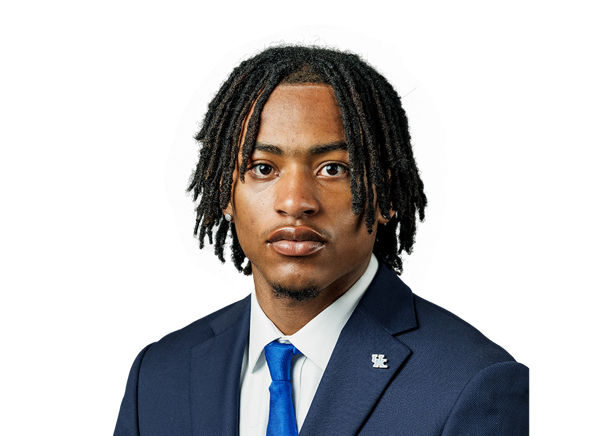
Andre Clarke
 Kentucky
Freshman
Kentucky
Freshman
Bio
Recruiting
Scouting Report
Andre Clarke is a 4-star Cornerback from Richmond, VA (Hermitage) in the 2026 class. Ranked No. 249 nationally, No. 72 at CB, No. 15 in VA. Composite rating: 0.9145. Committed to University of Kentucky since January 5, 2026.
Physical Profile
Listed at 6-1, 176 lbs. Taller than 57% and heavier than 58% of 2026 Cornerback prospects in the SEC Scouts database (204 with a listed size).
Play Style
A coverage-first defensive back who is most comfortable with his eyes on the receiver or the quarterback, not playing near the line. At corner he uses his length to crowd the catch point and smooth hips to stay with routes in transition. At safety he projects best as a two-high defender or a big nickel who can carry a vertical route from a slot receiver or tight end. His versatility lets a defense disguise coverages, rotating him down or leaving him deep without a substitution. Specific tackling, run-fit and statistical film data from his senior season were not found in available sources, so his physicality against the run is the least-documented part of his game.
Strengths
- Coverage versatility: he took real reps at both corner and safety at Hermitage, so he arrives able to play outside, in the slot and on the back end. That flexibility matters in a DB room that has to match up with SEC spread offenses.
- Length at the catch point: a 6-1/6-2 frame with long arms lets him break up passes he doesn't reach first and play the ball in the air from Cover 3 and quarters alignments. Evaluators called him 'a potential coverage ace with a longer frame'.
- Validated by elite programs: ESPN 300 #101, #15 CB nationally, 31 offers, and an early signing with Michigan. The staffs that know him best rated him as a starter-caliber Power 4 defensive back, not a developmental add.
Areas to Improve
- Play strength and weight: at about 170-175 pounds he has to gain mass to fit the run as a safety, shed blockers from receivers and tight ends, and handle the physical toll of SEC play. His first year in the strength program is the key to how fast he gets on the field.
- Committing to one position: splitting reps between corner and safety in high school means his reads and eye discipline at safety (reading the quarterback and route combinations, run/pass keys, communicating the coverage call) are less developed than a full-time safety's. Expect a learning curve on disguise and rotation.
College Projection
Projects as a safety at Kentucky, with corner and nickel reps as a secondary option. As the top-ranked signee in a first-year staff's class, he should have a real chance to play in 2026, probably first on special teams and in sub-package defense (dime, or covering tight ends on third down). A realistic path is a rotational role as a freshman in 2026, pushing for a starting job in 2027 once he's around 190 pounds, and becoming a multi-year starter from there. How fast he gets on the field depends mostly on weight gain and learning the safety position's calls and responsibilities.
NFL Outlook
As a four-star with an ESPN 300 profile, he has a legitimate NFL path. Tall, rangy safeties who can cover slot receivers and tight ends in man coverage are highly valued in today's NFL. If he fills out to 195-200 pounds while keeping the fluidity from his corner reps, and produces as a multi-year SEC starter, he projects as a Day 2-3 pick, with more upside if he shows ball production and range. The main risk is that he stays a light, coverage-only defender who can't hold up near the box, which would cap him as a late-round or priority free-agent sub-package player.
Best Fit
A defense that plays mostly two-high coverages (quarters, Cover 2 and Cover 6) and asks its safeties to cover man-to-man in space, not fill the box as an eighth run defender. Kentucky's SEC schedule against spread offenses fits him well. His ideal use is as a disguise piece who lines up deep and rotates down, or as a big nickel matched up on tight ends. A staff with a strong strength program and patience for a year of physical development will get the most out of him.
Player Comparison
Edelman shared a similar compact 6'0" 200lb frame with excellent instincts and competitive drive that allowed him to excel despite not being a prototype at any single position. Like this prospect, Edelman was highly productive at the college level but flew somewhat under the radar nationally due to playing at a smaller program, demonstrating the football IQ and versatility that made him valuable in multiple roles.
Current Team
University of Kentucky