
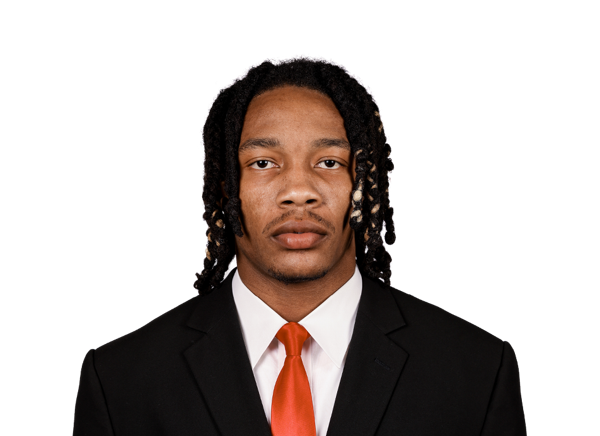
Ryan Mosley
 Georgia
Freshman
Georgia
Freshman
Bio
Recruiting
Scouting Report
Ryan Mosley is a 4-star Wide Receiver from Carrollton, GA (Carrollton) in the 2026 class. Ranked No. 227 nationally, No. 48 at WR, No. 37 in GA. Composite rating: 0.9179. Committed to University of Georgia since May 27, 2025.
Physical Profile
Listed at 6-2, 205 lbs. Taller than 58% and heavier than 92% of 2026 Wide Receiver prospects in the SEC Scouts database (329 with a listed size).
Play Style
Mosley plays like a big-framed 'X' receiver. He works back-shoulders, fades and in-breaking routes where he can use his body to box out defenders, and he is aggressive with the ball in the air. He is dangerous after the catch on vertical routes: his 18.2 yards per catch as a senior show he was more than a short-route possession target. Scouts describe a receiver who builds speed quickly rather than exploding off the line, who gets off press with his hands and strength, and who stays involved as a blocker. SI also credits him with the ability to line up both outside and in the slot, where his size creates mismatches against nickel defenders.
Strengths
- Wins at the catch point: 247Sports' evaluation says he uses his body to shield defenders from the ball, which makes him a reliable target on fades, back-shoulders and contested throws in the red zone. He scored 27 career touchdowns.
- Beats press coverage: the upper-body strength that helps him at the catch point also lets him get off the line against press-man coverage, an unusual trait for a high school receiver his size.
- Ball tracking and body control: SI/Dawgs Daily grade his ball tracking as a standout trait and note that he adjusts his body to poorly placed throws and still finishes the catch.
- Proven production against top competition: 31-471-7 as a sophomore, 55-848-12 as a junior (on a team that reached the state final in Georgia's largest classification), and 47-855-8 as a senior (18.2 yards per catch) for a 13-0 team that reached the 6A semifinals. He finished with 2,237 yards over 43 varsity games.
- Willing blocker and competitor: scouts say he moves cornerbacks in the run game and keeps fighting when engaged, which matters in Georgia's run-first offense.
Areas to Improve
- Separation speed: he gets open mostly through size and physical play rather than pure speed. Against SEC corners he has to prove he can stretch the field vertically and create space on deep routes, not just win contested catches.
- Route-running detail at the next level: SI praises his crispness, but big high school receivers usually need work on sinking their hips, breaking out of cuts at the top of routes, and staying efficient at the line against college-level patient press corners.
- Adding strength and weight: moving from about 206 to 215+ pounds would help him hold up physically on the boundary and in Georgia's demanding blocking assignments.
College Projection
He signed with Georgia in December 2025 and is a true freshman in 2026, competing in a deep receiver room coached by James Coley. The most likely path is special teams and limited rotational snaps in Year 1, possibly a redshirt, and a real contribution as a boundary receiver in the rotation in Year 2 once he adds strength. A starting role is realistic by Year 3 if his play speed improves. Georgia's interest in him as a nickel safety gives him a backup path to the field if the receiver depth chart stays crowded.
NFL Outlook
As a high-end four-star with SEC-starter size, Mosley has a realistic NFL path if he develops. Big receivers who win contested catches and block well fit the NFL's 'X' receiver role, and he has most of the tools. His draft stock will depend on whether he shows enough speed and separation in college. If he tests well and becomes a productive starter by Year 3 or 4, he projects as a Day 2 or early Day 3 pick. If his speed stays average, he is more likely a late-round or priority free-agent possession receiver who survives through special teams and blocking.
Best Fit
A pro-style, play-action offense that uses a big boundary 'X' receiver on vertical routes, back-shoulder throws and red-zone fades, and that values receivers who block. That describes Georgia's system under Kirby Smart. A physical, run-first SEC or Big Ten offense with time to develop him in the strength program gets the most out of his size, toughness and contested-catch ability.
Player Comparison
Carter was a similarly-sized versatile defender (6'2", 215 lbs) who committed to Georgia as a highly-rated recruit (#201 nationally in 2014) without a clearly defined position. Like this prospect, he had the athletic traits and frame that allowed Georgia coaches to develop him into a hybrid linebacker/edge rusher role, ultimately becoming a productive NFL player through positional flexibility and raw athletic ability.
Current Team
University of Georgia