
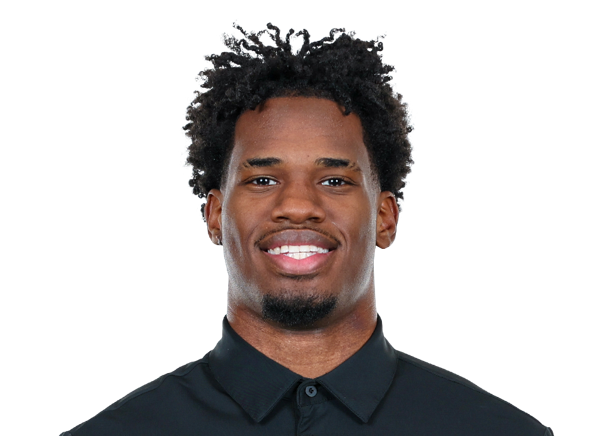
Camren Hamiel
 Texas A&M
Freshman
Texas A&M
Freshman
Bio
Recruiting
Scouting Report
Camren Hamiel is a 4-star Safety from Detroit, MI (Desert Edge) in the 2026 class. Ranked No. 164 nationally, No. 26 at S, No. 5 in AZ. Composite rating: 0.9343. Committed to Texas A&M University since June 3, 2025.
Physical Profile
Listed at 5-10, 180 lbs. Taller than 4% and heavier than 24% of 2026 Safety prospects in the SEC Scouts database (200 with a listed size).
Play Style
On film he plays downhill and aggressively. He triggers quickly on run keys, beats blockers in space to fill alleys, and times slot blitzes well, which explains his tackle-for-loss and sack totals. In coverage he is more comfortable playing with his eyes on the quarterback in zone, where he can drive on throws, than turning and running in press man. His transfer path (Detroit to Northrop in Fort Wayne, IN, to Desert Edge) put him in several defensive systems, and he held up in a state-title run. He plays with energy and physicality that coaches trust on special teams right away.
Strengths
- Production near the line of scrimmage: as a senior he had 72 tackles, 15.5 tackles for loss, 3 sacks and 2 forced fumbles. Those are unusual numbers for a defensive back and show real instincts as a blitzer and run defender from the slot.
- Ball skills and big-game history: he had 50 tackles and 3 interceptions (one returned for a touchdown) as a junior on a 5A Arizona state-title team. His career totals were 158 tackles, 21.5 tackles for loss and 4 interceptions.
- Versatility: evaluators say he can play corner, safety and nickel. Recruiting services ranked him at cornerback, then 247 moved him to safety (No. 15 S), and A&M lists him at nickel. That fits a defense that disguises coverages and matches personnel.
- Physical toughness and tackling: he closes fast and finishes plays, and he was used as an offensive weapon too (13 carries, 126 yards, 1 TD as a senior). 247's scouting report compared him to Kamren Kinchens.
Areas to Improve
- Man coverage against quick slot receivers: most of his senior production came as a blitzer and run defender. He needs to show he can stay with SEC slot receivers on option routes and two-way go's without the help of his high school pressure calls.
- Size and matchups: at 5-10, bigger slot receivers and move tight ends can shield him out on contested catches. He needs good technique at the catch point and good leverage to make up for less length.
- Learning the defense: he is still learning A&M's coverage checks and match rules as a true freshman in a crowded nickel room.
College Projection
He opened 2026 as the fourth-string nickel on the Week 1 depth chart, behind Jordan Shaw, with Bravion Rogers and Deyjohn Pettaway also in the rotation. A realistic plan is special teams plus some sub-package snaps in 2026 (a redshirt is possible), a push for the No. 2 nickel role in 2027, and a starting job at nickel or a hybrid safety spot by 2028. His development in man coverage decides whether he is a full-time nickel or a box safety.
NFL Outlook
247's projection is Day 3 of the draft. The NFL increasingly values slot defenders who can blitz and play the run (the Kinchens-type profile), but his measured 5-10 height limits him to nickel or safety. If he produces as a starting SEC nickel and shows he can cover, he projects as a mid-to-late-round pick who can also help on special teams. If his coverage stalls, he is more likely a priority free agent who makes a roster on special teams.
Best Fit
A multiple, pressure-heavy defense that treats the nickel as a starter, not a fifth defensive back: a star/nickel role that blitzes, fills against the run and plays zone match coverage. Texas A&M's defense and dedicated nickel coaching fit him well. He would be a poorer fit in a system that needs a long corner on an island or a single-high free safety.
Player Comparison
Both players share a similar compact frame at 5'11" with exceptional versatility that allows coaches to use them in multiple roles. Renfrow was also a highly-rated recruit who maximized his athletic ability through intelligence and precise route-running, demonstrating the type of football IQ that translates high school success into college production despite not having elite size or speed measurables.
Current Team
Texas A&M University