
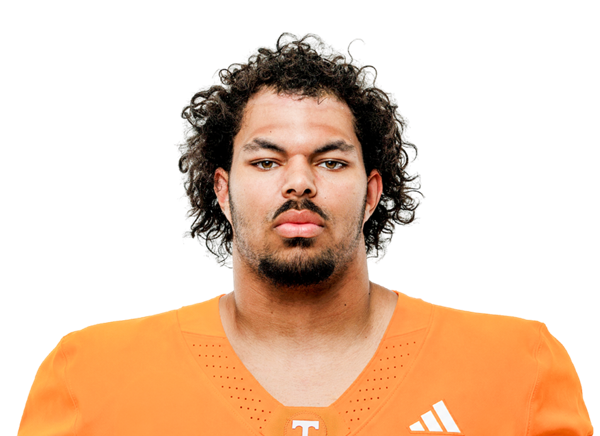
Kamari Blair
 Tennessee
Freshman
Tennessee
Freshman
Bio
Recruiting
Scouting Report
Kamari Blair is a 4-star Offensive Tackle from Clarksville, TN (Kirkwood) in the 2026 class. Ranked No. 157 nationally, No. 15 at OT, No. 6 in TN. Composite rating: 0.9364. Committed to University of Tennessee since August 20, 2025.
Physical Profile
Listed at 6-6, 290 lbs. Taller than 42% and heavier than 43% of 2026 Offensive Tackle prospects in the SEC Scouts database (182 with a listed size).
Play Style
An aggressive, finishing left tackle who moves well. Given his pancake totals, he plays with a nasty streak: he runs his feet on contact and chases the block to the ground rather than just walling off. He is most dangerous on the move, reaching on outside zone, climbing to linebackers and working on screens and perimeter runs. In pass protection he relies on length and quick feet more than polished hand usage, which works at the prep level but needs tightening. He brings a defensive lineman's understanding of how rushers attack a tackle's set.
Strengths
- Finishes blocks consistently: 56 pancake blocks with a 90% blocking grade at left tackle as a junior, then 77 pancakes in the senior regular season. He plays through the whistle and puts defenders on the ground.
- Athletic ceiling from his tight-end background: his feet, balance and range fit a zone-heavy, tempo scheme that asks tackles to reach, climb to the second level and block in space
- Durable and experienced on the blind side: 33 straight starts at left tackle over two seasons, plus two-way work on the defensive line. As a senior he was a Class 5A Mr. Football semifinalist and led Kirkwood to 9-3 and the school's first TSSAA playoff win.
- Long frame and wide wingspan for his size, which lets him ride edge rushers past the pocket and win reps with reach before technique catches up
Areas to Improve
- Play strength and anchor: he is still growing into a lineman's body, so bull rushes and heavy interior players can move him back. A full year in a college strength program is the main thing he needs.
- Pass-protection technique against better competition: Kirkwood's schedule did not test him with SEC-level speed-to-power rushers. He needs a more consistent pass set, better-timed hands and fewer reps where he wins only on length.
- Pad level and leverage: as a tall, long tackle he tends to play high when tired or when run blocking at the point of attack
College Projection
He enrolled early at Tennessee in January 2026, which gave him spring practice and a summer in the strength program. He is best viewed as a redshirt candidate in 2026 who can use up to four games of eligibility while adding mass. A reasonable timeline is swing tackle or top backup by 2027, and a legitimate chance to start at tackle in 2028 as a redshirt sophomore if the weight gain goes as planned. Tennessee OL coach Glen Elarbee drove the flip, so he has a direct investment in developing Blair. If he doesn't fit at tackle, he has enough length and movement to fall back to guard.
NFL Outlook
He has Day 2 or Day 3 potential if he reaches about 310 lbs and keeps his movement. NFL teams pay for long, athletic left tackles with high school tight-end movement skills, and Blair checks the length and athleticism boxes today. His draft stock depends almost entirely on strength development and on proving over two-plus seasons of SEC starts that he can anchor against power. A 2029 or 2030 draft window is realistic if he becomes a multi-year starter.
Best Fit
A zone-based, up-tempo spread offense that values athletic, long tackles who can reach, climb and protect in space over pure road-graders. That makes Josh Heupel's Tennessee offense a near-ideal fit. A patient program with a strong strength staff and a development runway suits him better than one needing an immediate plug-and-play starter.
Player Comparison
Blair's 6'6" 280-pound frame and elite recruiting profile (#137 nationally, 4-star) mirrors Barnett's physical tools and pedigree when he was a top Tennessee recruit. Both possess the versatile size that could translate to multiple positions along the defensive line, with the combination of length and athleticism that made Barnett a consistent pass rusher at Tennessee before becoming a first-round NFL pick.
Current Team
University of Tennessee