
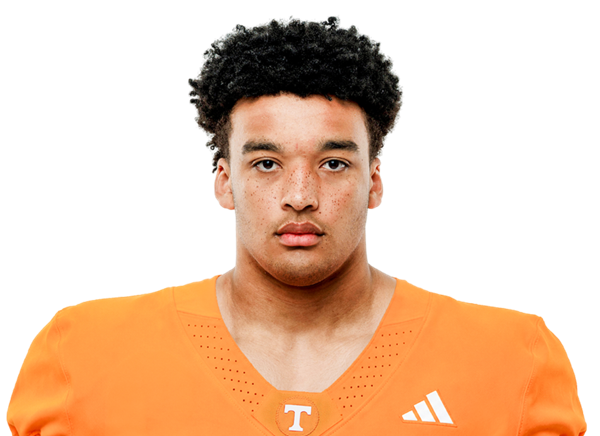
Carter Gooden
 Tennessee
Freshman
Tennessee
Freshman
Bio
Recruiting
Scouting Report
Carter Gooden is a 4-star Edge Rusher from Marion, MA (Tabor Academy) in the 2026 class. Ranked No. 106 nationally, No. 14 at EDGE, No. 1 in MA. Composite rating: 0.9544. Committed to University of Tennessee since December 2, 2025.
Physical Profile
Listed at 6-4, 267 lbs. Taller than 54% and heavier than 98% of 2026 Edge Rusher prospects in the SEC Scouts database (169 with a listed size).
Play Style
Gooden plays with a disruptor's mentality. He attacks upfield off the snap, shoots gaps and shows up in the backfield more often than he two-gaps. The senior highlight reel is heavy on penetration: tackles for loss on runs, quick pressures from the edge and interior, and backside pursuit where he runs down ball carriers. He uses his upper-body strength to shed quickly once engaged instead of stacking and reading, and his motor stays high late in plays. Tabor moved him around the front, and he looks comfortable both standing up and with his hand in the ground. The downside of that aggressive style is that he can rise out of his stance and play high, and some reps show him winning on athleticism more than on a set plan.
Strengths
- Explosive first step: Ivins calls him a 'pesky big man with an explosive first step.' He wins off the snap and gets into the backfield before blockers settle, which shows in 29 tackles for loss as a junior in 2024.
- Production and honors: 2024 ISL Defensive Player of the Year (49 tackles, 29 TFL, 7 sacks, 2 forced fumbles) and 2025 New England Lineman of the Year. He anchored back-to-back New England championship teams at Tabor.
- Can line up across the front: he is effective from a wide 5-technique, a 4i and inside at 3-technique. That lets a staff move him around by down and distance instead of locking him into one spot.
- Relentless pursuit: he is a natural playmaker who penetrates the pocket and 'patrols the cleat line.' He chases plays down the line and plays through the whistle.
- Late-starter upside: he has been playing football for a short time, and his strong fundamentals relative to experience and his multi-sport athleticism suggest a steeper development curve than a typical 4-star lineman.
Areas to Improve
- Pad level: he plays tall, especially as a bull rusher and when anchoring against double teams. Against college guards and tackles that exposes his chest and costs him leverage. Ivins lists this as a top development item.
- Technique and pass-rush plan: his production comes mostly from quickness and effort against New England prep-school competition. He needs a counter off his first move, tighter hand usage (club-rip, long-arm, swim timing) and cleaner block reads to beat SEC tackles once he can't win on speed alone.
- Level of competition and strength base: Tabor's ISL/NEPSAC schedule is well below Southeastern high school football. He will need a full strength-and-conditioning cycle to anchor against 320-lb SEC linemen at his playing weight.
College Projection
In 2026 he projects as a rotational piece or redshirt candidate while he adds strength and gets coaching on technique. He could see snaps in specific pass-rush packages or on special teams. Most likely he plays heavier in the Tennessee rotation by 2027 as a strongside end or big edge who kicks inside on third down, with a realistic path to a starting job in 2027-2028. His ceiling is a movable disruptor in the style of 247's comparison, Akheem Mesidor of Miami, who produces pressure from several alignments. How fast he gets there depends mostly on fixing his pad level against SEC blockers.
NFL Outlook
247 projects him as a Day 2 (rounds 2-3) prospect with NFL upside. The traits that translate are his first-step explosiveness, his versatility across the front and a still-rising development curve. For that projection to hold, he needs to settle at a playing weight (about 275-285 as a big end or 3-technique), develop a real pass-rush plan, and turn his high school TFL numbers into consistent SEC pressures and sacks. If he develops as scouts expect, a 2029-2030 draft window as a multi-alignment defensive lineman is realistic. If he doesn't, he projects as a solid multi-year college starter and a late-round or priority free-agent option.
Best Fit
An attacking, one-gap front that moves its linemen by situation fits him best: an even or multiple front where he plays strongside end on early downs and slides to 3-technique on passing downs. Tennessee under Tim Banks, which values penetration and rotates heavily up front, fits his skill set well. He would be less effective in a two-gap, read-and-react 3-4 that asks him to absorb double teams at nose or 4-technique, because that takes away his quickness. A staff that can develop his hands and pad level while using his motor right away will get the most out of him.
Player Comparison
Jack was similarly recruited as a versatile athlete with an unknown primary position, ultimately playing both linebacker and running back at UCLA due to his exceptional athleticism and football IQ. Like Gooden, Jack's elite ranking despite positional ambiguity stemmed from his rare combination of size (6'1", 245 lbs), speed, and ability to impact multiple phases of the game, making him a coveted prospect who could excel wherever coaches deployed him.
Current Team
University of Tennessee