
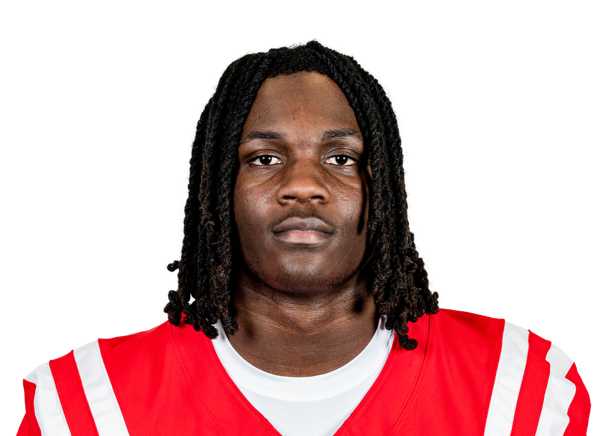
Damarius Yates
 Ole Miss
Freshman
Ole Miss
Freshman
Bio
Recruiting
Scouting Report
Damarius Yates is a 4-star Running Back from De Kalb, MS (Kemper County) in the 2026 class. Ranked No. 140 nationally, No. 11 at RB, No. 8 in MS. Composite rating: 0.9422. Committed to University of Mississippi since May 3, 2025.
Physical Profile
Listed at 5-10, 195 lbs. Taller than 30% and heavier than 46% of 2026 Running Back prospects in the SEC Scouts database (138 with a listed size).
Play Style
Yates is a one-cut, downhill zone runner who gains speed quickly after his plant step. He presses the line, reads the first down lineman, and either hits the crease or bounces it outside with enough speed to win the corner. That is why sweeps and counters worked so well for him. For his size he runs with forward lean and uses his mass to finish runs instead of dancing. In the pass game Kemper County split him out and threw him the ball rather than using him only on checkdowns, as his 14.6 yards per catch show. On returns he shows the same traits: quick decisions, burst through the first seam, and home-run speed once he clears the second level.
Strengths
- Big-play efficiency: 10.2 yards per carry as a junior (1,339 yds, 15 TD) and about 10.0 as a senior (209 carries, 2,080 yds, 30 TD). Averaging double digits in back-to-back seasons shows repeatable explosiveness, not a few long runs padding the numbers.
- Pass-catching: 31 catches for 453 yards (14.6 per catch) and 4 TDs as a junior, and 1,025 receiving yards with 10 TDs over his career. He has soft hands and can run routes from the backfield, which gives him legitimate three-down potential.
- One-cut decisiveness: scouting reports credit his vision to press the zone, plant, and go north-south, and his anticipation to bounce runs outside on sweeps and counters. That fits the zone-read concepts Ole Miss runs.
- Return value: he scored on both kickoff and punt returns as a junior with a 28.2-yard kickoff average. That special-teams skill can get a freshman on the field early.
- Makeup and stability: he stayed committed through a head coach departure, credited RB coach Kevin Smith, and enrolled early for spring ball. All of that points to a player who will absorb coaching and get in the rotation fast.
Areas to Improve
- Pass protection and play strength: at about 190 pounds, picking up blitzes against SEC linebackers will be the biggest barrier to third-down snaps. He needs a full year of strength work and better blitz-recognition technique, especially squaring up and anchoring instead of cut-blocking.
- Competition level: much of his production came against small-classification Mississippi defenses, where he was usually the best athlete on the field. His contact balance and patience behind blocks have not yet been tested against SEC-speed pursuit, where bouncing outside closes much faster.
- Ball security and pad level with heavier volume: backs his size who carried 200+ times in high school need to show they can protect the ball in traffic and finish runs low when the first defender arrives at full speed.
College Projection
He enrolled early and went through 2026 spring drills behind Kewan Lacy, whose running style Yates describes as similar to his own. Expect a year-one role as a change-of-pace back and special-teams returner, with limited carries until his pass protection earns third-down trust. The redshirt rule allows up to four games without using a year of eligibility, which gives the staff flexibility. His most likely path is to become the 1A/1B back by his second or third season once Lacy moves on, after adding 10-15 pounds. His ceiling is a full three-down SEC starter, and his receiving skill gives him a higher floor than a pure between-the-tackles runner.
NFL Outlook
He is a mid-round NFL candidate if he gets to about 200-205 pounds and holds his speed. The league values backs who can catch passes, return kicks, and run a zone scheme, and Yates has all three traits. The early-round case depends on college production: an 1,000-yard SEC season with a strong yards-after-contact rate and clean pass-protection grades would push him to Day 2. If he doesn't add weight, his NFL role is more likely a satellite back and returner taken on Day 3.
Best Fit
A spread, zone-read offense with a heavy RPO element that puts backs in space, which is the system Ole Miss has run. Outside-zone and split-zone runs suit his one-cut style, and a scheme that splits running backs out wide and throws to them uses his receiving skill. Early on he fits best in a rotation-heavy backfield where he can be the explosive complement while he develops as a blocker. He would be a poor fit in a power/gap offense that needs a 220-pound back to take 25 carries between the tackles every week.
Player Comparison
Moore was also a highly-rated Mississippi prospect (4-star) who committed to Ole Miss with versatile skills that made him a focal point despite questions about his exact role. At 5'9" 178 lbs, he shared similar compact build and explosive athleticism that allowed him to impact games in multiple ways before finding his niche as an elite slot receiver.
Current Team
University of Mississippi