
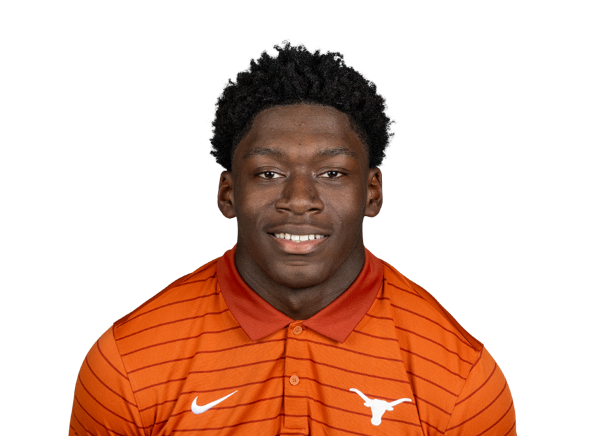
Kosi Okpala
 Texas
Freshman
Texas
Freshman
Bio
Recruiting
Scouting Report
Kosi Okpala is a 4-star Edge Rusher from Houston, TX (Mayde Creek) in the 2026 class. Ranked No. 122 nationally, No. 17 at EDGE, No. 11 in TX. Composite rating: 0.9492. Committed to University of Texas since July 2, 2025.
Physical Profile
Listed at 6-3, 235 lbs. Taller than 21% and heavier than 49% of 2026 Edge Rusher prospects in the SEC Scouts database (169 with a listed size).
Play Style
Okpala plays like an attacking pressure player. He is at his best in a clear downhill lane, whether shooting a gap on a run blitz, looping on a stunt or rushing off the edge. He plays with a high motor that shows up in his hurry totals and his blocked punt, and he finishes tackles instead of just hitting ball carriers. His film is most convincing on rushes and gap shots and least tested on read-and-flow run defense and zone drops, which is exactly what Texas' move to inside linebacker asks him to develop.
Strengths
- Disruptive production behind the line: as a junior he had 55 tackles, 17 TFL, 5 sacks, 21 hurries, 2 forced fumbles and a fumble recovery. As a senior he added 13 TFL and 7 sacks and was named Houston Touchdown Club Defensive Player of the Year.
- Downhill trigger and tackling: Texas coaches and teammates singled him out in camp as a sure tackler who fits his gaps correctly, and defensive end Lance Jackson named him one of three freshmen who surprised early in preseason camp.
- Positional versatility: he can play standing up on the edge, rush from the linebacker spot or play off the ball on the weak side, which lets a defensive staff move him around on passing downs.
- Early readiness: as a spring 2026 early enrollee he had already played in two games by late September, making tackles for loss against Texas State (9/5) and UTSA (9/19).
Areas to Improve
- Off-ball processing: most of his high school snaps were attacking from the edge. At inside linebacker he has to read run plays through the guards, handle misdirection and play with patience instead of pure reaction, and that takes reps.
- Pass coverage: moving from edge rusher to weak-side linebacker means covering running backs and tight ends in man coverage and dropping into zones, which is largely unproven for him.
- Taking on blocks: at 235 pounds he needs more lower-body strength and better hand use to shed guards climbing to the second level, instead of relying on quickness to avoid them.
- Sack counter moves: at the college edge he will need a developed move to go to when his speed rush is stopped.
College Projection
Texas moved Okpala inside, and he opened 2026 as the backup weak-side linebacker. He is getting early snaps in rotation and on special teams, with tackles for loss in his first appearances. Expect a rotational and special-teams role in 2026, a push for a real share of snaps as a sophomore in 2027 (likely as a blitzing weak-side or hybrid 'star' linebacker on passing downs), and a starting job by 2028 if his coverage and block-shedding develop. If the move inside stalls, he could return to a situational pass-rusher role.
NFL Outlook
The one professional projection on record is 247Sports analyst Gabe Brooks' Day 2 (Round 2-3) projection. That is optimistic next to his Composite ranking but consistent with his athletic profile. NFL teams value linebackers who can both rush the passer and play in space, and Okpala's path to the draft depends mostly on proving he can cover and read plays from an off-ball spot while keeping his pass-rush production. If he does, a mid-round pick is realistic; if he stays a situational rusher at around 235 pounds, he projects more as a late-round or priority free agent.
Best Fit
Okpala fits best in an aggressive multiple or 3-4 front that uses its weak-side linebacker as a blitzer and creates simulated pressures and stunts, much like Texas' current scheme under Pete Kwiatkowski and linebackers coach Johnny Nansen. He is less suited to a system that asks its linebackers mainly to read and flow sideline to sideline, or one that expects a 250-plus-pound hand-down end.
Player Comparison
Phillips was similarly rated as a 4-star prospect with versatile size at 6'1" 215 lbs who could project to multiple positions on defense. Like this prospect, he was highly ranked in Texas (#20 in state) and committed early to a premier program, showcasing the same combination of athletic ability and character evaluation that impressed coaching staffs despite positional uncertainty.
Current Team
University of Texas