
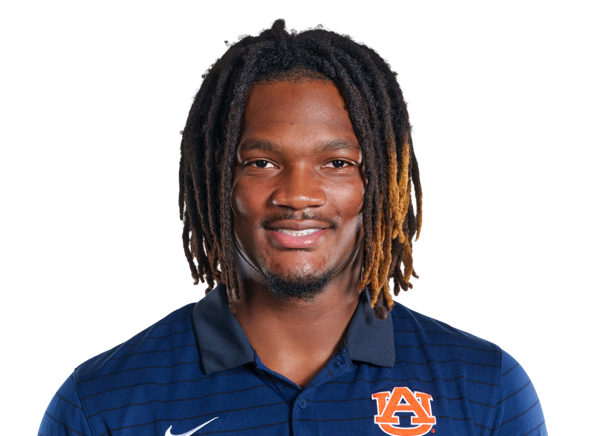
Jaquez Wilkes
 Auburn
Freshman
Auburn
Freshman
Bio
Recruiting
Scouting Report
Jaquez Wilkes is a 4-star Linebacker from Wadley, AL (Wadley) in the 2026 class. Ranked No. 116 nationally, No. 26 at LB, No. 9 in AL. Composite rating: 0.9514. Committed to Auburn University since July 20, 2025.
Physical Profile
Listed at 6-4, 245 lbs. Taller than 94% and heavier than 100% of 2026 Linebacker prospects in the SEC Scouts database (207 with a listed size).
Play Style
On film he is an athlete who plays downhill with purpose. As a linebacker he triggers quickly, meets blockers head-on instead of running around them, and finishes with range. As a runner he shows the vision, burst and long speed that coaches hope will show up as closing speed on edge rushes and backside pursuit. His current edge game relies on a quick first step and chasing plays down rather than technical rushing. He is at his best in space, on stunts and twists, and when pursuing, and weaker when he has to win one-on-one with his hands on long passing downs.
Strengths
- Open-field speed and range from sideline to sideline, built as a feature back (2025 AHSAA 1A Back of the Year). CBS's Brad Crawford highlighted his lateral quickness as the trait that should carry over to edge first.
- Physical, downhill play against the run. 247's Cooper Petagna praised his 'contact courage and the ability to defeat blocks between the tackles' as an inside linebacker, which gives him a better base for setting the edge than most speed-based edge prospects.
- Heavy production and durability: 287+ career tackles, 16 sacks, three straight state title game appearances, ASWA Super All-State. He also played basketball and ran track.
- Maturity and ability to read plays. Auburn coaches have praised how he processes the game, which suggests he can handle a new position and a complex college scheme faster than his competition level would predict.
Areas to Improve
- Pass-rush technique. He played ILB and RB in high school rather than working as a true hand-in-the-dirt rusher, so he has to build a rush plan from scratch: hand placement, a go-to move plus a counter, and converting speed to power against SEC tackles. Ivins specifically lists hand usage as a need.
- Flexibility and bend at the top of the rush to flatten toward the quarterback. His 1A competition, which rarely featured Power Four-caliber offensive linemen, did not test this. His early college numbers (2 tackles, 0 sacks) are what you would expect while that skill develops.
- Strength at the point of attack at 245 against 310-plus pound SEC tackles, especially setting the edge against down blocks and double teams in the run game.
College Projection
In 2026 he is a true freshman working in the rotation behind or alongside Joe Phillips, JJ Faulk, and transfers DaShawn Womack and Nate Johnson. The realistic year-one role is special teams plus situational snaps as a rusher. He should become a regular rotation player in year two once he gets to 250-255 and has an established rush plan, and could start by year three. Because of his linebacker background, Auburn can also use him as a SAM or hybrid linebacker who drops into coverage, which gives him a fallback role if his pure pass rushing develops slowly.
NFL Outlook
Ivins projects him as a Day 2 pick (Rounds 2-3), which is reasonable given his frame and athletic ability. Whether he reaches that range depends on developing bend and counter moves. If both come along, he fits the NFL mold of a 3-4 outside linebacker or a wide-9 defensive end. If his pass rushing stalls, his size, speed and special-teams value still give him a Day 3 floor as a SAM or hybrid linebacker.
Best Fit
A multiple or 3-4 front that uses a stand-up edge or 'buck/jack' hybrid role, with a patient defensive line coach who teaches technique. This lets him play in space, rush in favorable matchups, and drop into coverage while his hand-fighting develops. Auburn's front under DJ Durkin, who recruited him, fits that profile, and staying about 45 minutes from home gives him stability through a multi-year conversion.
Player Comparison
Similar size at 6'1" 219 lbs with elite athleticism and physical tools that impressed evaluators despite limited high-level competition exposure. Both were highly-rated prospects who committed early to Auburn, showing strong relationship building skills, and possessed the raw talent and measurables that projected well to major college football despite questions about competition level.
Current Team
Auburn University