
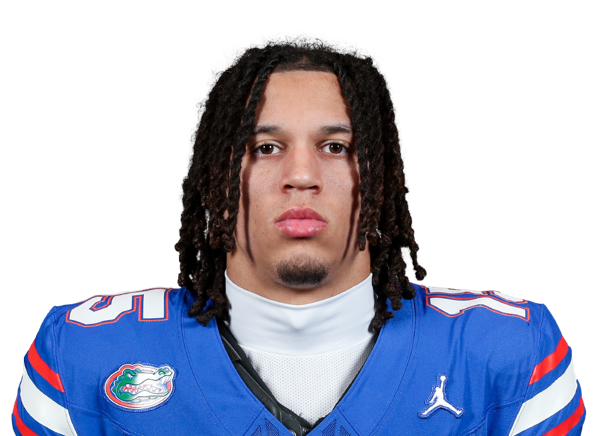
CJ Bronaugh
 Florida
Freshman
Florida
Freshman
Bio
Recruiting
Scouting Report
CJ Bronaugh is a 4-star Cornerback from Orlando, FL (Windermere) in the 2026 class. Ranked No. 92 nationally, No. 7 at CB, No. 8 in FL. Composite rating: 0.9607. Committed to University of Florida since June 17, 2025.
Physical Profile
Listed at 6-0, 183 lbs. Taller than 33% and heavier than 78% of 2026 Cornerback prospects in the SEC Scouts database (204 with a listed size).
Play Style
He is a long, loose boundary corner who is most comfortable mirroring vertical routes, staying in phase down the sideline and making a play on the ball at its highest point. His tape shows off-man and press-bail looks where he reads the receiver's release and uses his speed to erase separation, plus route-jumping instincts that turn into return touchdowns. As a two-way player he shows receiver-level ball skills and a comfort in open space that carries over to returns. He is willing but light as a run defender and tends to come in high.
Strengths
- Elite verified speed: a 10.34 100m and 20.87 200m and three state sprint titles make him one of the fastest players in the 2026 class. He can play press or off coverage and still close on vertical routes.
- Ball production: in 2024 he had 6 interceptions (3 returned for TDs), 4 pass breakups, 30 tackles, 3 TFL, 2 sacks and a forced fumble for a 10-0 Windermere team. He tracks the ball and turns interceptions into points.
- Length and fluidity for his height: at 6-0-plus he flips his hips and stays on the hip of the receiver downfield. He was named DB MVP at the Under Armour Next camp in Orlando.
- Competitive makeup: he played both ways in high school and was trusted in every phase. He held his commitment to Florida through an Ohio State official visit and a coaching change.
Areas to Improve
- Play strength and weight: he arrived around 165 lbs, so the weight gain has to continue so he can re-route bigger SEC receivers at the line, fight through stalk blocks and tackle in the run game without being a liability.
- Technique over speed: like most sprinter-corners, he can lean on recovery speed. He needs more consistent press footwork, patience at the line and zone eyes (pattern-matching, reading the quarterback) to stop giving up easy completions on underneath and back-shoulder throws.
- Tackling consistency: his 2025 senior season was quieter (about 23 tackles, 3 PBU, 2 INT) as quarterbacks threw away from him, and his open-field tackling angles need work against college ball carriers.
College Projection
He is a true freshman in 2026 in a Florida secondary led by a new staff. The Florida roster bio as of mid-September 2026 said he had played in one game (his Week 1 debut) with no stats yet, so expect him to rotate on special teams and in limited sub-package coverage snaps in year one. A realistic path: keep adding mass toward 185–190 lbs, compete for a starting boundary job as a redshirt freshman or sophomore in 2027, and grow into an every-down CB1 by 2028 if his technique catches up to his speed.
NFL Outlook
His NFL upside is real. Speed in the 10.3 range, length and interception production are the traits NFL scouts pay for at corner, and 247's evaluation projected him in the 2nd–3rd round range. Reaching that depends on adding functional strength while keeping his speed and on becoming a technically sound press corner rather than one who relies on recovery speed. If both happen, he is a Day 2 corner prospect with a chance to push higher.
Best Fit
A press-heavy, man-coverage defense that puts its corners on an island at the boundary and trusts length and speed, with a strong strength-and-nutrition program to add weight without costing speed. Florida fits because it's an in-state SEC school with early playing opportunity under Sumrall. Schemes built on heavy Cover 3 or quarters that ask corners to tackle and set the edge often would expose his current frame more than they would use his coverage traits.
Player Comparison
Both prospects share similar measurables at 6'1" 175 lbs with elite speed and agility profiles that translate to game-breaking ability. Waddle was also a highly-rated Florida recruit (#89 nationally, 4-star) who committed early to a premier program, showing the same combination of elite state ranking and national recognition despite limited exposure that suggests exceptional raw talent evaluators quickly identified.
Current Team
University of Florida