
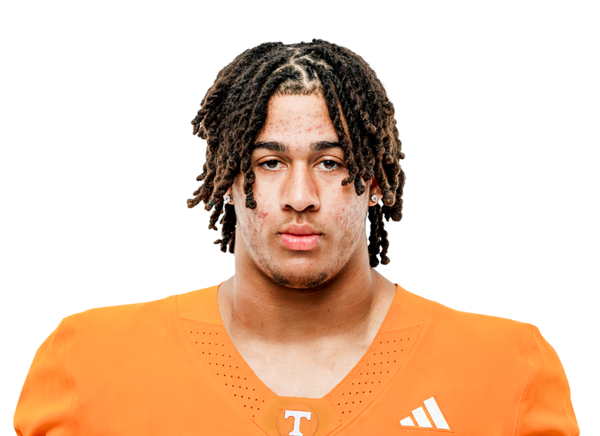
Brayden Rouse
 Tennessee
Freshman
Tennessee
Freshman
Bio
Recruiting
Scouting Report
Brayden Rouse is a 4-star Linebacker from Woodstock, GA (Kell) in the 2026 class. Ranked No. 79 nationally, No. 4 at LB, No. 11 in GA. Composite rating: 0.9665. Committed to University of Tennessee since July 7, 2025.
Physical Profile
Listed at 6-3, 225 lbs. Taller than 71% and heavier than 82% of 2026 Linebacker prospects in the SEC Scouts database (207 with a listed size).
Play Style
Rouse plays downhill with plenty of speed. He is at his best on the move: scraping over the top on outside runs, chasing plays from the backside, and dropping into hook and curl zones. There he uses his length to disrupt throwing lanes and his receiver background to play the ball. He is comfortable lined up in space over a slot receiver or tight end, which is why several evaluators projected him as an overhang or big-nickel player before he settled at Will. He is an effective blitzer on delays and simple pressures because he closes so quickly. He is not yet a stack-and-shed, hold-the-point linebacker. His game is built on avoiding blocks and pursuit, not taking blockers on directly.
Strengths
- Range from sideline to sideline. His verified speed lets him run down plays outside the tackles and carry routes up the seam, which is rare for a player with a linebacker's frame.
- Length for coverage and taking on blocks. His +5 wingspan and near-34-inch arms help him close passing windows in zone and keep blockers off his body in the box.
- Versatility. At Kell he played off-ball LB, edge, safety, wide receiver and tight end (37 catches, 523 yards, 8 TDs as a senior). That gives him the ball skills and body control to play overhang, big nickel or Will without falling off.
- Production and physical play. As a senior he posted about 120 tackles, 11.5 TFL, 1.5 sacks and 3 INT. He also delivered a much-discussed big hit in Tennessee's spring scrimmage, so the speed comes with a willingness to hit.
Areas to Improve
- Diagnosing plays between the tackles. Because he moved around so much in high school, he has fewer true inside-linebacker snaps than most top-100 linebackers. Reading guards, fitting the correct gap and playing through blocks against SEC interior linemen will take time.
- Strength at the point of contact. He weighs 225 now, but most of that is recent gain. Holding his ground against climbing offensive linemen and finishing tackles against SEC running backs will depend on another year of strength work.
- Consistent tackling angles. Fast linebackers often overrun cutback lanes. Controlling his speed to break down in space is the main technical step between a special-teams role and a starting role.
College Projection
He is already a true freshman on Tennessee's roster (No. 28). As of September 2026 he is listed as a third-string Will linebacker behind Arion Carter and Edwin Spillman, with a small number of defensive snaps so far. Expect 2026 to be mostly special teams and situational work, with a chance at sub-package and pressure roles late in the season. With Jim Knowles, who recruited him at Ohio State, running a defense that uses safety-linebacker hybrids, Rouse looks like a rotational contributor in 2027 and a projected starter at Will by 2027-2028.
NFL Outlook
His length, verified speed and coverage ability match what NFL teams look for in modern weakside and coverage linebackers. If he adds functional strength and tightens up his run fits, he projects as a Day 2 pick (rounds 2-3) after a 3-4 year college career. Early special-teams value and sub-package coverage ability give him a solid floor even if he never becomes a full-time box linebacker.
Best Fit
An aggressive, multiple defense that plays a lot of nickel and big nickel and asks its Will to cover and pursue, not stack and shed. Tennessee under Jim Knowles is close to ideal. A scheme with a heavy, block-absorbing Mike and a two-down, box-only Will would waste his speed and coverage ability.
Player Comparison
The 6'3" 205 lb frame with elite Georgia ranking and early Tennessee commitment mirrors Henry's physical development curve as a highly-ranked prospect from the Southeast. Both players showed the rare combination of size and athleticism that made them position-scarce recruits, with Henry also being an early commit to a major SEC program before his massive senior year growth.
Current Team
University of Tennessee