
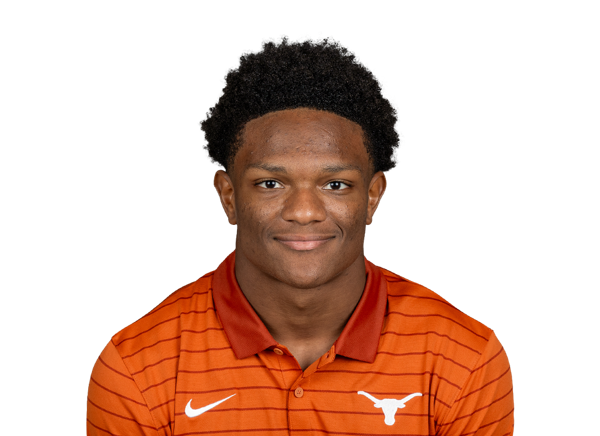
Derrek Cooper
 Texas
Freshman
Texas
Freshman
Bio
Recruiting
Scouting Report
Derrek Cooper is a 4-star Running Back from Lauderhill, FL (Chaminade-Madonna) in the 2026 class. Ranked No. 109 nationally, No. 15 at RB, No. 24 in FL. Composite rating: 0.9529. Committed to University of Texas since July 19, 2025.
Physical Profile
Listed at 6-1, 212 lbs. Taller than 93% and heavier than 92% of 2026 Running Back prospects in the SEC Scouts database (138 with a listed size).
Play Style
Cooper is a north-south, one-cut runner. 247 says he 'runs with plenty of tempo and energy as he hits the hole with urgency.' He works best in inside zone and duo: he presses the hole, makes one decisive cut, and gets downhill. He isn't a runner who spends a lot of time dancing behind the line. Once through the line he is 'always spiraling forward,' and he uses his size and core strength to bounce off tacklers in tight spaces. He has enough speed to turn a crease into a long run. In the passing game he is dangerous on screens and swing routes, and he has the hands to be more than a check-down option. That lets an offense keep him on the field in passing situations instead of subbing him out.
Strengths
- Production at a high level of Florida football: 124 carries for 905 yards and 13 TD as a junior on a 1A state title team, then 165 carries for 1,503 yards (9.1 per carry) and 19 TD over 14 games as a senior, which won him the Nat Moore Trophy.
- Power between the tackles. He hits the hole fast, keeps his feet moving on contact, and 247's Andrew Ivins says he 'creates yardage in traffic with his timing and cuts.' That means fewer negative runs and more yards after contact than most backs his age.
- A real receiving threat. He is effective on swing and screen passes and catches cleanly away from his body, so he can be a matchup piece on third down rather than just a check-down outlet.
- Experience on both sides of the ball. Playing linebacker and safety gives him an unusual understanding of how defenders fit the run and read blocks. It should also help him pick up blitzes faster, which is usually what keeps freshman backs off the field.
Areas to Improve
- Pad level and running lower. At 6-1+ he can run too tall in short-yardage and red-zone situations. College linebackers will take on his chest unless he sinks his hips before contact.
- Pass protection technique and how long he can hold up. His defensive background helps him recognize pressure, but blocking SEC edge rushers and blitzing linebackers requires technique he has not had to use much as a featured high school back.
- Durability and managing his workload. A running game built on contact takes a toll, and he has already missed time early at Texas with a lower-leg injury (he was seen in a walking boot and was a game-time decision against Ohio State). Building his body up for college hits is a near-term priority.
College Projection
At Texas in 2026, Cooper projects as an immediate rotation back and a likely starter by his second year. His size, power and ability to protect and catch fit Steve Sarkisian's offense, which has consistently found creative ways to use versatile skill players. He should get early carries on standard downs, in short-yardage and on screens as a freshman, as long as his leg injury heals and his pass protection develops. By 2027 he should be the lead back, with the upside of carrying 200+ times and catching 30+ passes as a complete three-down player.
NFL Outlook
Cooper has Day 1-2 draft potential. His size, measured speed and explosion, contact balance and receiving ability are the traits NFL teams now want in a three-down back, a type that still goes early in the draft despite the position losing value overall. If he stays healthy, runs with better pad level and becomes a trustworthy pass protector, he could be one of the top backs in his draft class. The main risks are durability and wear from his running style. As a fallback, his size and defensive background leave room for a move to a hybrid or special-teams role.
Best Fit
Cooper fits best in a pro-style offense with a heavy zone and duo running game that also uses the running back as a receiver. That is almost exactly what Sarkisian runs at Texas. He needs a team that commits to him as a three-down back, pairs him with a physical offensive line and uses him on screens and angle routes to create mismatches with linebackers. He would be a poorer fit in an offense that spreads defenses horizontally, where most runs go outside, or in a system that uses its backs mainly as pass blockers.
Player Comparison
Both are highly-rated prospects from elite Florida prep programs with similar size profiles (6'0", 210 lbs range) who generated significant Power 5 interest despite limited public film exposure. Diggs also came from a talent-rich South Florida environment and demonstrated the versatility and competitive fire that made him attractive to major programs, ultimately developing into an elite playmaker despite not being the most physically imposing prospect.
Current Team
University of Texas