
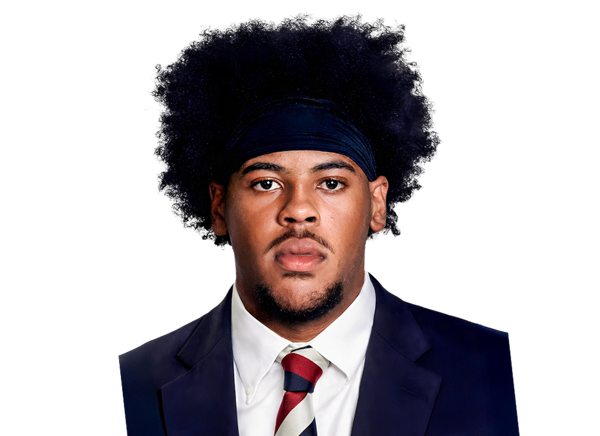
Julian Walker
 South Carolina
Freshman
South Carolina
Freshman
Bio
Recruiting
Scouting Report
Julian Walker is a 4-star Edge Rusher from Irmo, SC (Dutch Fork) in the 2026 class. Ranked No. 38 nationally, No. 4 at EDGE, No. 1 in SC. Composite rating: 0.9833. Committed to University of South Carolina since December 3, 2025.
Physical Profile
Listed at 6-6, 255 lbs. Taller than 93% and heavier than 91% of 2026 Edge Rusher prospects in the SEC Scouts database (169 with a listed size).
Play Style
Walker is a long, high-motor rusher from a two- or three-point stance. He sets up tackles with the length of his first step and his reach, then chooses his path based on how the tackle sets: he goes around a tackle who oversets and cuts inside one who sits back. Once he gets his hands on a blocker he strikes and extends well, and he has more power at contact than his thin frame suggests. He pursues well from the backside and finishes plays, and his fumble-return score in the state title game shows he keeps playing after first contact. Against the run he is more of a disruptor who penetrates than a player who holds his ground and sets the edge.
Strengths
- Length and hand usage: nearly 35-inch arms and what 247's Andrew Ivins calls 'surprising pop in the hands' let him win first contact and keep blockers off his body. That is unusual for a player who is still filling out.
- Pass-rush production against top competition: he had 19 TFLs (11 sacks) as a junior and 19 TFLs as a senior for a Dutch Fork program that won its fourth straight 5A Division I title. In the 2025 state final against Summerville he had 3.5 sacks and a fumble-return touchdown.
- Athletic edge: he can win to the outside or cut inside because he is often faster than the tackle. That gives him a two-way rush early in his career, before he has a full set of counter moves.
- Makes plays in college already: he has 1.5 sacks through three games as the fourth defensive end. DC Clayton White said his 'first rep [in fall camp] was better than any rep he took during the spring,' a sign he is picking things up quickly.
- Background and work habits: his father, Jamil Walker, is on South Carolina's strength and conditioning staff. Coaches praise his motor and his film study.
Areas to Improve
- Anchor against the run: Ivins' evaluation specifically says he needs to improve his anchor strength. At 255 he can get pushed back by down blocks and double teams from SEC tackles who weigh 320 or more, so he is best used on passing downs for now.
- Pass-rush plan: in high school he won mainly on length and athleticism. Against SEC tackles he needs a reliable counter off his speed rush and a way to turn speed into power. White has noted he is still learning the details and how offenses scheme against him, saying: 'He's a freshman. He's going to have freshman mistakes.'
- Pad level: like most 6-6 edges, he can play too tall. Keeping his pads low through contact will decide whether he can hold up on the edge as an every-down player.
College Projection
He is well ahead of the redshirt timeline 247 projected. He enrolled early and is part of the 2026 rotation as the fourth defensive end behind Caleb Herring, Anthony Addison and Jaquavious Dodd, with Dylan Stewart's injury opening up snaps. In the fall-camp outlook, SI projected him as a starting edge opposite Herring. Expect him to be a situational pass rusher with a growing snap count in 2026. He should become a full-time starter by 2027, once he gets to about 265 and his anchor improves, and he could be South Carolina's featured edge rusher as a sophomore or junior. That would follow the recent line of Gamecocks edge rushers the Post and Courier profiled.
NFL Outlook
Walker has a real chance to be drafted early. His length, frame, bend and pass-rush production are what NFL teams draft edge rushers for, and 247's Ivins projected him as a Day 2 pick (Rounds 2-3) coming out of high school, calling him a 'potential game-wrecker up front.' If he adds strength without losing burst and develops counters, he could move into Day 1 consideration after two productive seasons as a starter, making him eligible after 2028. The risk is that he stays mainly a length-and-speed rusher who doesn't hold up against the run. Players like that tend to go on Day 2 as rotational pass rushers.
Best Fit
A multiple front that uses its edges as wide-alignment rushers (5- or 7-technique DE, or a stand-up JACK in an odd front) and asks them to attack upfield rather than read and hold blocks. South Carolina is a strong fit: Clayton White's scheme rotates edge rushers heavily, which lets Walker get pass-rush snaps early while his run defense develops. His father is also on the strength staff that controls his weight-gain plan.
Player Comparison
Both are elite-ranked defensive prospects (Clowney was #1 overall) with exceptional size at 6'6" 255+ lbs who committed to South Carolina. Like Walker's profile suggests, Clowney combined rare athletic ability with strong football instincts and technical skills, though he played a more defined DE/OLB role. The in-state commitment, elite ranking, and physical profile create a strong parallel.
Current Team
University of South Carolina