
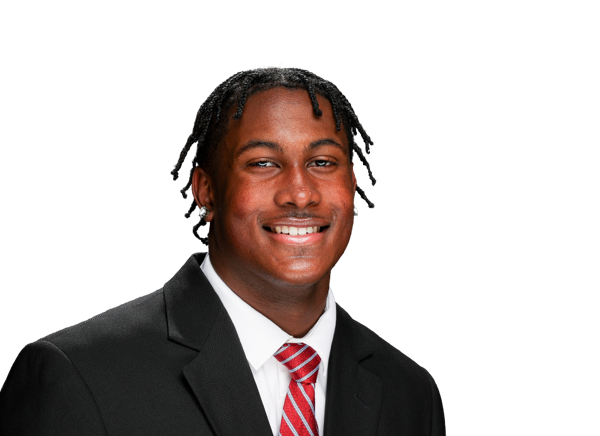
Zyan Gibson
 Alabama
Freshman
Alabama
Freshman
Bio
Recruiting
Scouting Report
Zyan Gibson is a 4-star Cornerback from Gadsden, AL (Gadsden City) in the 2026 class. Ranked No. 69 nationally, No. 18 at CB, No. 5 in AL. Composite rating: 0.9700. Committed to University of Alabama since December 23, 2024.
Physical Profile
Listed at 6-0, 195 lbs. Taller than 33% and heavier than 95% of 2026 Cornerback prospects in the SEC Scouts database (204 with a listed size).
Play Style
Gibson is an outside corner who wins with speed and smooth hips more than with physicality. He is comfortable in off-man and trail coverage, stays on the receiver's hip on vertical routes, and closes quickly on throws in front of him. As a two-way high school player he was a willing tackler in space, though he is more of a cover player than a hitter. On film he rarely panics when a receiver gets past him early, because his speed lets him make up the ground.
Strengths
- Verified long speed (10.53 100m, 22.10 200m). He can stay on top of vertical routes and recover when he gets beaten early, which is why evaluators kept calling him a 'twitched-up cover corner with track speed.'
- Maintains phase in trail technique. He can play from the receiver's hip on go and post routes without grabbing, the skill that most often decides whether a young corner can survive on the outside in the SEC.
- Quarterbacks avoided him in high school. His senior line was light (about 7 tackles and 1 INT over 7 games) because offenses threw away from him, not because he lacked production. As a junior two-way player he had 30-plus tackles and earned 2024 ASWA all-state honors.
- Early enrollment and a No. 2 CB spot on the Week 1 depth chart show he absorbed Alabama's coverage scheme quickly. He played defensive and special-teams snaps in the opener against East Carolina.
Areas to Improve
- Play strength at the catch point and in run support. The added weight helps, but he still has to show he can hold up physically against big SEC receivers and set the edge against perimeter runs and screens.
- Ball production and route recognition. He saw few targets as a senior, so his skill at reading a quarterback and taking the ball away is less proven than his coverage. Converting pass breakups into interceptions will decide whether he becomes a starter or stays in the rotation.
- Press consistency. He needs more refined hand timing and patience at the line so he isn't relying on speed to recover against releases from polished route runners.
College Projection
He is already contributing as a true freshman: backup CB on the Week 1 depth chart, with defensive and special-teams snaps against East Carolina. He missed the Week 2 game at Kentucky with an illness, not an injury, and Kalen DeBoer said he expected him back soon. The CB injuries around him, including classmate Jorden Edmonds' fall-camp injury, create more early opportunity. The realistic path is rotational snaps and special teams in 2026, a push for a starting outside spot in 2027, and a multi-year starter window after that if his play strength keeps developing.
NFL Outlook
His NFL profile starts with verified sub-10.6 100m speed, a 6-0 frame that can carry close to 200 lb, and early playing time in the SEC. 247Sports' evaluation projected a Day 2 (Rounds 2-3) NFL ceiling. Reaching that depends on ball production and physicality against SEC receivers. If he becomes a two-year starter who makes plays on the ball, a Day 2 selection is realistic. If he stays mainly a speed-cover player, a Day 3 outside or dime corner is the likely floor.
Best Fit
A pressure-heavy defense that asks corners to play man or match-quarters on islands, where his speed and trail technique matter most. Alabama's defense under DeBoer fits: the corners are asked to handle vertical routes alone while safeties help elsewhere. A scheme built mostly on soft zone would waste his best trait.
Player Comparison
Both prospects share the exact physical profile at 6'1" 174 lbs with elite recruiting pedigree, including high 4-star ratings and top Alabama rankings. Smith's elite technical skills and football IQ that made him a Heisman winner despite his slender frame mirrors the advanced instincts and premium rating this prospect displays at the high school level.
Current Team
University of Alabama