
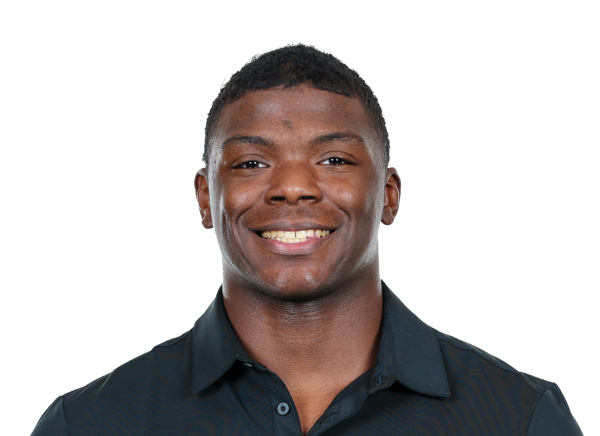
KJ Edwards
 Texas A&M
Freshman
Texas A&M
Freshman
Bio
Recruiting
Scouting Report
KJ Edwards is a 4-star Running Back from Carthage, TX (Carthage) in the 2026 class. Ranked No. 50 nationally, No. 3 at RB, No. 9 in TX. Composite rating: 0.9783. Committed to Texas A&M University since June 16, 2025.
Physical Profile
Listed at 5-10, 197 lbs. Taller than 30% and heavier than 57% of 2026 Running Back prospects in the SEC Scouts database (138 with a listed size).
Play Style
A cut-and-go slasher who hits top speed quickly. He works well in zone schemes: he presses the play side, reads the backside cutback lane and hits it in one step. Scouts often note that he looks faster in elite camp settings than on film. Once he reaches the second level, defensive backs rarely catch him from behind, which explains his 13+ yards per carry. He is patient enough to let blocks develop but does not waste steps. He also has enough physicality to finish runs, and TexAgs specifically noted his speed and physicality in one of his senior-year games. He is a legitimate receiving option out of the backfield who can be moved around as a mismatch rather than serving only as a check-down.
Strengths
- Big-play speed backed by real efficiency: 13.8 yards per carry as a senior (2,085 yards, 31 TDs on 151 carries) and 12.6 as a junior (1,789 yards, 23 TDs). 247's Gabe Brooks describes 'afterburner speed' with 'elite acceleration accompanied by high-end top-end speed.'
- Decisive one-cut and cutback runner. He sees backside lanes early, puts his foot in the ground and gets to the second level in one move without dancing behind the line, and he makes the first defender in the hole miss.
- Real receiving value, with 48 catches for 553 yards in his career through his junior year, then 25 catches for 272 yards as a senior. He runs well after the catch and has the awareness in space to be used on swings, angle routes and some snaps split out wide.
- Proven in big games: two-time state champion, Offensive MVP of the 2024 4A-DII title game (18 carries, 188 yards, 2 TDs) and Offensive MVP again in the 49-21 title win that finished a 16-0 senior season.
- Heavy four-year workload (roughly 500 carries) without losing efficiency, which shows he is durable and consistent.
Areas to Improve
- Pass protection. Like most high school backs who rarely stay in to block, he needs to learn to identify blitzers and square up against SEC linebackers. At 197 pounds his anchor against bigger rushers is limited until he adds strength, and blocking will decide how many third-down snaps he gets as a freshman.
- Running between the tackles against SEC size. Many of his long runs at 4A came after he got through clean creases. He needs to show he can gain 3-4 yards when the hole collapses by lowering his pads and falling forward instead of bouncing runs outside.
- Ball security and contact balance under a college workload. Adding lean mass while keeping his 10.9-level burst is the main strength-program goal for his first 12-18 months.
College Projection
He is already in the rotation. As an early enrollee wearing #0 at Texas A&M, he had 5 carries for 44 yards (8.8 per carry) in the 2026 opener against Missouri State, and Mike Elko said the freshman backs are 'going to play a lot.' Year 1 (2026): change-of-pace and explosive-play role at about 6-10 touches per game, with third-down snaps depending on how his pass protection develops. Year 2 (2027): likely 1A/1B in a committee as his strength program pays off. Years 2-3: projects as the lead back if he adds 5-8 pounds and becomes reliable in protection. His realistic ceiling is an all-SEC, 1,000-yard back who produces as both a runner and a receiver.
NFL Outlook
247Sports projects him as a Day 2 pick (rounds 2-3), with comparisons to Jahmyr Gibbs and Tony Pollard. That fits: he offers the speed and receiving versatility the NFL values more than size in current running backs. What moves him up draft boards is proof that he can protect the passer and carry the ball 15-20 times a game at SEC weight without losing burst. If he does that by his third year, a Day 2 selection is realistic and a late first round is possible in a weak running back class. If he stays a speed-only back without every-down traits, he projects as a Day 3 pick in a committee or returner role.
Best Fit
An outside or inside zone offense with a spread and RPO base that gives him horizontal space to press and cut back, puts him in space as a receiver, and uses a committee early to protect his durability while he adds mass. Texas A&M fits well because the Aggies are already working him into a rotation with fellow freshman Carsyn Baker, which lets him use his explosiveness right away while he develops as a protector and between-the-tackles runner.
Player Comparison
Both are elite Texas prospects who committed early to Texas A&M with exceptional composite ratings despite limited national exposure. Edwards' 5'10" 190 lb frame and elite athleticism mirrors Garrett's high school profile before his growth spurt, suggesting similar explosive potential and technique refinement that fits the Aggies' development system.
Current Team
Texas A&M University