
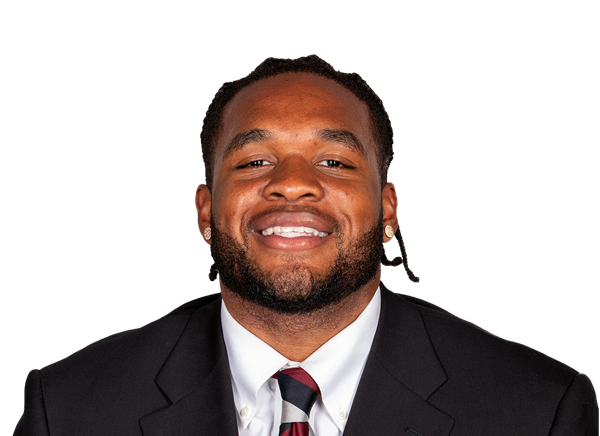
Darius Gray
 South Carolina
Freshman
South Carolina
Freshman
Bio
Recruiting
Scouting Report
Darius Gray is a 4-star Interior Offensive Line from Chesterfield, VA (St. Christopher's School) in the 2026 class. Ranked No. 42 nationally, No. 4 at IOL, No. 2 in VA. Composite rating: 0.9823. Committed to University of South Carolina since August 21, 2025.
Physical Profile
Listed at 6-3, 302 lbs. Taller than 5% and heavier than 62% of 2026 Interior Offensive Line prospects in the SEC Scouts database (207 with a listed size).
Play Style
A physical, competitive interior lineman who wins with quickness, leverage and balance more than length. His defensive-line production suggests he plays with an aggressive, downhill mentality and fires out of his stance, and his basketball background suggests he recovers well when a defender gets an early edge. That profile fits a guard who can pull, reach-block and climb to linebackers on the second level. Note: no independent film breakdown was available; this description is based on 247's evaluation and his production.
Strengths
- Quickness and balance for his size: 247's Andrew Ivins calls him 'compact and competitive' with 'the quickness, agility and balance to help solve a lot of teams' problems up front', which suits zone-blocking reach and combination blocks
- Proven athlete on both sides of the ball: he was the 2025 VISAA Defensive Player of the Year and first-team all-state on both the offensive and defensive lines; his 50 tackles, 17.5 TFL and 8 sacks in 2024 show a fast first step and the hand violence to shed blocks
- Can play multiple spots inside: 247 projects him at more than one offensive line position, and a guard/center option makes him more valuable on a depth chart
- Played against top competition: he was selected to the Navy All-American Bowl and was the #1-ranked IOL nationally on 247 heading into his senior year
Areas to Improve
- Arm length and height: at 6-3 he will need consistent hand placement and inside leverage to control longer SEC interior linemen, and his arm measurement is still unknown
- Pass protection technique: he played private-school football and split time on the defensive line, so he likely has fewer offensive reps against varied fronts; he needs polish on picking up stunts and twists, anchoring against bull rushes, and reading blitzes as a guard
- Getting to SEC playing weight: he is up to 302, but he needs to reach about 310-315 without losing the quickness that sets him apart
College Projection
He enrolled early enough in summer 2026 to go through fall camp and is on the 2026 roster as #77. A 5-star IOL often contributes in year one, but SEC starting jobs usually require added strength, so the realistic path is rotation work and redshirt-eligible snaps (up to four games) in 2026, then competing for a starting guard job in 2027. 247's projection of a potential multi-year starter with all-conference upside is reasonable, and he could make an impact by his second season.
NFL Outlook
247 projects him as a first-round pick and compares him to Zion Johnson (Boston College, a 2022 first-round pick of the Chargers), another compact, athletic guard. His ceiling is an early-round NFL guard or center. What happens in the draft will depend on his measured arm length, his strength gains at South Carolina, and whether he becomes an all-SEC-level starter by his third season (eligible for the 2029 draft at the earliest).
Best Fit
An SEC or Power Four program running a zone-heavy or gap/zone hybrid scheme that uses guards as pullers and second-level blockers, where his quickness and balance count for more than his height. South Carolina fits well because it offers early playing time on the interior. The guard/center versatility is a plus in any system.
Player Comparison
Jack was a versatile 6'1" 245lb athlete who played both linebacker and running back at UCLA, showcasing elite athleticism and football IQ that allowed him to impact games at multiple positions. Like Gray, Jack was highly recruited based on raw athletic ability and adaptability rather than position-specific mastery, with coaches viewing him as a chess piece who could excel wherever needed. Both players possess the rare combination of size, speed, and instincts that make them disruptive forces regardless of their specific role on the field.
Current Team
University of South Carolina