
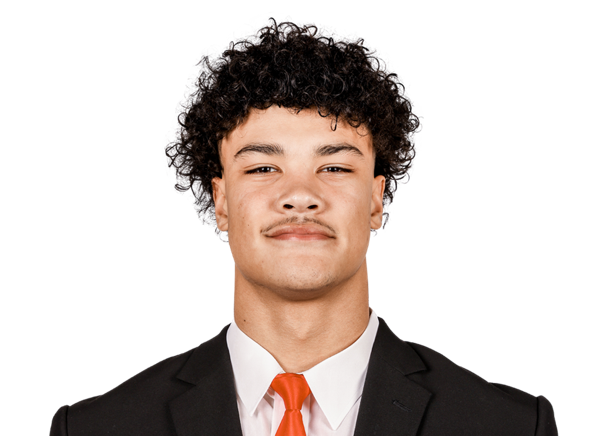
Kaiden Prothro
 Georgia
Freshman
Georgia
Freshman
Bio
Recruiting
Scouting Report
Kaiden Prothro is a 4-star Tight End from Bowdon, GA (Bowdon) in the 2026 class. Ranked No. 39 nationally, No. 5 at TE, No. 8 in GA. Composite rating: 0.9830. Committed to University of Georgia since July 11, 2025.
Physical Profile
Listed at 6-6, 230 lbs. Taller than 80% and heavier than 57% of 2026 Tight End prospects in the SEC Scouts database (116 with a listed size).
Play Style
Prothro plays like a big wide receiver. He usually lined up detached from the line, either in the slot or out wide, and won with size, catch radius and body positioning rather than pure speed. On film he is at his best on vertical routes up the seam, back-shoulder throws and jump balls in the red zone, where he walls off defenders and attacks the ball at its highest point. He is a better runner after the catch than you'd expect for his size, and he gains yards with long strides once he's in the open. He also played both ways at Bowdon and had 3 interceptions on defense as a senior, which reflects his ball skills and competitiveness. His in-line blocking has been limited and is still developing.
Strengths
- Red-zone production: 66 career TD catches, a Georgia state record. That includes 22 TDs as a junior (56 catches, 1,203 yards, 21.5 yards per catch) and 27 as a senior (58 catches, 1,115 yards). He has been a reliable end-zone target at every level.
- Wins contested catches: his length and basketball rebounding instincts let him catch the ball at its highest point over smaller defenders. That makes him a real target on fades, back-shoulder throws and seam routes that force a single safety to cover him.
- Positional versatility: his high school coach said about half the schools that recruited him saw him as a tight end and half as a receiver. Georgia has already lined him up in the slot, and he led both teams in receiving in the 2026 G-Day spring game (5 catches, 46 yards, TD).
- Proven against better competition early: he enrolled early, stood out in spring and scored his first college TD, a 16-yarder, against Tennessee State on 9/5/2026. His game already translates past Class A high school football.
Areas to Improve
- In-line blocking: Bowdon and Georgia have both mostly split him out wide. His hand placement, leverage and ability to hold up against SEC edge defenders at the point of attack are still unproven. Georgia TE coach Todd Hartley has said he has a 'long way to go' in technique at both tight end and receiver.
- Strength and route detail: he needs to keep adding weight while keeping his speed. He also has to sharpen his releases against press coverage and his route breaks against college defensive backs, who won't be beaten by size alone the way Class A defenders were.
- Level of competition: much of his production came against Class A Division II defenses, so how dominant he will be against top athletes still has to be shown over a full SEC season.
College Projection
Year 1 (2026): he is a rotational slot and matchup piece. He is listed fifth on Georgia's tight end depth chart behind Luckie, Reddell, Williams and Barbour, but he gets snaps with the receivers and in red-zone packages. Year 2: once he adds weight and improves his blocking, he could become the team's top move tight end, lined up flexed or in the slot. Years 2-3: his ceiling is a primary receiving tight end who creates mismatches, the role Brock Bowers and Darnell Washington-style players have had at Georgia. Coverage of him has compared him to both Brock Bowers and George Pickens because the staff can build his role either way.
NFL Outlook
He has the tools of a Day 2 pick with first-round upside. NFL teams pay a premium for 6-6 tight ends who catch passes like receivers and can win contested balls. How high he goes depends mostly on his blocking. If he can hold up in line, he projects as a matchup tight end worth an early pick. If he stays mostly a big-slot receiver, he still projects as a draftable 'big' receiver or F tight end. He will be draft-eligible after the 2028 season.
Best Fit
The best fit is a pro-style or spread-to-pro offense that uses 12 personnel (two tight ends) and moves its tight ends around the formation to find mismatches, which is exactly Georgia's system. He belongs in a scheme that detaches the F tight end in the slot, attacks the seam and uses a big-bodied target in the red zone, while giving him time to develop as an in-line blocker instead of making him a traditional Y tight end right away.
Player Comparison
Dean was similarly recruited as a versatile, high-IQ athlete who Georgia saw fitting multiple roles - he could play safety or linebacker and was valued for his instincts and football intelligence rather than just raw measurables. Both prospects share that elite versatility factor where coaching staffs see multiple ways to deploy their skill sets, and Dean's 6'0" 229 lb frame translates to similar athleticism at a slightly different build.
Current Team
University of Georgia