
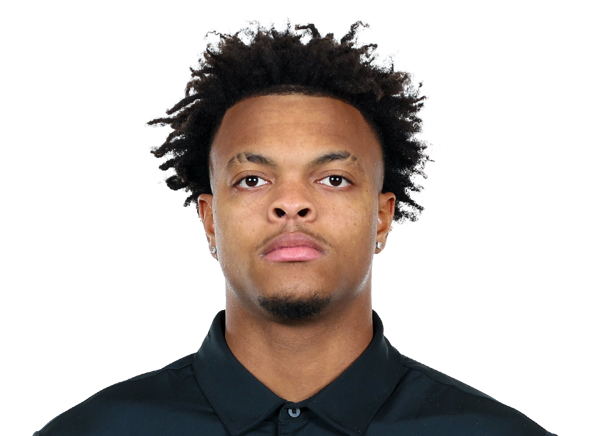
Brandon Arrington
 Texas A&M
Freshman
Texas A&M
Freshman
Bio
Recruiting
Scouting Report
Brandon Arrington is a 5-star Cornerback from San Diego, CA (Mount Miguel) in the 2026 class. Ranked No. 8 nationally, No. 2 at CB, No. 1 in CA. Composite rating: 0.9948. Committed to Texas A&M University since June 18, 2025.
Physical Profile
Listed at 6-2, 201 lbs. Taller than 78% and heavier than 99% of 2026 Cornerback prospects in the SEC Scouts database (204 with a listed size).
Play Style
He is a traits-first, man-coverage outside corner. His length and speed let him play press or trail receivers from off coverage and close ground quickly. On film he mirrors receivers downfield and gets to the catch point. Offenses tended to avoid his side in high school, which limited his production. He also has the open-field speed to add value as a returner. His game still relies more on athleticism than on refined technique and film study, which is typical for an elite two-sport athlete.
Strengths
- Elite verified speed (10.21 100m, 20.35 200m) lets him recover from technique mistakes and carry vertical routes stride for stride. Few college receivers can simply outrun him.
- At 6-2 with very long arms, he can disrupt receivers at the line in press and reach the ball at the catch point on back-shoulder throws and 50/50 balls, which usually give shorter corners trouble.
- Scouts rate his man coverage as elite. 247's Andrew Ivins projects him as a first-round pick and compares him to Darien Porter, noting impressive agility for his size, not just straight-line speed.
- He makes plays on the ball. Through seven games of his 2025 senior season he had 10 tackles, 1 INT, 3 pass breakups and 1 forced fumble, even though offenses often threw away from him.
Areas to Improve
- Technique hasn't caught up to his athleticism. Time split with track means his footwork at the line, patience in press, and route recognition (reading splits and route stems) need polish. Ivins specifically says a redshirt-type development year may be needed before he becomes a lockdown corner.
- Play strength and tackling: at 185 to 201 lbs he needs to add weight and get stronger to jam physical SEC receivers, get off blocks on perimeter runs and screens, and tackle consistently in space.
- Zone coverage instincts: his film and evaluations lean toward man coverage. He needs more reps in pattern-matching and zone concepts, where reading the quarterback matters more than raw recovery speed.
College Projection
He is contributing as a true freshman in 2026, with limited defensive stats so far (1 tackle). Snaps are available at A&M after Will Lee III left for the NFL and three corners played 500+ snaps in 2025, and SI named him an early-impact freshman after a strong spring game. Expect a rotational and special-teams role in year one, a push for a starting outside job in 2027, and a chance at All-SEC honors by his third year if his technique and strength develop on schedule.
NFL Outlook
His NFL ceiling is first round. Size (6-2, long arms) plus Olympic-level speed is exactly the profile NFL teams pay for at corner, and 247 explicitly projects him as a first-rounder with a Darien Porter comparison. His draft stock will depend on turning his traits into consistent college production and technique. If that happens, he fits the mold of the day-one outside corners teams draft on traits. He would be draft-eligible after the 2028 season.
Best Fit
He fits best in an aggressive, man-heavy scheme that lets him press outside receivers and trust his recovery speed, with a coaching staff that can teach technique and a strength program to add weight. A&M under Mike Elko fits: an SEC defense that plays plenty of man coverage, a clear path to snaps, and a staff that already sees him as a Will Lee III-type outside corner.
Player Comparison
Both share an elite 4-star recruiting profile with similar physical dimensions at 6'2" and lean build around 185 lbs. Smith was also a highly-rated California product who committed early to an SEC powerhouse, demonstrating the same combination of verified production against top competition and elite program evaluation that suggests difference-making ability despite not having prototypical size for their position.
Current Team
Texas A&M University