
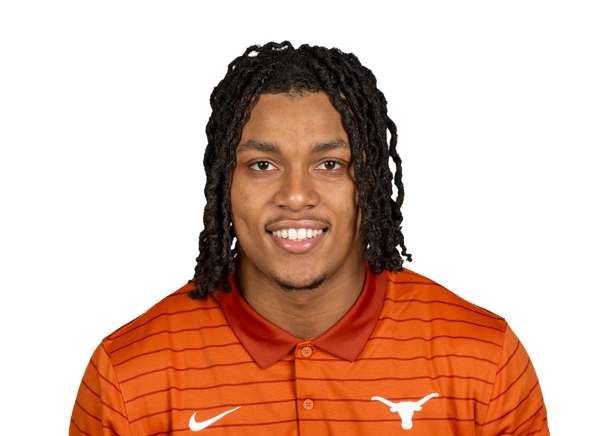
Tyler Atkinson
 Texas
Freshman
Texas
Freshman
Bio
Recruiting
Scouting Report
Tyler Atkinson is a 5-star Linebacker from Lawrenceville, GA (Grayson) in the 2026 class. Ranked No. 31 nationally, No. 2 at LB, No. 1 in GA. Composite rating: 0.9860. Committed to University of Texas since July 14, 2025.
Physical Profile
Listed at 6-1, 219 lbs. Taller than 21% and heavier than 71% of 2026 Linebacker prospects in the SEC Scouts database (207 with a listed size).
Play Style
He is a see-ball, get-ball linebacker who plays at full speed. On film he triggers downhill almost instantly on run reads and runs through the ball carrier's near hip. His short-area burst lets him take away cutback lanes. Grayson moved him around the formation, stacked off the ball, walked up on the edge, and sent him on A-gap and edge blitzes. His hurry totals (93 over his first three seasons) show he gets to the quarterback consistently, not just in occasional splash plays. He is a reliable open-field tackler whose tackle volume comes from pursuit and effort as much as from how he was deployed.
Strengths
- Historic production that held up every year: at least 100 tackles, 20 TFL and 8 sacks in each of his first three varsity seasons. That includes a school-record 197 tackles as a sophomore and 166 tackles, 32 TFL, 46 QB hurries and 13 sacks as a junior on a 14-1 team that won the 6A state title. Across his career he had roughly 483+ tackles and 31.5 sacks before his senior year.
- Pass-rush value from off the ball: he beats blockers on the blitz by slipping and dipping around them rather than running through them. He had 8 or more sacks in all four seasons, including 10 sacks and 25 TFL as a senior in 2025, which makes him a real sub-package pressure piece and not just a tackler.
- Processing and range: he finds the football quickly with good field awareness and mirrors ball carriers laterally. 247 compared him to Roquan Smith, a 'highly-productive inside linebacker' whose instincts turn into tackles on both sides of the formation.
- Top-level recognition: 2024 MaxPreps National Junior of the Year, AJC 6A Defensive Player of the Year, 2025 High School Butkus Award winner, Gatorade Georgia Player of the Year, and an All-American Bowl selection.
Areas to Improve
- Taking on and shedding blocks between the tackles. He wins now with quickness and angles. Against SEC offensive linemen climbing to the second level he needs to add weight and play with better hand placement, so he can take on blocks and fill his gap rather than run around them.
- Coverage and scheme load. He was used a lot as a downhill and blitz player at Grayson, and his high school film shows only one career-level interception. Matching running backs and tight ends in man coverage, carrying seam routes in zone, and learning a complex defensive system with many checks are the main hurdles to becoming an every-down player as a freshman.
College Projection
He enrolled early at Texas in spring 2026, wears No. 16, and debuted against Texas State on 9/5/2026. Expect him to start as a rotational linebacker, sub-package pressure player and special-teams contributor, taking on more snaps as he learns the defense. The realistic timeline is to push for a starting job late in 2026 or by the 2027 opener, and to become a multi-year starter and All-SEC candidate by his second season if his weight reaches the 225-230 range.
NFL Outlook
He has first-round tools. Off-ball linebackers who combine his range, pursuit and blitz value (the Roquan Smith type) are in demand in the NFL's sub-package-heavy game. If he adds size without losing burst and shows he can handle coverage responsibilities, he projects as a Day 1 or early Day 2 pick after his third college season (the 2029 draft cycle at the earliest). The main risk is his frame: if he stays around 215-220, he could be typed as a weakside or hybrid linebacker, which usually goes a little lower in the draft.
Best Fit
A multiple, aggressive 4-2-5 or 3-3-5 front that plays its linebackers off the ball, uses a lot of simulated pressures and creeper blitzes, and keeps him clean behind active interior linemen. That lets his instincts and lateral burst decide plays while his blitz skill is used on passing downs. That describes Texas's defense well, and he said at his commitment that 'the way they have me playing is the best fit.'
Player Comparison
Like Atkinson, Parsons was a versatile elite prospect who could impact games from multiple positions without being locked into one specific role. His 6'3", 245 lb frame was larger, but both share that rare combination of elite athleticism, football IQ, and the ability to make game-changing plays regardless of alignment - Parsons excelled as both linebacker and pass rusher in college before becoming an NFL superstar.
Current Team
University of Texas