
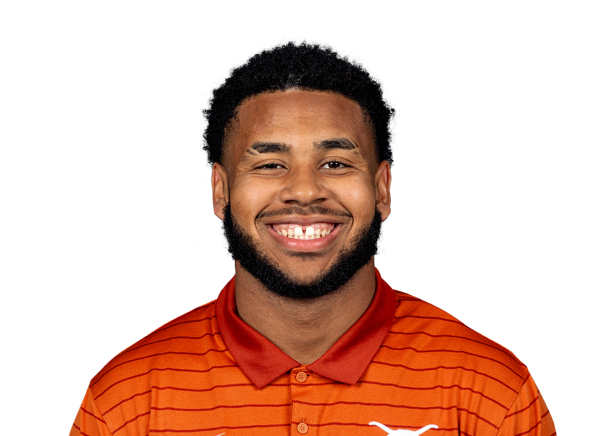
Richard Wesley
 Texas
Freshman
Texas
Freshman
Bio
Recruiting
Scouting Report
Richard Wesley is a 5-star Edge Rusher from Sylmar, CA (Sierra Canyon) in the 2026 class. Ranked No. 32 nationally, No. 7 at EDGE, No. 3 in CA. Composite rating: 0.9851. Committed to University of Texas since June 21, 2025.
Physical Profile
Listed at 6-4, 258 lbs. Taller than 54% and heavier than 93% of 2026 Edge Rusher prospects in the SEC Scouts database (169 with a listed size).
Play Style
On film he is a long, loose rusher who wins with first-step burst and length. He reaches a tackle's outside shoulder quickly and can flatten toward the quarterback. The Thibodeaux comparison, which 247 also extended to Matayo Uiagalelei and Drake Jackson, points to a speed-to-power rusher who can also stand up and move around. His 5 senior interceptions and 10 hurries show he plays with his eyes up and chases, not a player who only rushes straight ahead. His high-school film does not show a finished run defender, and his hand usage is still developing. That is normal for a player a year young for the class, not a red flag.
Strengths
- Production as a pass rusher: as a senior (MaxPreps) he had 29 tackles, 12.5 tackles for loss, 8.5 sacks, 10 QB hurries and 1 forced fumble in Sierra Canyon's schedule, one of California's toughest. Getting into the backfield that often while being a year young for the class is the core of his case.
- Range and athleticism beyond a pure rusher: he also had 5 interceptions as a senior, which is rare for an edge player. It shows he can drop into coverage, read the quarterback's eyes and catch the ball. That supports using him as a standup or 'Jack' linebacker, not only as a hand-down end.
- Physical readiness plus youth: he is at 250 pounds after skipping a year of high school development, and a Texas starter noticed him early. Lance Jackson named him one of three freshmen who surprised him in camp and said he's 'gonna be a dog for us in the future.' Being ready this early while still having another year of growth to come is what made him a five-star.
- Recruiting reputation: Rivals ranked him a five-star and No. 29 overall, and ESPN ranked him a five-star and the No. 2 defensive end. He is Texas' highest-rated 2026 signee on Rivals. Several services put him in the national top 30, which lowers the risk that he was overrated by a single outlet.
Areas to Improve
- Consistency against the run and at the point of attack: young, long edge players often get moved by down-blocks and double teams in the SEC. He needs to play with lower pads, set a firm edge and shed blocks from 280- to 320-pound tackles. That will decide whether he can play every down or only in passing situations.
- Developing counter moves: many high school sacks come from speed and length alone. Against SEC tackles he will need a planned plan of attack, such as a dependable inside counter, a long-arm rush that sets up the dip-and-rip, and better hand timing. Otherwise tackles will learn to overset him.
- Adding strength without losing bend: carrying 260 or more pounds while keeping his flexibility around the edge is the key year-one and year-two development goal.
College Projection
In 2026 he is a rotational pass rusher behind Colin Simmons. Expect third-down and obvious-passing-down snaps, some special teams, and a gradual increase in reps if he keeps playing well. His early enrollment and his inclusion on On3's Week 2 list of standout true freshmen suggest he is already getting meaningful snaps. In 2027 he is a strong candidate to start or co-start at edge, especially if Simmons leaves for the NFL after the 2026 season. His realistic ceiling by 2027–28 is a double-digit-sack, All-SEC edge rusher, provided he adds weight and improves as a run defender.
NFL Outlook
He has first-round tools. Long, bendy edge rushers who carry 250 pounds or more are among the highest-valued prospects in the draft, and the Thibodeaux comparison (No. 5 overall pick in 2022) shows the ceiling scouts see. Because he reclassified, he may reach draft eligibility after the 2028 season while still young, which NFL teams value. The most likely path is a Day 1 or early Day 2 pick if he produces as a starter in 2027–28. The main risk is that he becomes a pass-rush-only player and slides to Day 2 if his run defense and strength don't develop.
Best Fit
An aggressive, multiple 3-4 or hybrid front that lets him play as a standup outside linebacker or 'Jack' and a hand-down end in passing situations. Such a front also uses his coverage ability on simulated pressures and zone drops. Texas' current scheme and edge-player development, with Simmons as a model at the same position, fits him well. A scheme that asks him to two-gap as a 4i or 5-technique early would waste his speed and bend.
Player Comparison
Both are elite 5-star prospects with similar size (6'4", 244 lbs vs Garrett's 6'4", 270 lbs playing weight) who were top-20 national recruits from premier high school programs. Garrett was also ranked in the top-15 nationally and committed early to a major Texas program, showing the same combination of elite physical tools and high football IQ that comes with such prestigious rankings.
Current Team
University of Texas