
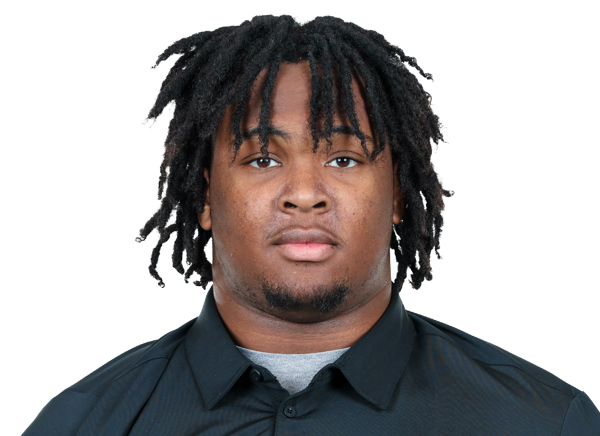
Sam Roseborough
 Texas A&M
Freshman
Texas A&M
Freshman
Bio
Recruiting
Scouting Report
Sam Roseborough is a 4-star Interior Offensive Line from Clearwater, FL (Clearwater) in the 2026 class. Ranked No. 152 nationally. Composite rating: 0.9385. Committed to Texas A&M University since August 5, 2026.
Physical Profile
Listed at 6-3, 303 lbs. Taller than 5% and heavier than 62% of 2026 Interior Offensive Line prospects in the SEC Scouts database (207 with a listed size).
Play Style
He's a physical, downhill run blocker who plays with good pad level and tries to finish blocks. As a high school right tackle he won mostly with power and leverage, which is why the Composite rates him higher as an interior prospect than 247 does. In pass protection he has improved every season and has already faced edge speed. His style fits a gap/power run game, and his experience outside gives him a pass-protection foundation that many interior prospects lack.
Strengths
- Played right tackle as a junior in 2024. Blocking edge rushers on an island gives him more pass-set experience than a typical high school guard, and that should carry over well inside.
- Scouts consistently call him a difference-maker in the run game. His natural leverage at 6-3 helps him win the pad-level battle and move defenders at the point of attack.
- He's physically ready for college. Being 300-plus pounds as an early enrollee let him go through spring practice and a full summer strength cycle before his first fall.
- His two-way background (51 tackles and 4 sacks in 2023) shows athleticism, competitiveness and a feel for how defensive linemen attack blocks.
Areas to Improve
- Moving from tackle to guard means learning new footwork and hand timing: shorter sets, handling immediate contact, and working combo blocks and stunt/twist pickups in tight spaces rather than on the edge.
- Evaluators credited him with steady but still-developing pass protection. Against SEC interior rushers he'll need better hand placement, and he'll need to anchor against bull rushes with less length than most tackles have to recover.
- His grades split: 89 and #28 IOL from 247 versus #8 IOL on the Composite. He needs to prove the higher evaluation with technique and consistency, not size alone.
College Projection
The most likely path is a guard, with center as a possible second position. He'll spend 2026 as a true freshman reserve and could redshirt. Texas A&M's line is being rebuilt after four 2025 starters were drafted and only one starter returned, so there are reps to win on the two-deep sooner than usual. Enrolling early gives him a head start on the other 2026 linemen (Zaden Krempin and Avery Morcho). A realistic timeline is special teams and backup snaps in 2026, a push for a starting guard spot in 2027 as a redshirt freshman or sophomore, and a multi-year starter from 2028 on if his pass-protection technique develops.
NFL Outlook
He's a mid-to-late Day 3 developmental prospect whose ceiling depends on the position switch. NFL guards his size (6-3, 305-315) are viable, especially in gap-scheme offenses, and his tackle background adds value as a backup who can play multiple spots. To reach Day 2, he'd need to become a multi-year SEC starter and put strong anchor and hand-usage film on tape against top interior rushers. Right now his recruiting profile points to a college starter first and an NFL candidate second.
Best Fit
A power/gap-heavy or duo-based run scheme that asks guards to drive-block, pull and work combos. That uses his leverage and run-game physicality while limiting how often he blocks in space. Texas A&M is a strong fit because of the early enrollment and an offensive line depth chart with openings after the 2025 departures.
Player Comparison
Similar physical profile at 6'4" 312 lbs with elite athleticism for size, both were highly-rated 4-star prospects who committed early to top SEC programs. Wills also had exceptional composite ratings despite playing multiple positions in high school, showing the versatility and fundamental soundness that translates to elite college programs regardless of final position designation.
Current Team
Texas A&M University