
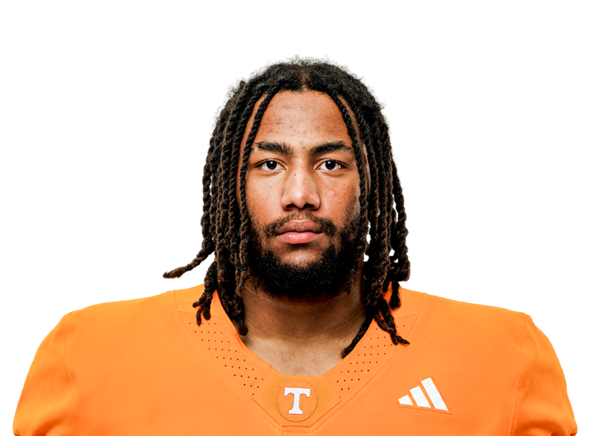
JJ Finch
 Tennessee
Freshman
Tennessee
Freshman
Bio
Recruiting
Scouting Report
JJ Finch is a 4-star Defensive Line from Indianapolis, IN (Warren Central) in the 2026 class. Ranked No. 469 nationally. Composite rating: 0.8911. Committed to University of Tennessee since August 5, 2026.
Physical Profile
Listed at 6-3, 293 lbs. Taller than 37% and heavier than 73% of 2026 Defensive Line prospects in the SEC Scouts database (227 with a listed size).
Play Style
Finch plays like an edge rusher inside a tackle's body. He's quick off the snap, attacks upfield, and his production comes from penetration and chasing plays down rather than two-gapping. In high school he lived in the backfield (24.5 TFL). His best position at Tennessee looks like a one-gap 3-technique or shaded nose, where he can shoot a gap and use his leverage against bigger guards. He's still developing as a pure read-and-react run defender.
Strengths
- Disruption in the backfield: 24.5 tackles for loss, 10.5 sacks and 17 hurries as a senior. He didn't just eat blocks. He regularly finished in the backfield against Indiana 6A-level competition.
- Get-off and closing burst from his edge days carry over inside. A former edge player who is now close to 295 pounds usually brings better first-step quickness than a typical high school nose tackle, and that's what shows up in his TFL total.
- Physical development and work ethic, shown by gaining roughly 70 pounds from his sophomore year to Tennessee's roster while still earning snaps in September of his true freshman season. Coverage of the program says the Tennessee staff is 'really, really high on him.'
- Readiness for early playing time: he went through spring practice as an early enrollee, was listed DT3 for the opener, and is competing with Ethan Utley for the DT2 spot.
Areas to Improve
- Interior technique: he's still learning to play inside. That means holding up against double teams, keeping his pad level through contact, and staying in his gap against zone runs, where an edge player's instinct to go upfield gets exploited by SEC guards and centers.
- Play strength and conditioning at his new weight: turning the recent gain into anchor strength against SEC run games, and keeping his quickness over a full rep count as his snaps grow past the roughly 20-per-game range.
- Pass-rush plan: his high school sacks came largely from athletic advantages. He needs a counter off his primary move (a club/swim or push-pull off a long-arm) to keep producing against SEC interior linemen.
College Projection
He's already a rotational true freshman at Tennessee, with a 19-snap debut against Furman and his first tackle against Kennesaw State. His realistic 2026 role is a DT2/DT3 rotation player who gets 15-25 snaps a game, mostly on early downs and against lesser opponents, with snaps growing as he wins the Utley competition. He took Tennessee because interior tackles Bryson Eason and Dom Bailey were leaving for the NFL and he wanted to 'come in and fill in.' If his weight settles and his technique improves, he projects as a starter as a redshirt freshman or sophomore in 2027-28.
NFL Outlook
Mid-round upside. At 6-3/295 with an edge rusher's background, he could fit the NFL's interest in quick, penetrating 3-techniques. He's short of the ideal height and length, so his draft value will depend on college production: TFL and pressure rates as a starter, plus testing that confirms his quickness survived the weight gain. The most likely outcome is a Day 3 prospect after three or four college seasons. It could climb to Day 2 if he becomes a multi-year SEC starter with 6+ sacks a season from inside.
Best Fit
A one-gap, attacking 4-man front that lets its interior linemen shoot gaps instead of two-gapping and holding blocks. Tennessee's aggressive, rotation-heavy defensive line is close to ideal: he plays early in a rotation instead of carrying a full starter's load before his body and technique are ready. A two-gapping 3-4 nose role would take away his quickness, which is his biggest strength.
Player Comparison
Similar physical frame at 6'3" 278 lbs suggests a versatile defensive lineman or linebacker hybrid prospect. Ojabo was also a highly-rated recruit who developed early recognition despite being relatively new to football, showing the kind of upside that leads to strong composite ratings. Both prospects demonstrate the athletic potential and early development that major programs target in multi-positional defensive players.
Current Team
University of Tennessee