
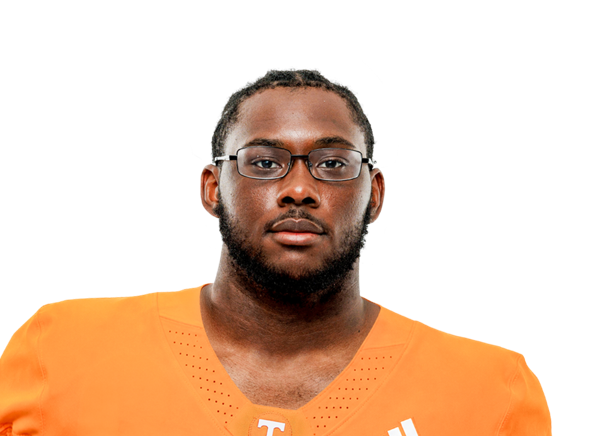
Ed Baker
 Tennessee
Freshman
Tennessee
Freshman
Bio
Recruiting
Scouting Report
Ed Baker is a 3-star Interior Offensive Line from Baltimore, MD (St. Frances Academy) in the 2026 class. Ranked No. 1030 nationally. Composite rating: 0.8722. Committed to University of Tennessee since August 5, 2026.
Physical Profile
Listed at 6-4, 322 lbs. Taller than 36% and heavier than 86% of 2026 Interior Offensive Line prospects in the SEC Scouts database (207 with a listed size).
Play Style
Baker plays like a heavy, physical drive blocker who is comfortable on the edge because of his time at tackle. His tackle background shows in his pass protection: he can set out to meet a rusher instead of just sitting down in place. His frame fits gap and duo schemes where he can combo-block with a center or tackle before climbing to a linebacker. Tennessee recruited him as an interior player, which points to guard, where his mass and shorter length are less of a problem and his foot quality from playing tackle becomes a plus. No verified high school stats or detailed film breakdowns were found, so this assessment relies on his measurables, positional history, and how he was recruited.
Strengths
- Ready-made size for the interior: he already weighs about 322 pounds, so he doesn't need a year of weight gain before he can handle SEC defensive tackles.
- Tackle experience on an interior frame: snaps at right tackle for St. Frances forced him to protect in space and recover against speed, which helps on guard pulls and against twists and stunts.
- Positional flexibility: he has said he believes he can play all five line spots, and recruiting outlets list him as both an offensive tackle and an interior lineman. Swing depth across three or more spots is valuable on a college two-deep.
- Proven against strong competition: St. Frances plays a national-level schedule, and more than 20 schools offered him, including Alabama, Auburn, Florida, Miami, Texas A&M, Ole Miss, Arkansas, NC State, and Virginia. That interest outweighs his No. 1,000-plus national ranking.
Areas to Improve
- Fully adapting to the interior: at guard, the main jobs are a strong anchor against powerful defensive tackles, quick hands in a confined space, and handling stunts. After years outside, he has to learn to fight in a phone booth with shorter, firmer steps.
- Body composition and functional strength: he already has the weight, so the goal for his first college strength cycle is converting it into play strength and keeping his lower body flexible enough to sink his hips and hold up against bull rushes.
- Tempo stamina and consistent technique: Tennessee's fast, wide-split offense demands that linemen stay in shape and keep their technique sound late in long drives. Pad level and hand placement are the details that usually separate a three-star backup from a starter.
College Projection
He is in his true freshman season at Tennessee in 2026, working under offensive line coach Glen Elarbee. Tennessee returned an experienced line and has five-star tackle Gabriel Osenda in the same class, so a 2026 redshirt (up to four games) is the most likely path for Baker. Realistically, he is a backup at guard in 2027, a contender for a starting job in 2028 as a redshirt sophomore, and has the size and versatility to become a multi-year starter at guard for his last two or three seasons. Being able to back up at tackle in a pinch makes him more valuable as a backup in the meantime.
Best Fit
Tennessee's spread offense under Heupel, with wide splits and run-heavy RPOs, is a good match. The wide splits create one-on-one blocks inside that favor a heavy guard with tackle-level feet, and the gap and duo runs suit his drive-blocking. More broadly, he is best used as a guard in a gap or duo run scheme that also needs a backup who can slide outside. A pure zone scheme that needs a lighter, longer lineman would fit him less well.
Current Team
University of Tennessee